

Adaptive equipment for people with dementia is a specialized domain within occupational therapy that intersects cognitive and physical function in ways that do not apply to most other populations. The challenge is not simply that the person has physical limitations -- it is that the person may not be able to learn a new tool, remember how to use a tool they learned yesterday, initiate the use of a tool independently, or safely use a tool that has any hazard potential. Adaptive equipment selection for dementia must prioritize safety, simplicity, and consistency over functional sophistication. A tool that works perfectly for someone with full cognitive function may be confusing, dangerous, or unused by someone with moderate dementia.
Direct answer: The occupational therapy principles for dementia adaptive equipment selection are: simplest possible operation (single step, not multi-step), familiar form (looks like what it does, no novel interface), safe failure mode (if misused, the failure is harmless), and consistent placement (same location every time, relied on by procedural memory which is relatively preserved). Reachers meet these criteria well -- they look like a grabbing tool, operate with a single squeeze, and the failure mode (dropping something) is harmless. Electric jar openers require more caregiver supervision to ensure safe use.
Dementia-Appropriate Adaptive Equipment Criteria
| Criterion | Why It Matters for Dementia | Application |
|---|---|---|
| Single-step operation | Multi-step sequences cannot be reliably retained or initiated | Electric jar opener (one button) is better than any multi-step alternative |
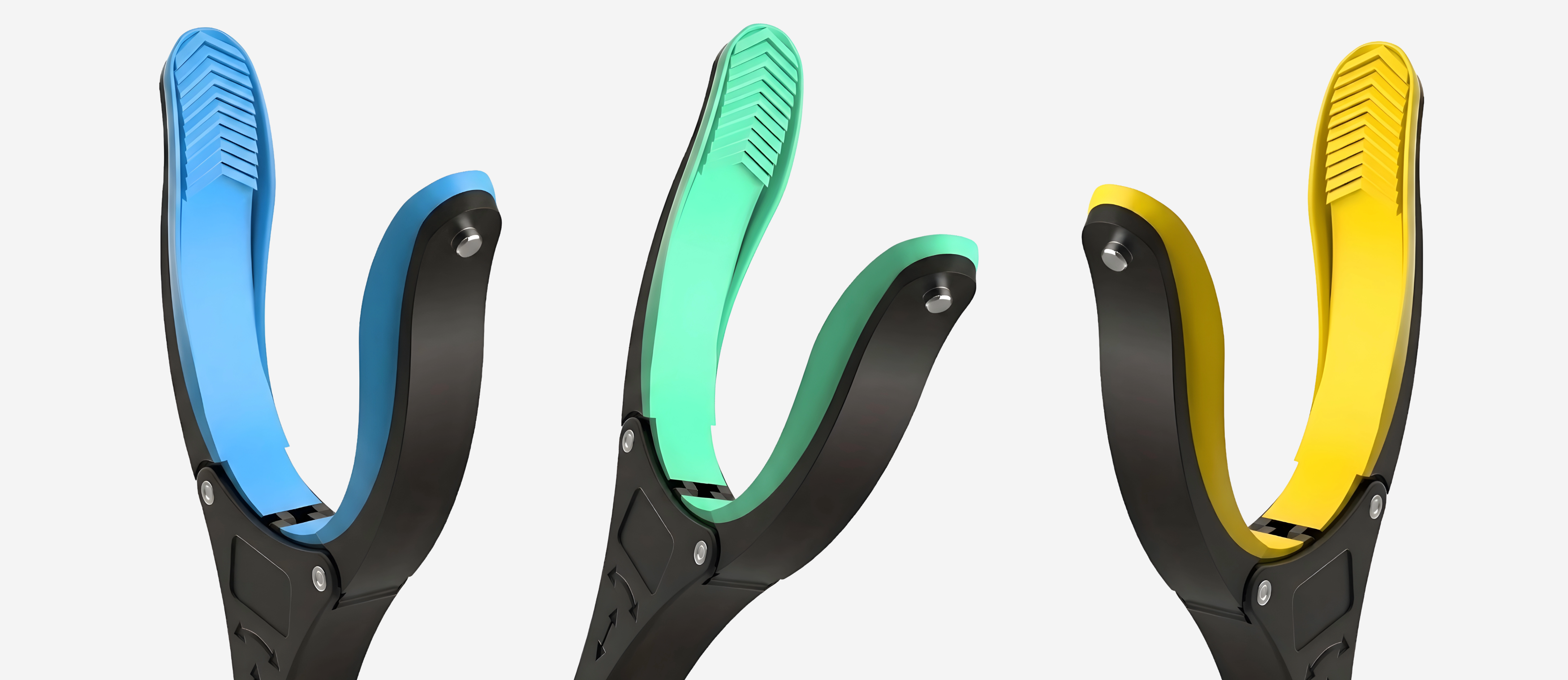
| Familiar form factor | Novel interfaces cannot be learned and re-learned each day | A reacher that looks like a claw is more intuitive than a lever-mechanism design |
| Safe failure mode | Tool misuse must not create injury risk | Reacher misuse (drop, wrong squeeze) is safe; sharp or heated tools are not appropriate unsupervised |
| Consistent placement | Procedural memory (how to use) is more preserved than episodic (where I put it) | Permanent designated locations for all adaptive tools |
| Caregiver visibility | Caregiver must be able to observe use and correct errors | Open kitchen design; tools used in common areas, not isolated spaces |
When to Involve a Caregiver in Tool Use
As dementia progresses, independent adaptive tool use requires reassessment. A reacher used independently in early dementia may require caregiver setup (placed in the right location, pointed at the right item) in moderate dementia, and full caregiver assistance in advanced stages. The goal shifts from independence to assisted function as the condition progresses.
The GrabbersTool 32-inch Reacher is an appropriate early-stage dementia adaptive tool for floor retrieval under appropriate supervision. Browse the full reacher collection.


