

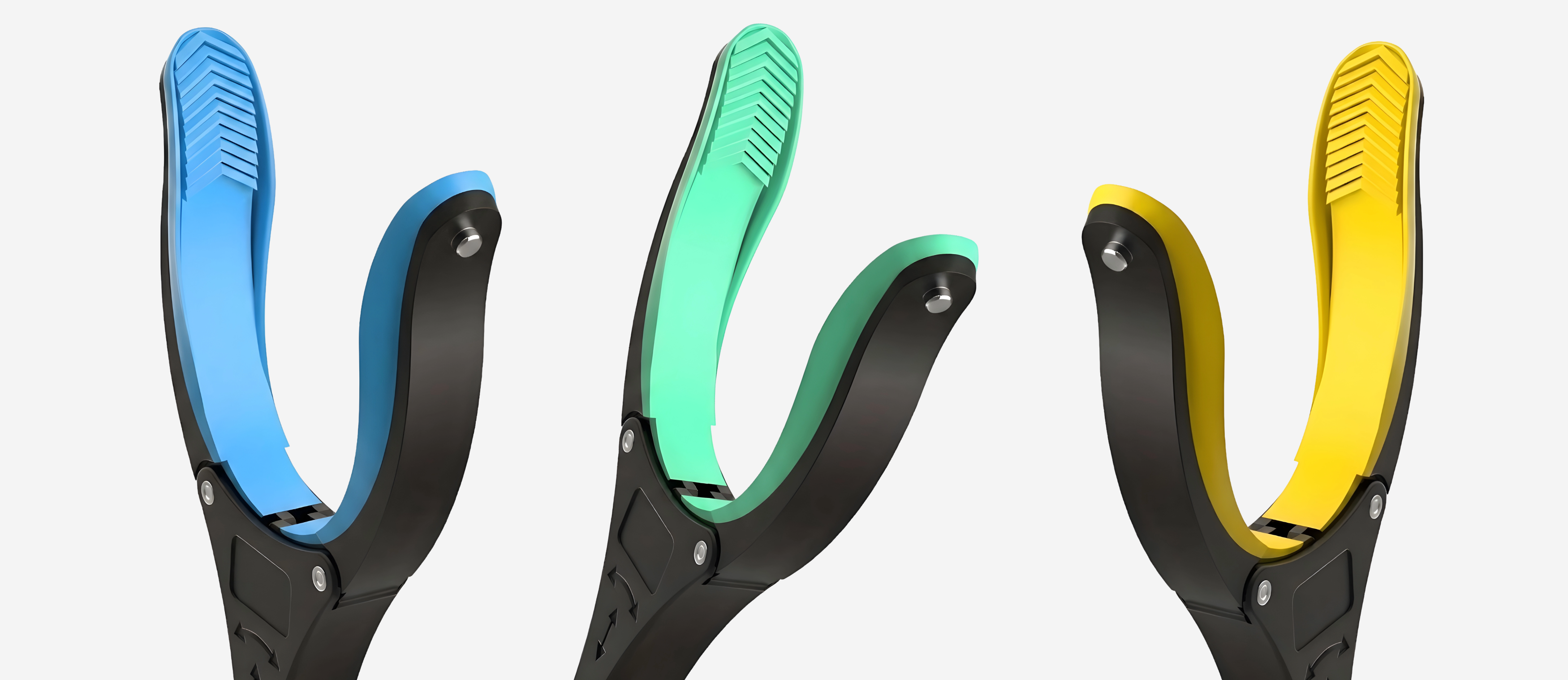
Reacher grabber tools look similar across a wide price range — a handle, a shaft, a jaw mechanism. The functional difference between a budget generic and a purpose-engineered model is not visible in a product photograph. It becomes visible in daily use: the jaw that releases under load when gripping a jar, the handle grip that slips during wet conditions, the spring mechanism that fatigues after months of daily use. For a person who uses a reacher grabber multiple times per day as a primary independence tool, the performance of the jaw mechanism matters in a way it does not for occasional use.
Direct answer: the key functional differences between GrabbersTool reacher grabbers and typical generic alternatives are jaw grip reliability under load, handle ergonomics for extended use, jaw opening width for larger objects, and mechanism durability over high-frequency use cycles. These differences are most significant for users who rely on the tool daily — post-surgical recovery, arthritis management, wheelchair users — and less significant for occasional supplementary use. GrabbersTool product specifications — jaw force, opening width, shaft material, handle dimensions — are on each product page. View the 32" Reacher Grabber specifications
What the Jaw Mechanism Actually Does
The jaw mechanism of a reacher grabber must accomplish three simultaneous functions: close on the object with sufficient grip force to hold it against gravity during the full reach, hold that force reliably throughout the transfer (not just at the moment of pickup), and release cleanly when the trigger is relaxed. Generic mechanisms frequently fail on the second function: the jaw closes adequately but releases grip partially during the carry phase, causing objects to drop mid-transfer.
GrabbersTool jaw mechanisms are designed around the specific grip-force-to-trigger-force ratio that enables a user with reduced hand strength — arthritis, post-surgical weakness, neurological conditions — to close the jaw reliably without the trigger force exceeding comfortable grip capability. A jaw that requires excessive trigger force to close reliably defeats the purpose of a low-effort adaptive tool.
Comparison Framework
| Feature | GrabbersTool Models | Typical Generic | Why It Matters |
|---|---|---|---|
| Jaw grip under load | Sustained — holds through full transfer arc | Variable — may release partially under load | Objects dropped mid-transfer defeat the purpose |
| Jaw opening width | Specified on product page for each model | Often not specified; typically narrower | Cannot grip large items (water bottles, boxes) |
| Handle ergonomics | Contoured for extended grip; non-slip surface | Cylindrical; may be smooth | Hand fatigue and slip risk with extended daily use |
| Shaft stiffness | Low flex under lateral load | Often flexes under lateral load | Flex reduces precision for small object pickup |
| Mechanism durability | Designed for high-frequency daily use | May degrade after months of daily use | Daily users replace generic models more frequently |
| Magnetic tip option | Available on selected models | Rarely available | Essential for metal small objects (keys, pins, coins) |
GrabbersTool specifications for jaw opening width, trigger force, shaft diameter, and weight are published on each product page. These are the specifications to compare when evaluating any reacher grabber — generic or branded. Specifications not published by a manufacturer should be treated as unverified. View 32" specifications | View 43" specifications
The Frequency-of-Use Threshold
The performance gap between purpose-engineered and generic reacher grabbers is most apparent above a specific daily use frequency. Occasional use — a few times per week, to retrieve items from high shelves — produces less differentiation because any mechanism works well under low frequency. Daily use of 10-20 times per day — the pattern of a post-surgical patient or wheelchair user who relies on the reacher as a primary independence tool — amplifies every mechanism weakness. Spring fatigue, jaw release inconsistency, and grip surface degradation all develop faster under high-frequency use.
GrabbersTool customer feedback from daily-use patients — arthritis, hip replacement recovery, wheelchair use — consistently identifies mechanism consistency and handle comfort as the features that differentiate their GrabbersTool experience from previous generic models. The same pattern appears across many different medical contexts and user profiles.
The Length Selection Question
Beyond quality, the correct length selection matters independently of brand. A 32-inch reacher that reaches 26 inches beyond the user arm is inadequate for a wheelchair user who needs floor-level pickup — the 43-inch model is required. A 43-inch reacher is unnecessarily awkward for bedside object retrieval where 32 inches is sufficient.
The correct length selection guide is at Reacher Grabber Length Guide: 32 vs 43 Inch Models Explained. Both GrabbersTool lengths are available: 32" Reacher Grabber and 43" Reacher Grabber. The Precision Grabber is the narrow-jaw option for small object retrieval.
Browse the full reacher grabber range at Reacher Grabber Tools and Long Reach Grabber Tools.


