

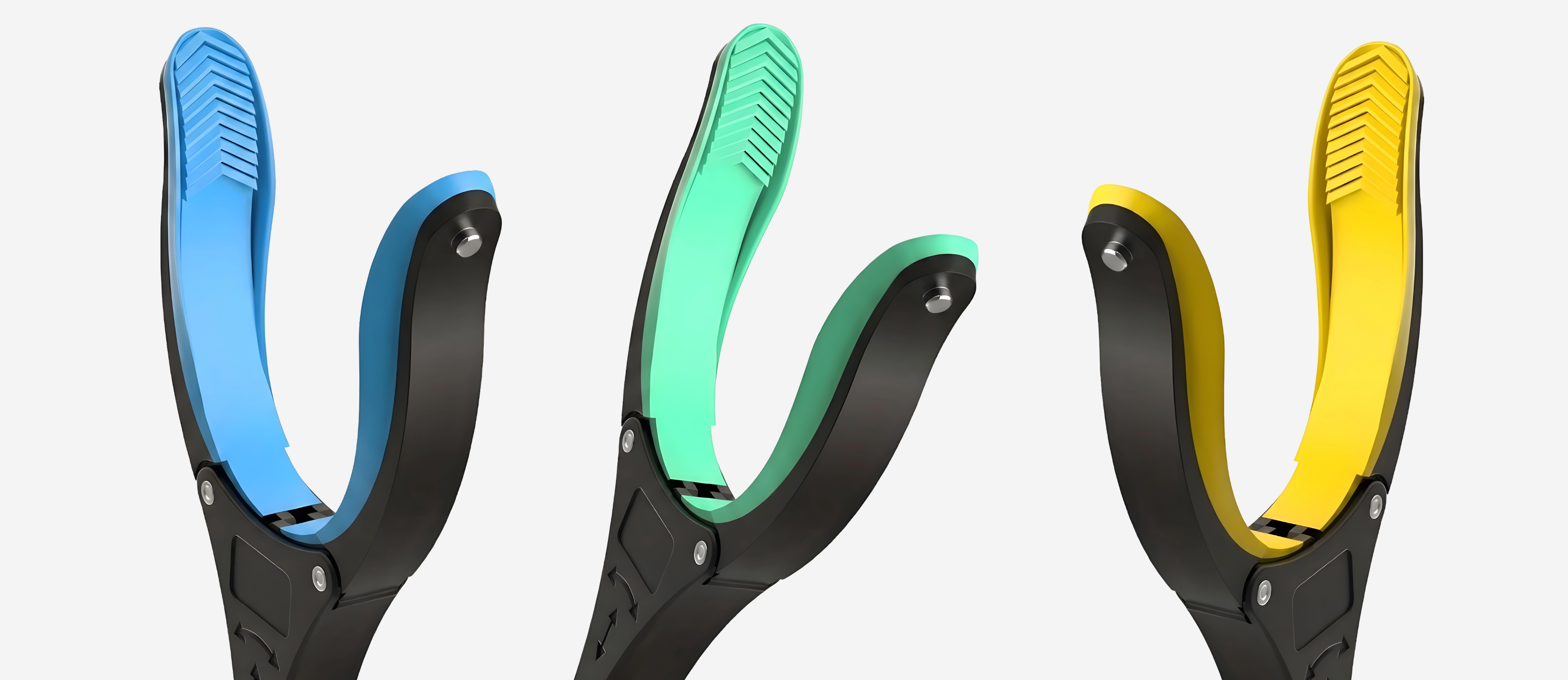
Huntington disease (HD) presents a fundamentally different adaptive equipment challenge than any orthopedic or static neurological condition. The core features -- choreiform movements, progressive cognitive decline, balance impairment, and dysphagia -- create a moving target for equipment fit that requires repeated OT reassessment rather than a single adaptive equipment prescription. Standard adaptive tools developed for stable conditions require modification in their application to HD, and some tools appropriate for other neurological conditions are contraindicated in HD due to the chorea risk.
Direct answer: Reacher grabbers are conditionally appropriate in HD, primarily in the earlier stages when chorea is mild and hand function is relatively preserved. As choreiform movements increase, the risk of uncontrolled reacher motion during use becomes a safety consideration. OT assessment determines whether reacher use is appropriate for the specific individual and stage. For kitchen tasks, the electric jar opener is more broadly applicable because it eliminates the sustained grip-against-resistance pattern that is particularly disrupted by chorea.
HD Progression and Adaptive Equipment Stages
| HD Stage | Primary Functional Features | Adaptive Equipment Focus |
|---|---|---|
| Early (UHDRS TFC 13) | Mild chorea, preserved ADL function, early cognitive changes | Preventive adaptation, fall risk reduction, cognitive aids |
| Middle (TFC 7-12) | Moderate chorea, balance impaired, ADL difficulties emerging | Kitchen tools, bathroom safety, reacher (OT-assessed), weighted utensils |
| Late (TFC 1-6) | Severe chorea or rigidity, dependent for most ADLs | Full care support, swallowing adaptations, positioning aids |
Safety Considerations Specific to HD
- Chorea and tool control: Involuntary movements during tool use create injury risk. Rigid tools carry different risk than soft tools. OT must assess whether the specific individual movement pattern is compatible with safe reacher use.
- Falls during reaching: HD balance impairment combined with the posture shifts of reaching significantly increases fall risk.
- Cognitive factors: Executive function changes in HD can affect the consistent and safe use of adaptive equipment. Simple, single-step equipment is preferable.
The GrabbersTool Electric Jar Opener is a single-step, one-handed task with minimal balance demands -- well-suited to the early and middle HD kitchen profile. Browse the reacher collection and adaptive kitchen tools.


