

The standard adaptive tool framework assumes a support network -- a family member to help when the tool does not suffice, a caregiver for tasks beyond the tool range, another person in the house to assist with falls. People with progressive conditions who live alone do not have this fallback. Every tool failure, every task the tool cannot manage, every moment the condition exceeds the tool capability -- there is no one to call. GrabbersTool works with customers in this situation and hears a consistent priority: they do not need tools for average days. They need tools for their worst days, when the condition is at its most demanding and no assistance is available.
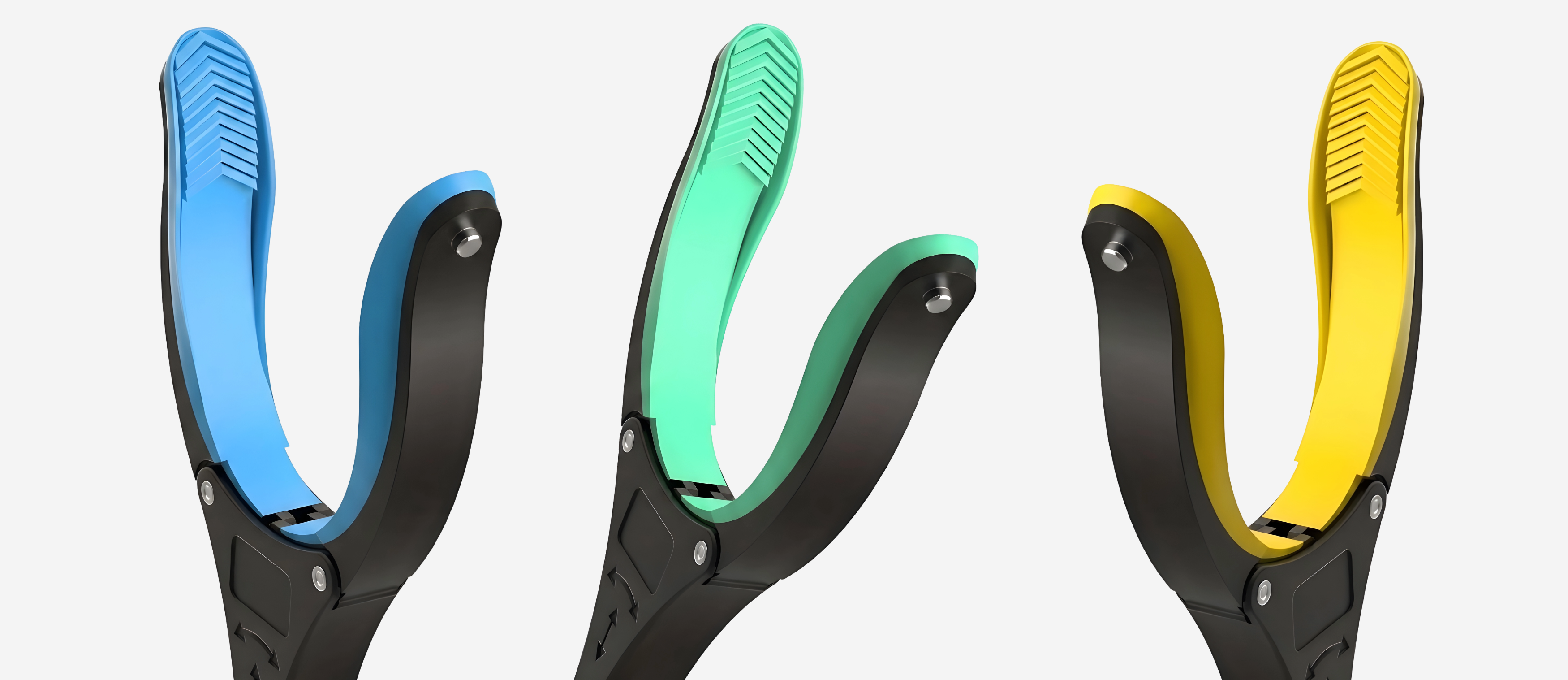
Direct answer: for people living alone with progressive conditions, the adaptive tool selection principle is worst-case-first -- select tools based on the most demanding functional state the condition creates, not the current average state. The GrabbersTool Electric Jar Opener requires only palm placement and button press -- functional even during severe grip weakness, flare conditions, or off-medication periods. The 43-inch Reacher Grabber covers floor retrieval when back pain, fatigue, or lower limb weakness makes bending unsafe or impossible.
Progressive Condition Trajectory and Tool Planning
| Condition | Primary Progression Pattern | Solo-Living Adaptive Priority |
|---|---|---|
| Multiple Sclerosis | Relapsing-remitting or progressive; fatigue, spasticity, grip weakness | Electric kitchen tools for relapse periods; reacher for balance-limited days |
| Parkinson disease | Tremor, rigidity, freezing episodes; medication-dependent function | Electric openers for off-medication windows; Standing Assist for rise support |
| ALS (amyotrophic lateral sclerosis) | Progressive limb weakness; timeline unpredictable | Anticipatory tool introduction -- electric openers before grip loss becomes critical |
| Charcot-Marie-Tooth | Slow distal weakness progression over decades | Early tool adoption while familiar; Walking Cane for foot drop balance |
| COPD/CHF | Episodic exacerbations with inter-episode baseline decline | Electric tools for exacerbation days when minimal exertion is required |
Detailed product specifications and operation requirements are on each product page. View Electric Jar Opener.
The Anticipatory Tool Adoption Strategy
People who live alone with progressive conditions face a specific timing challenge: if they wait until a tool is urgently needed, they may be in a worse functional state when they need to research, order, and learn to use it. The GrabbersTool recommendation for solo-living progressive condition patients is to introduce tools one functional stage ahead of current need. If grip is currently manageable but declining, the electric jar opener should be introduced now -- so it is familiar and in place when grip becomes unreliable. The adaptation curve for a new tool is easier to manage from a position of moderate limitation than from crisis-level limitation. GrabbersTool customers with ALS, MS, and Parkinson disease who were introduced to electric kitchen tools by their OT or neurologist early consistently report better adaptation than those who waited for urgent need.
Emergency Protocols and Adaptive Tools
Solo living with a progressive condition requires emergency planning that household-based care does not. If a fall occurs, a reacher grabber within reach can help retrieve a phone from the floor without rising. The Reacher Grabber kept in primary living and sleeping areas is an emergency recovery tool as much as a daily living aid. People living alone should also consider where their reacher is relative to locations where falls are most likely: bathroom, kitchen, and bedroom. Multiple reachers -- one per room -- provide coverage without requiring movement after a fall to retrieve the tool. See also: Fall Prevention Room-by-Room: Adaptive Tools and Environmental Modifications.
Social and Psychological Dimensions
Living alone with a progressive condition creates a psychological load that adaptive tools can partially address. The loss of ability to complete basic tasks independently -- making a meal, retrieving a dropped item -- is particularly acute when there is no one to compensate. Restoring specific functional capacities through adaptive tools supports what Ryan and Deci (2000) describe as the foundational need for autonomy -- the same psychological mechanism that makes independence-enabling adaptive tools emotionally significant as well as practically useful. GrabbersTool customers living alone with progressive conditions describe functional tools not as accommodations but as what makes solo living feel dignified. See also: The Psychology of Accepting Adaptive Tools: Identity, Autonomy, and the Decision to Change.
Browse Reacher Grabber Tools, Easy Grip Kitchen Openers, and Ergonomic Mobility Solutions.


