

Cooking and kitchen tasks with one functional hand present specific challenges, as many standard kitchen activities are designed for two-handed use. One-handed kitchen function is needed by people with a range of conditions: stroke (hemiplegia or hemiparesis affecting one side), upper limb amputation, arm or hand injury and surgery recovery (fractures, tendon injuries, post-surgical immobilization), brachial plexus injury, hemiplegic cerebral palsy, and any condition rendering one arm and hand non-functional or unavailable. The core challenge is that many kitchen tasks normally use two hands -- one to stabilize and one to work: opening jars (one hand stabilizes the jar, the other twists the lid), cutting food (one hand stabilizes the food, the other cuts), opening packages, stabilizing bowls during mixing, and carrying large items. One-handed kitchen technique combines: adaptive tools that replace the stabilizing function of the missing hand (so one hand can accomplish tasks that normally need two), specific one-handed techniques (methods for performing tasks with one hand), and kitchen organization to support one-handed function. With the right tools and techniques, substantial one-handed kitchen independence is achievable. Occupational therapy is valuable for learning one-handed kitchen techniques, particularly after stroke or amputation. This guide covers the key one-handed kitchen tools and techniques.
Direct answer: One-handed kitchen function relies on adaptive tools that replace the stabilizing hand -- electric jar openers (open jars without a stabilizing hand), suction-base cutting boards with food-holding prongs (stabilize food for one-handed cutting), non-slip matting (stabilize bowls), and rocker knives. The GrabbersTool Electric Jar Opener is the essential one-handed kitchen tool for jar opening, and the reacher collection supports one-handed reaching.
One-Handed Kitchen Techniques and Tools
| Kitchen Task | One-Handed Challenge | Technique and Tool Solution |
|---|---|---|
| Opening jars and containers one-handed | Opening jars normally requires two hands -- one to stabilize the jar and one to twist the lid; with one hand, the jar cannot be both stabilized and twisted; jar opening is one of the most commonly cited difficult one-handed kitchen tasks; bottle caps, packages, and other containers present the same two-handed challenge; the inability to stabilize while opening affects many container-opening kitchen tasks | Electric jar opener (GrabbersTool) is the essential one-handed jar-opening tool -- it grips and twists the lid automatically, requiring only placement with the one functional hand (no stabilizing hand needed); wall-mounted or under-cabinet jar openers (the mount stabilizes the jar); non-slip jar grips combined with bracing the jar (against the body or in a drawer) for manual opening; one-handed bottle and package openers; the electric jar opener solves the core one-handed jar challenge |
| Cutting and food preparation one-handed | Cutting food normally requires one hand to stabilize the food and one to cut; with one hand, the food cannot be both held and cut (the food slides); stabilizing food for cutting, peeling, and preparation is a key one-handed challenge; spreading, mixing, and other preparation tasks also normally use a stabilizing hand; the lack of a stabilizing hand affects food preparation tasks | Suction-base cutting board with stainless steel food-holding prongs (the prongs impale and hold the food, and the suction base stabilizes the board -- allowing one-handed cutting); a cutting board with a corner guard or raised edge (to stabilize food against); rocker knife (a curved blade that rocks to cut with one hand using a rocking motion rather than a two-handed sawing); non-slip matting under the board; these tools replace the stabilizing hand for one-handed cutting and preparation |
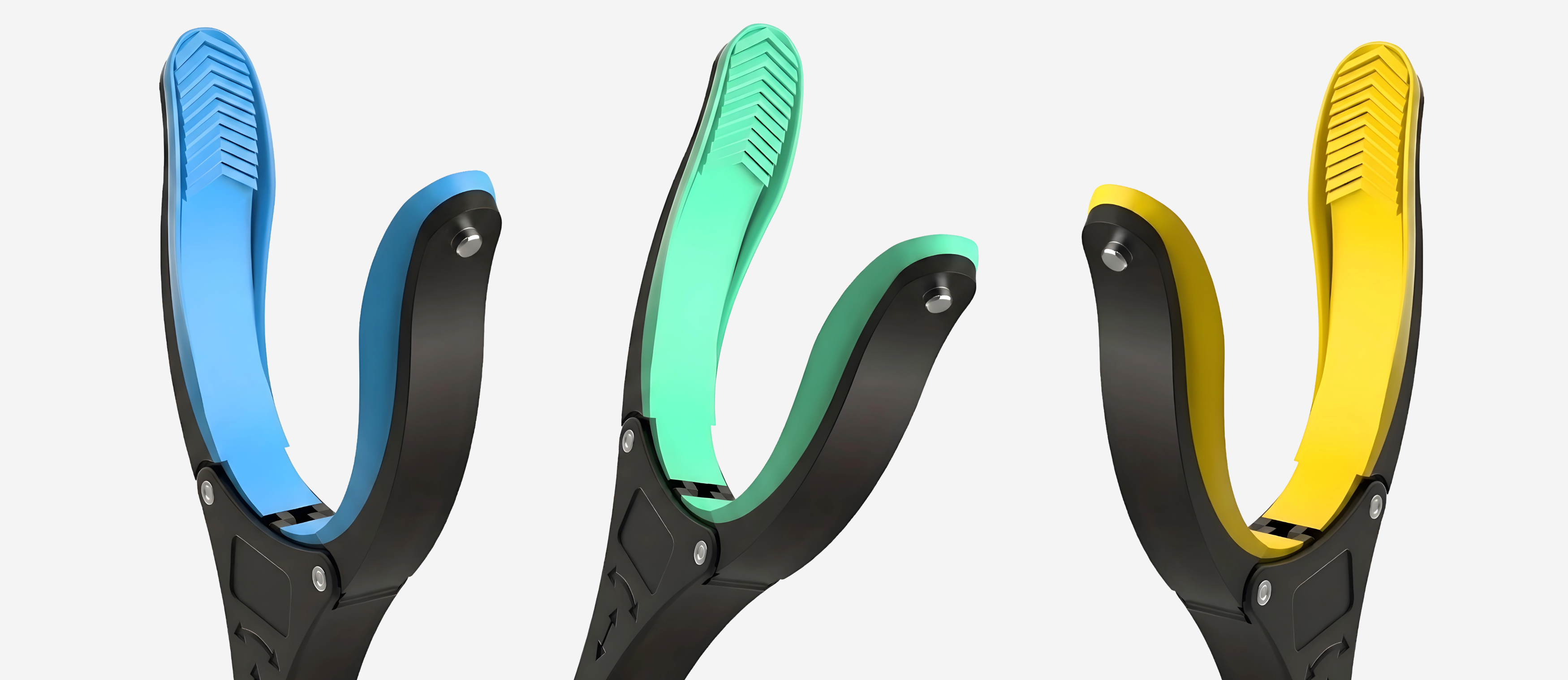
| Mixing, stabilizing, carrying, and reaching one-handed | Mixing normally uses one hand to stabilize the bowl and one to mix (the bowl spins with one hand); carrying large items normally uses two hands; stabilizing items for various tasks normally uses a second hand; reaching and retrieving items, especially when the one hand is occupied or for distant/low items, is challenging; the lack of a second hand affects mixing, carrying, stabilizing, and reaching tasks throughout the kitchen | Non-slip matting or a damp cloth under bowls to stabilize them during one-handed mixing (prevents spinning); bowls with suction bases or bowl holders; a wheeled cart to transport items (rather than carrying with one hand); slide items along counters; reacher grabber (GrabbersTool) for one-handed reaching and retrieving (extends the reach of the one functional hand for low, high, and distant items); electric appliances (food processor, electric can opener) that need only one hand to operate; kitchen organization within easy one-handed reach; occupational therapy for comprehensive one-handed kitchen technique training |
Getting Started with One-Handed Kitchen Function
- Essential first tools: Electric Jar Opener (one-handed jar opening), suction-base cutting board with prongs (one-handed cutting), and non-slip matting (stabilizing)
- Reaching support: Reacher Grabber for one-handed retrieval of low, high, and distant items
- Learn techniques: occupational therapy for one-handed kitchen technique training (especially valuable after stroke or amputation)
- Organize the kitchen: keep frequently used items within easy one-handed reach
See the Electric Jar Opener and the reacher grabber collection for essential one-handed kitchen tools.


