

Parkinson's disease adaptive equipment lists often include the same tools recommended for post-surgical recovery — and then those tools arrive and do not work as expected, because Parkinson's presents a different set of functional challenges than a hip replacement. A grabber tool that requires a sustained trigger squeeze is poorly suited to a user with resting tremor. A walking cane that demands precise placement is poorly suited to a user with festination. Understanding what Parkinson's actually does to daily task function changes which tools are worth purchasing.
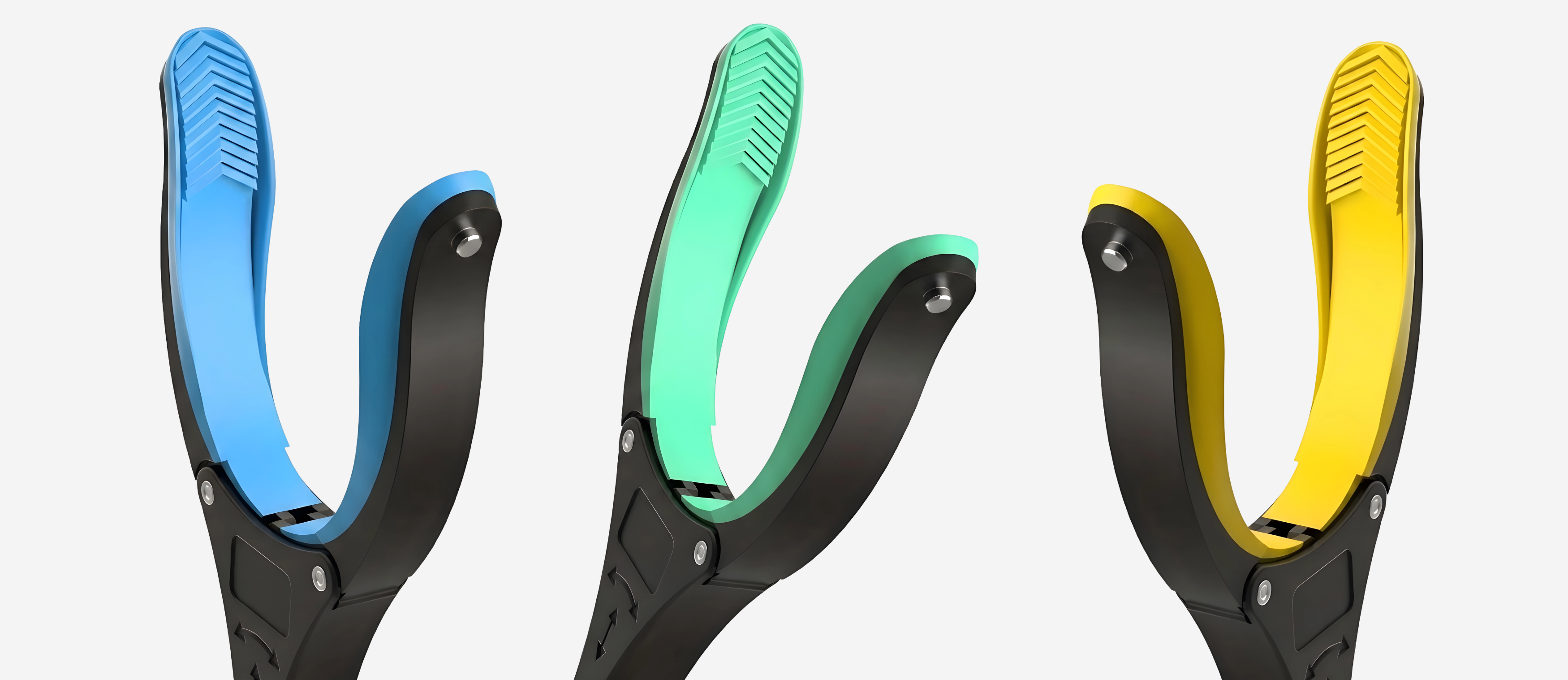
Direct answer: for people with Parkinson's disease, adaptive tools work best when they reduce the precision required for each task, not just the force or reach. A reacher grabber with a low-trigger-force mechanism and wide rubber jaw surface is more suitable than a precision-jaw model, because tremor affects fine motor control more than gross motor function. The GrabbersTool Reacher Grabber's wide jaw and low-activation trigger accommodates the tremor-affected trigger squeeze better than tools requiring precise, sustained grip force.
How Parkinson's Affects Daily Task Function
Parkinson's disease affects the dopaminergic system, producing a constellation of motor symptoms with distinct functional implications for tool use:
- Resting tremor: involuntary oscillating movement at 4–6Hz when the limb is at rest; typically reduces with intentional movement but can reappear under stress or fatigue
- Bradykinesia: slowness of movement; tasks that require rapid, coordinated motor sequences become effortful and slow
- Rigidity: increased muscle tone throughout the range of motion; reaching overhead or to floor level is restricted by stiffness rather than pain
- Postural instability: reduced righting reflexes; balance is affected especially during transitions (sitting to standing, turning)
- Freezing of gait: sudden, temporary inability to initiate or continue walking; particularly problematic at doorways and when turning
Tool Feature Requirements by Symptom
| Symptom | Task Impact | Tool Requirement | GrabbersTool Match |
|---|---|---|---|
| Resting tremor | Imprecise trigger press; object approaches with oscillation | Low trigger force; wide jaw surface to compensate for approach variability | Reacher Grabber — wide jaw, low trigger |
| Bradykinesia | Slow approach to target; task fatigue | Lightweight tool to reduce effort; no complex multi-step mechanisms | ~180g aluminum frame |
| Rigidity | Limited arm elevation; restricted rotation | Rotating jaw head to compensate for reduced wrist rotation | 360° rotating jaw |
| Postural instability | Risk during floor retrieval — forward lean destabilizes | Long reach to minimize trunk displacement; no bending required | 43" Reacher — maximum reach |
| Reduced grip force | Jar opening, can opening, bottle caps | Motorized openers eliminating grip requirement | Electric Jar Opener, Electric Can Opener |
The trigger activation force and jaw opening dimensions for GrabbersTool reacher models are detailed on the product pages — these specifications determine functional suitability for users with tremor-affected hand function. View specifications →
The Kitchen With Parkinson's: Specific Tool Implications
Parkinson's affects kitchen independence through two primary mechanisms: reduced grip force and bradykinesia that increases the time and effort required for each preparation step. The adaptive opener category is particularly relevant:
- The Electric Jar Opener requires only button activation — no grip rotation, no sustained squeeze
- The Electric Can Opener eliminates the rotary handle operation that requires coordinated bilateral movement
- The Multi-Opener 5-in-1 provides low-force opening options for bottles and caps
GrabbersTool customers with Parkinson's who use electric kitchen openers report that the kitchen independence gain is significant: the ability to prepare a meal without requiring assistance for the opening steps changes the entire meal preparation experience.
Walking Aid Considerations for Parkinson's
The GrabbersTool Walking Cane is appropriate for early-to-mid stage Parkinson's where balance is affected but freezing and festination are not yet prominent. For users experiencing freezing of gait — where the feet stop while the trunk continues forward — a four-wheel rollator walker is typically the more appropriate aid because it provides a moving cue that helps reduce freezing episodes.
For users at the cane stage, the ergonomic handle and lightweight construction of the GrabbersTool Walking Cane reduce the wrist and grip fatigue that accumulates with sustained cane use. The Cane Strap prevents the cane from falling when set down — a relevant concern when bradykinesia makes picking it back up a slow, effortful process.
What Adaptive Tools Cannot Do for Parkinson's
Honest assessment matters here. Adaptive tools reduce the functional impact of Parkinson's motor symptoms on specific daily tasks. They do not address:
- Cognitive changes (executive function, memory) associated with Parkinson's dementia
- Freezing of gait — which requires specialized walking cues (laser canes, rhythmic auditory stimulation) beyond the scope of standard mobility aids
- Voice and communication changes
- Autonomic symptoms (blood pressure regulation, swallowing)
The appropriate scope for adaptive tools in Parkinson's management is the motor symptom impact on daily living tasks — and within that scope, the tools in GrabbersTool's range address the reach, grip, and mobility components reliably.
See also: How to Prevent Falls at Home: The Room-by-Room Assessment for the fall prevention framework relevant to postural instability, and Standing Up From a Chair Without Help for the sit-to-stand challenge in Parkinson's.


