

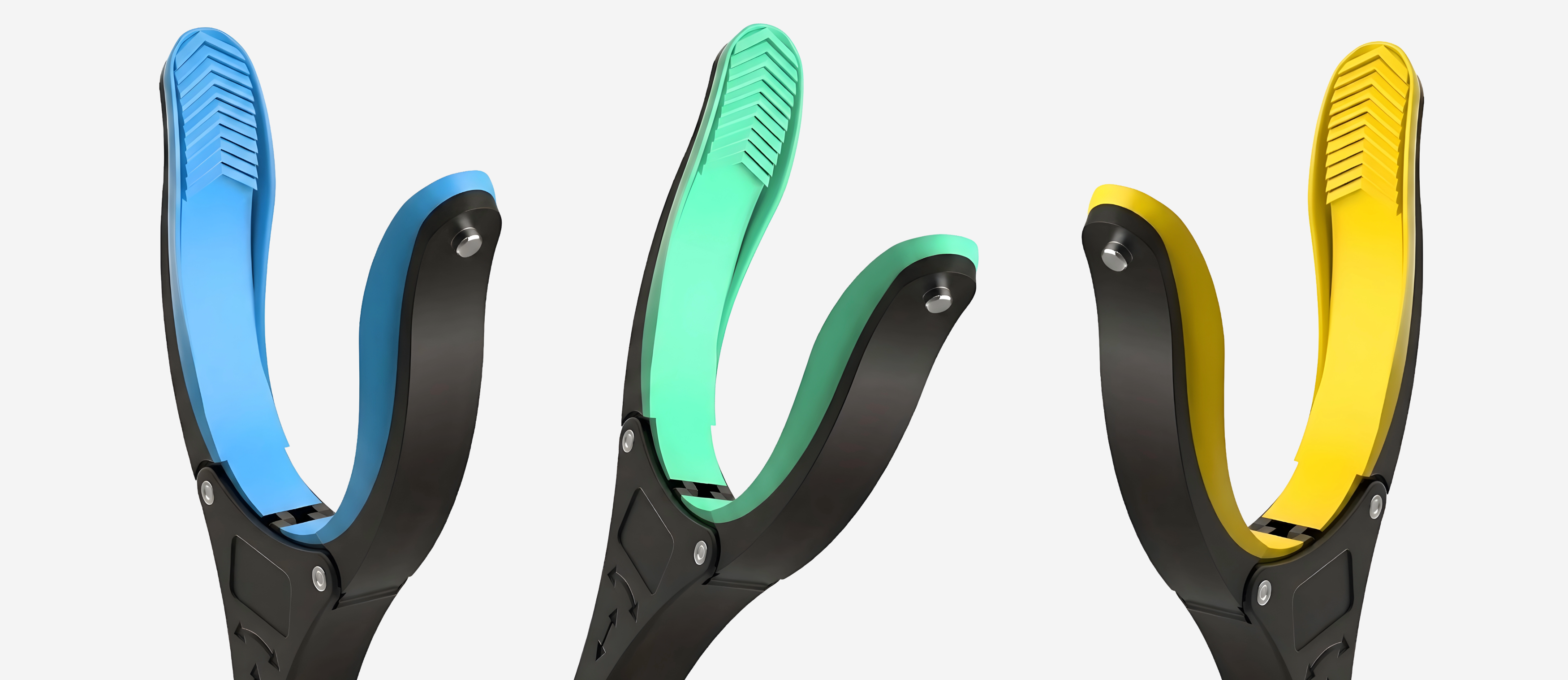
Cesarean section is the most commonly performed major surgery in the United States -- approximately 32% of all births are by C-section. The abdominal incision from a cesarean creates movement restrictions that precisely match the sternal precaution pattern from cardiac surgery: no lifting beyond the newborn weight limit, no trunk flexion at the incision, and no movements that strain the healing abdominal wall. A new mother recovering from a cesarean with a newborn in the house is navigating these restrictions while simultaneously performing the highest-demand domestic task of her life. GrabbersTool hears from postpartum women -- and from their partners who are trying to help -- who need practical kitchen tools for the first 4-6 weeks of recovery.
Direct answer: for C-section recovery, the adaptive kitchen strategy mirrors the approach for any abdominal surgery: the GrabbersTool Reacher Grabber eliminates forward trunk flexion for floor retrieval (dropped items during newborn care are extremely frequent). The Electric Jar Opener eliminates the abdominal-engagement effort of manual jar opening. The Standing Assist Tool provides arm support for the chair-to-stand transition when abdominal muscles are healing and painful.
C-Section Recovery Timeline and Adaptive Tool Use
| Recovery Week | Mobility Status | Adaptive Tool Use |
|---|---|---|
| Week 1-2: Acute recovery | Incision healing; walking slowly possible; stair limit may apply | Full reacher and electric opener strategy; avoid any bending or lifting |
| Week 2-4: Early healing | More mobile; incision still sensitive; no vigorous lifting | Continue electric openers; reacher for floor tasks to protect incision |
| Week 4-6: Healing consolidation | Returning to more normal movement; cleared for light activity | Transition away from tools gradually as physician clears activity |
| Week 6+: Medical clearance | Usually cleared for return to full activity at 6-week OB visit | Tools transition to convenience items if still useful |
Reacher grabber and electric opener specifications are on each product page. View Reacher Grabber specifications.
Dropped Items and the Newborn Household
The frequency of dropped items in a household with a newborn is dramatically higher than in a standard household: pacifiers, bottle parts, burp cloths, and small toys are dropped throughout the day and evening. For a C-section recovering mother who cannot safely bend to retrieve items, this creates a constant dependent-retrieval cycle -- calling a partner, waiting for assistance, or risking the incision by bending anyway. The reacher grabber specifically addresses this postpartum scenario: it allows safe floor retrieval of the dropped pacifier at 3am without waking the partner and without bending the healing abdomen. GrabbersTool postpartum customers consistently identify the 3am dropped-item retrieval as the highest-value use case for the reacher in C-section recovery.
Pre-Birth Preparation: Setting Up Before the C-Section
For planned C-sections (scheduled repeat cesareans, elective primary cesareans), the adaptive tool preparation can occur before the birth. GrabbersTool recommends setting up the reacher, electric opener, and standing assist at least one week before the scheduled surgery date -- ideally during the third trimester when energy is still available. The items most commonly dropped in the newborn household (pacifiers, bottle parts) should be stored at countertop height where they are accessible without bending. The hospital discharge nurse will provide sternal-equivalent precaution guidance; the adaptive tool setup translates those instructions into specific kitchen management. See also: Pregnancy and Mobility: Adaptive Tools for the Third Trimester and Postpartum.
Browse Reacher Grabber Tools, Easy Grip Kitchen Openers, and Ergonomic Mobility Solutions.


