

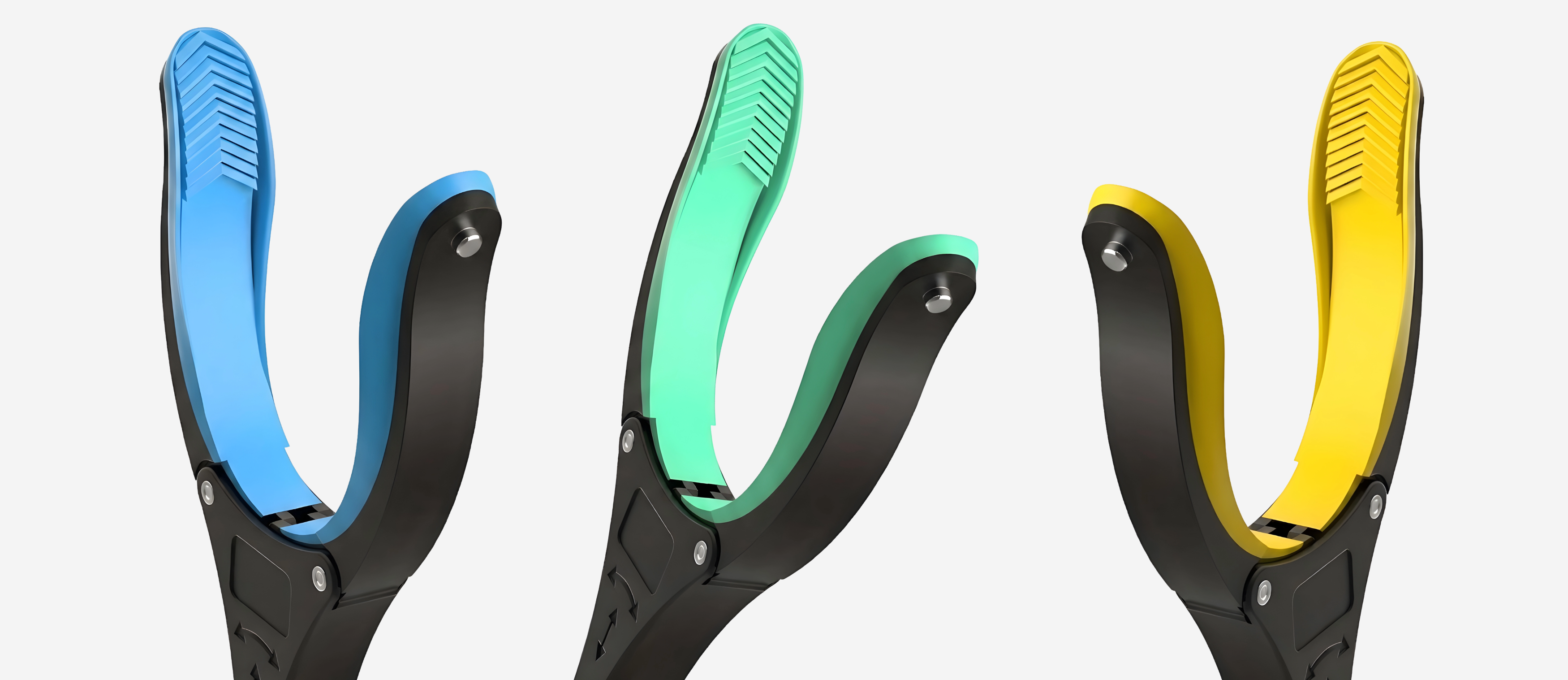
Buyers obsess over reacher length and ignore the two specifications that actually decide whether the tool holds their load. Length determines how far you reach. Weight capacity and jaw type determine whether anything stays in the jaw once you get there. The GrabbersTool support team finds that mismatched expectations almost always trace to these two overlooked specs -- a user expecting to lift something the tool was never rated for, or a jaw shape wrong for the objects they handle. Read these two correctly and the tool performs as expected.
Direct answer: Weight capacity is the maximum load the jaw and cable can reliably hold; jaw type is the shape and surface that determines which objects grip securely. Match both to the objects you actually retrieve -- everyday household items for a standard reacher, held by a rubberized jaw that adapts to varied shapes. The GrabbersTool 32-inch Reacher specifications state both clearly. This guide explains how to read them.
Weight Capacity: What It Really Means
Weight capacity is not a lifting boast -- it is a reliability boundary. A reacher grabber is designed for everyday household objects: keys, coins, paper, clothing, jars, and light bottles. Exceeding the rated capacity does not just risk a dropped item -- it strains the trigger cable, the exact component most likely to fail. The correct reading of weight capacity is a limit to respect, not a target to test. Staying within it is what keeps the tool working for years.
Jaw Types: Matching Shape to Object
The jaw is the contact patch, and its design decides which objects hold. A good general-purpose jaw is rubberized and shaped to grip diverse forms -- closing evenly on round jars, flat paper, and thin items alike. Some reachers add a rotating jaw head, which lets the grip align to objects without twisting the wrist -- valuable for wrist arthritis and awkward angles. The jaw type should match the range of objects you handle daily.
The Two Specs, Explained (Fact / Metric / Insight)
| Specification | What It Controls | How to Read It |
|---|---|---|
| Weight capacity | The maximum reliable load before grip and cable strain | A limit to stay within, matched to everyday household objects |
| Jaw surface | Grip friction on the object | Rubberized surfaces hold diverse shapes without slipping |
| Jaw shape | Which object forms grip securely | An adaptive jaw closes evenly on round, flat, and thin items |
| Rotating jaw head | Grip alignment without wrist twist | Valuable for wrist arthritis and awkward retrieval angles |
The full weight capacity and jaw specifications for each model are on the GrabbersTool 32-inch Reacher page and across the reacher grabber collection.
How to Match the Specs to Your Use
- List your real objects. If you retrieve keys, clothing, jars, and light bottles, a standard reacher capacity fits -- the 32-inch Reacher covers everyday household use.
- Consider your wrist. If wrist arthritis or awkward angles are a factor, a rotating jaw head reduces the twisting strain.
- Do not plan to exceed capacity. If you need to move heavy loads, a reacher is the wrong tool -- use a cart or ask for help, and keep the reacher for what it is rated to hold.
The Specification Rule
Length gets you there; weight capacity and jaw type decide what stays in the jaw. Read both before buying, match them to the objects you actually handle, and the reacher performs exactly as expected. The complete specifications are on the GrabbersTool 32-inch Reacher and 43-inch Reacher pages.


