

When an occupational therapist prepares a patient for discharge after hip replacement surgery, they typically hand over a printed list. It contains seven items. Most patients buy two or three of them and discover the rest by trial and error over the following weeks. This guide is that list — with the reasoning behind each item and the order in which each becomes relevant during recovery and daily life.
All seven tools address specific functional gaps that occur when bending below 90°, gripping with full force, or reaching above shoulder height becomes difficult or contraindicated.
Tool 1: Reacher Grabber (32" or 43")
When you need it: Day 1 of recovery, and indefinitely for anyone with back pain, limited mobility, or reaching limitations.
What it solves: Floor retrieval, overhead reaching, dressing, laundry transfer, item pickup without bending.
GrabbersTool recommendation: The 32" model for most people; the 43" model for users over 5'9" or wheelchair users.
Why it comes first: It has the widest functional coverage of any single item on this list. Every other tool solves one specific task. The reacher grabber solves dozens.
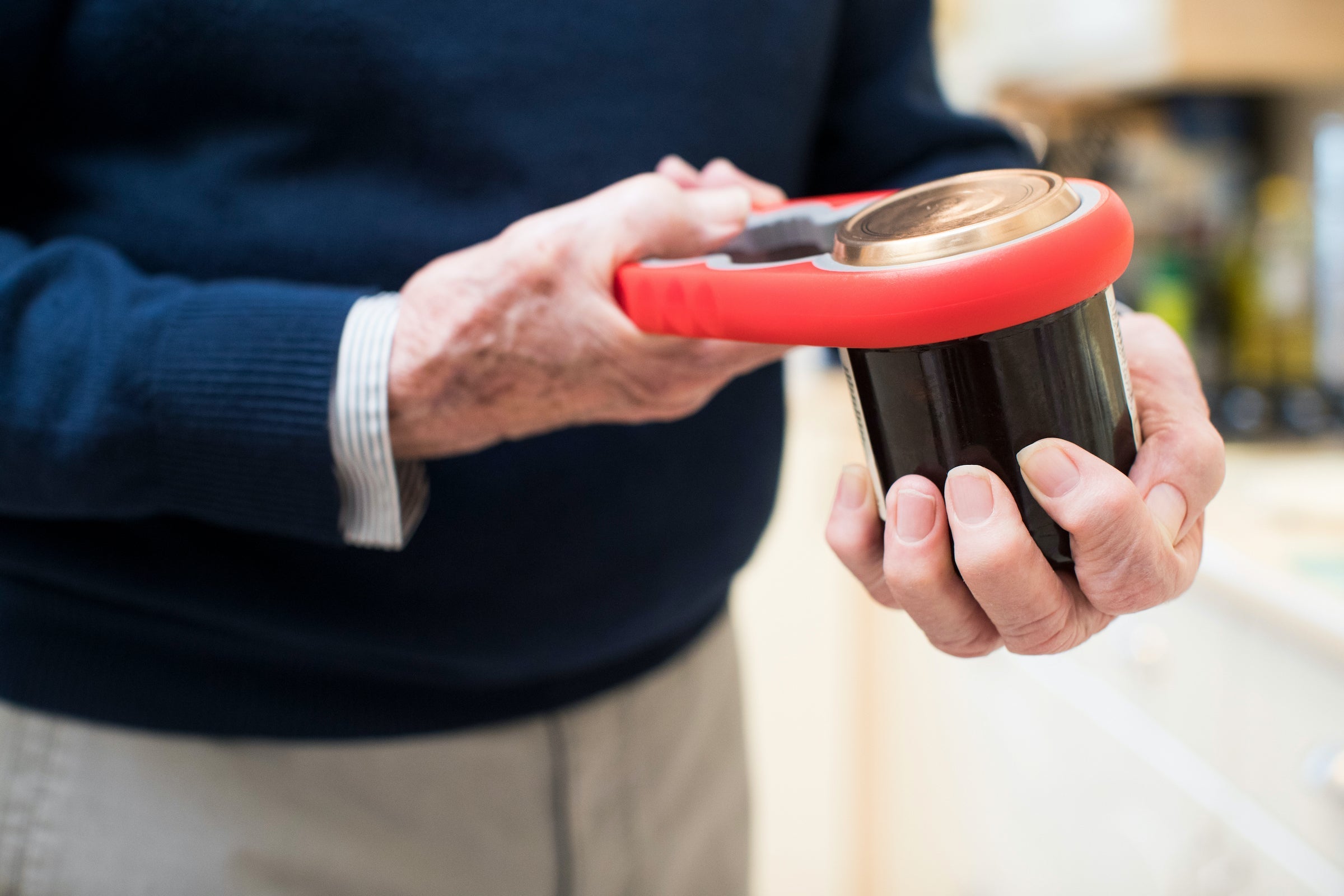
Tool 2: Electric Jar Opener
When you need it: The first time you try to cook independently and encounter a vacuum-sealed jar.
What it solves: Jar opening with zero grip, zero wrist rotation, zero pain.
GrabbersTool recommendation: The Electric Jar Opener — one button, auto-stop, works on all standard lid sizes.
Why it matters: Jar opening requires simultaneous grip strength and rotational force — two of the first capabilities affected by arthritis, surgery recovery, or age-related grip decline. A manual workaround does not exist at zero hand strength.
Tool 3: Multi Opener 5-in-1
When you need it: Every day. Bottle caps, pull tabs, ring pulls, and sealed packages are daily kitchen events.
What it solves: Five opening tasks with one lightweight tool that requires minimal grip.
GrabbersTool recommendation: The Multi Opener 5-in-1 — handles jars, bottle caps, pull tabs, ring pulls, and safety seals.
Why it comes before an electric can opener: Pull tabs and ring pulls cannot be opened electrically. This tool fills the gap.
Tool 4: Standing Assist Tool
When you need it: The first time you sit in a low sofa or chair and realize getting up requires more force than your legs can generate safely.
What it solves: Safe standing from low furniture with a stable handle, no wall mounting, no installation.
GrabbersTool recommendation: The Standing Assist Tool — portable, non-slip base, works on carpet and hard floors.
Why not just a grab bar: A grab bar requires drilling and is fixed to one location. The standing assist tool moves room to room and works in rental properties.

Tool 5: Electric Can Opener
When you need it: When you realize manual can opening requires simultaneous piercing, rotating, and gripping — three movements that are painful post-surgery or with arthritis.
What it solves: One-touch can opening with no wrist rotation and no grip strength required.
GrabbersTool recommendation: The Electric Can Opener — auto-stop, smooth edge cut, one-touch operation.
Note: This is a daily-use item for anyone who cooks regularly. The smooth-edge cut also eliminates the sharp-lid injury risk.
Tool 6: Ergonomic Peeler
When you need it: When cooking requires peeling vegetables and a standard peeler concentrates painful pressure on two finger joints.
What it solves: Vegetable peeling with a wide, cushioned handle that distributes force across the palm — reducing hand fatigue by an estimated 40–60% compared to standard peeler handles.
GrabbersTool recommendation: The Ergonomic Peeler with built-in peel collector and ultra-sharp stainless blade.
Tool 7: Walking Cane With Strap
When you need it: When transitioning from a walker to independent walking, or when balance support is needed for longer distances.
What it solves: Stability during walking, with the strap preventing drops when both hands are needed.
GrabbersTool recommendation: The Walking Cane paired with the Cane Strap — the strap prevents the cane from falling when you reach for something or sit down.
Why the strap matters: A dropped cane is a fall risk. Without a wrist strap, the cane falls every time both hands are used — opening a door, carrying groceries, sitting down.

The Full Kit: Cost and Priority
| Tool | GrabbersTool Product | Price | Priority | First Needed |
|---|---|---|---|---|
| Reacher Grabber | 32" or 43" | $35.99–$45.99 | 1 — Essential | Day 1 |
| Standing Assist Tool | Standing Assist | $47.99 | 1 — Essential | Day 1 |
| Electric Jar Opener | Electric Jar Opener | $55.99 | 2 — High | Week 1 |
| Multi Opener 5-in-1 | Multi Opener | $27.99 | 2 — High | Week 1 |
| Electric Can Opener | Electric Can Opener | $39.50 | 3 — Standard | Week 2 |
| Ergonomic Peeler | Ergonomic Peeler | $23.99 | 3 — Standard | Week 2 |
| Walking Cane + Strap | Cane + Strap | $109.49 | 4 — As needed | Week 3–4 |
Total full kit: $340.94. The cost of one week in assisted living: $1,500–$4,000+. The tools do not replace care — they extend the window before it is needed.
Browse the complete Reacher Grabber Tools, Kitchen Adaptive Tools, and Ergonomic Mobility collections at GrabbersTool.com. All orders ship free with a 30-day return policy.


