

Adaptive kitchen tools solve specific functional problems. The mistake most people make when purchasing adaptive equipment is buying based on their diagnosis rather than their actual kitchen limitation. Two people with rheumatoid arthritis may have completely different kitchen problems: one struggles with jar opening (hand involvement) while the other struggles with floor retrieval (hip and knee involvement). This guide maps the 10 most common kitchen independence problems to the specific adaptive tools that address them -- regardless of what condition is causing the problem.
The 10 Most Common Kitchen Independence Problems and Their Solutions
| Problem | Who Has This Problem | Adaptive Tool Solution |
|---|---|---|
| 1. Cannot open jar lids | Arthritis, grip weakness, carpal tunnel, post-surgery (any type), neurological conditions affecting hands, chemotherapy neuropathy | Electric jar opener -- eliminates grip, pinch, and wrist rotation requirements entirely; see the GrabbersTool Electric Jar Opener |
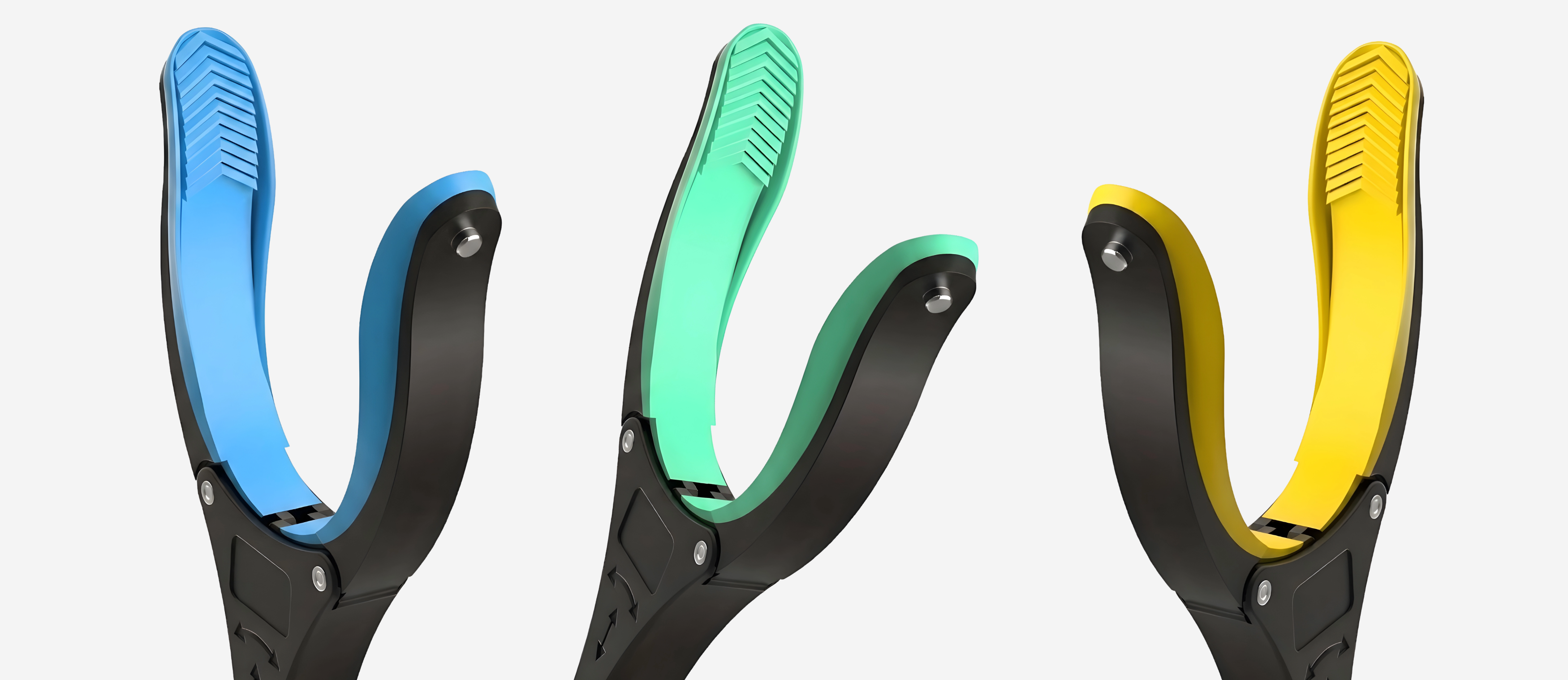
| 2. Cannot bend to floor to pick up dropped items | Hip replacement (precautions), hip and knee OA, lumbar surgery, spinal stenosis, pregnancy, obesity | Reacher grabber (32-inch for ambulatory users); see the GrabbersTool 32-inch Reacher |
| 3. Cannot reach floor items from wheelchair | Any condition requiring wheelchair mobility -- SCI, MS, muscular dystrophy, stroke, advanced OA | Extended reacher (43-inch); see the GrabbersTool 43-inch Reacher |
| 4. Cannot stand for prolonged cooking | COPD, CHF, POTS, knee OA, plantar fasciitis, hip OA, chronic fatigue, post-surgery recovery | Bar stool or counter-height perch; seated cooking strategy; electric jar opener to reduce per-task time |
| 5. Cannot carry heavy pots and pans | Post-cardiac surgery (sternal precautions), shoulder replacement, post-abdominal surgery, weakness from any cause | Lightweight cookware; cup-to-cup liquid transfer instead of lifting full pots; electric kettle at counter height |
| 6. Cannot use one arm in the kitchen | Stroke (hemiplegia), above-elbow amputation, brachial plexus injury, shoulder replacement with precautions | Electric jar opener (one-hand operation); suction-base cutting boards and stabilizers; one-handed kitchen strategy with OT training |
| 7. Dropping items due to grip weakness or numbness | Peripheral neuropathy, carpal tunnel syndrome, MS hand weakness, essential tremor, Parkinson disease | Electric jar opener; built-up handle utensils; non-slip mats; lightweight cookware with two handles for safer transport |
| 8. Cannot reach overhead cupboards safely | Frozen shoulder, short stature with balance limitation, falls risk in older adults, post-shoulder surgery | Reacher grabber for overhead reach; reorganize kitchen to store all frequent items below shoulder height |
| 9. Cannot open lids and packages with sore or painful hands | Rheumatoid arthritis, psoriatic arthritis, hand OA, gout flare, hand burns, Dupuytren contracture | Electric jar opener; automatic can opener; packaging scissors with spring-assist return; bottle opener tools |
| 10. Kitchen fatigue causing early stopping before meal is complete | Chronic fatigue syndrome, cancer fatigue, CHF, COPD, fibromyalgia, dialysis fatigue, post-chemotherapy | Energy conservation strategy: seated cooking, electric jar opener, batch cooking on good days, simple meals on bad days |
Start with the tools that solve your specific problems: the Electric Jar Opener, the 32-inch Reacher, and the 43-inch Reacher. Browse the complete adaptive kitchen collection.


