

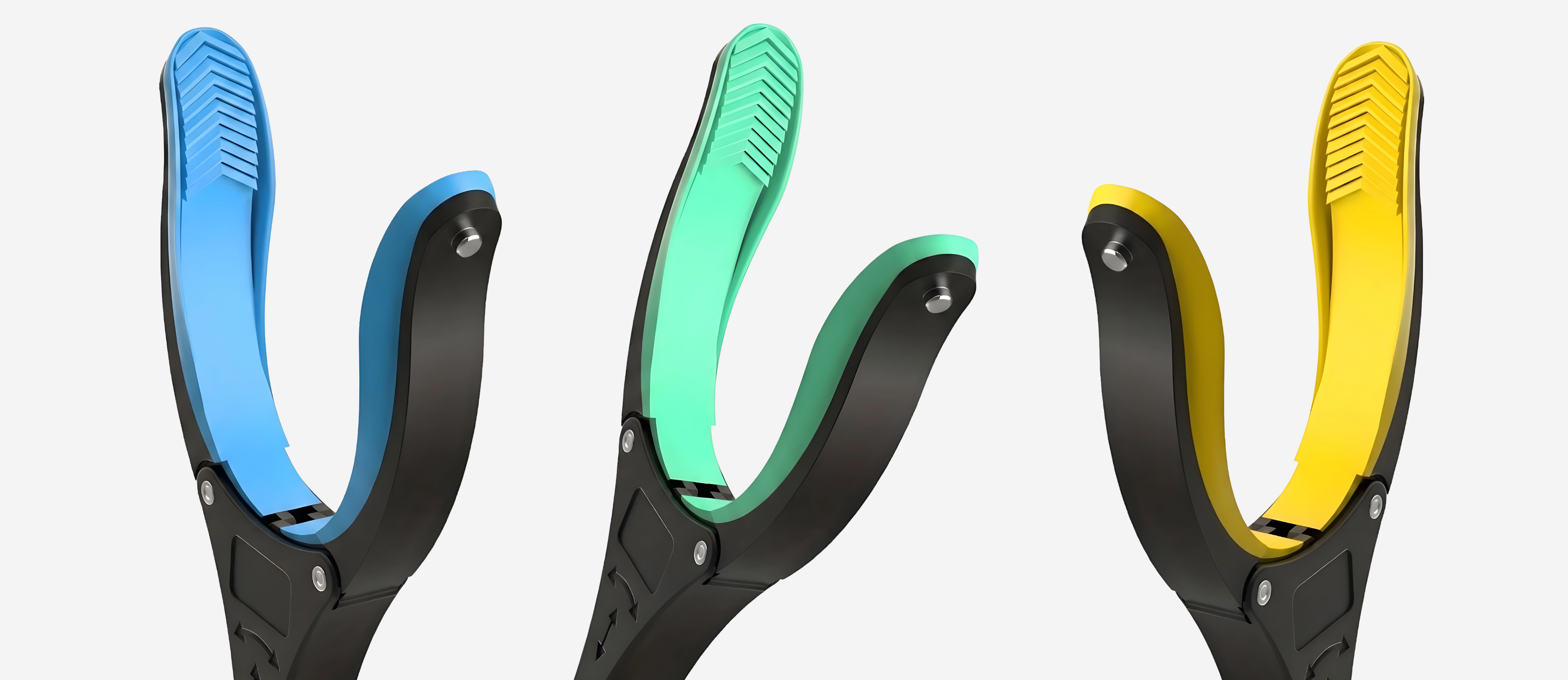
The price range for reacher grabbers spans from approximately $8 to $45, with meaningful quality differences at different price points. This price spread can make the decision feel like a simple value calculation, but for someone who depends on a reacher daily as a mobility aid, the failure of a $10 reacher is not a $10 problem -- it is a gap in the functional independence that the tool was providing, potentially on a day when the alternative (bending) is exactly what the person cannot safely do. Understanding the specific construction differences that drive durability explains why quality matters for daily-use adaptive tools.
Direct answer: Cheap reacher grabbers fail at three specific points: (1) the internal cable that operates the jaw frays or pulls out of its anchor at the handle end -- this is the most common failure mode and is caused by use of single-strand wire rather than braided cable; (2) the jaw pivot pin loosens or cracks because it is plastic rather than metal; and (3) the shaft bends because it is thin-wall steel or polycarbonate plastic rather than anodized aluminum. The GrabbersTool Reacher uses braided stainless cable, metal jaw pivot, and aluminum shaft construction.
Cheap vs Quality Reacher: Specific Construction Differences
| Component | Cheap Reacher | Quality Reacher | Failure Mode |
|---|---|---|---|
| Jaw cable | Single-strand steel wire | Braided stainless steel cable | Single wire frays at flexion point; braided cable distributes flex stress across multiple strands |
| Jaw pivot | Plastic pin in plastic body | Metal pin in reinforced plastic or metal body | Plastic pivot loosens with use and fails under lateral load |
| Shaft material | Thin-wall steel tube or rigid plastic | Anodized aluminum tube | Steel bends at lower force than aluminum; plastic shatters under lateral stress |
| Handle construction | Single-piece injection-molded plastic | Multi-component with grip insert | Single-piece handles crack at stress concentration points under regular grip force |
| Jaw pad material | Standard foam or bare plastic | Medical-grade foam or non-slip rubber | Standard foam compresses and loses grip; rubber and medical foam maintain performance |
When Cheap Is Acceptable
A $10 reacher is acceptable for very occasional use: reaching behind the sofa for the remote, getting something off a high shelf a few times a month. At that use frequency, the single-wire cable may last for years. The quality issue applies to daily-use mobility aid applications: when the reacher is used 5-15 times per day, the cable accumulates flexion cycles rapidly, and single-strand wire failure is a matter of weeks to months, not years.
The GrabbersTool 32-inch Reacher and 43-inch Reacher are built for daily mobility aid use. Browse the full reacher collection.


