

Cooking from a wheelchair is not a compromise of the cooking experience -- it is a different technique with its own methods and tools. GrabbersTool works with wheelchair users who are fully active home cooks and who have developed efficient kitchen workflows that would surprise people who assume wheelchair use inherently limits kitchen participation. The key insights: counter height and roll-under clearance determine which standard kitchen is usable without modification; adaptive tools extend accessible reach and handle specific task adaptations; and technique adjustments (thinner cutting boards, front-of-counter appliance placement, adapted grip methods) complete the picture. This article covers all three dimensions.
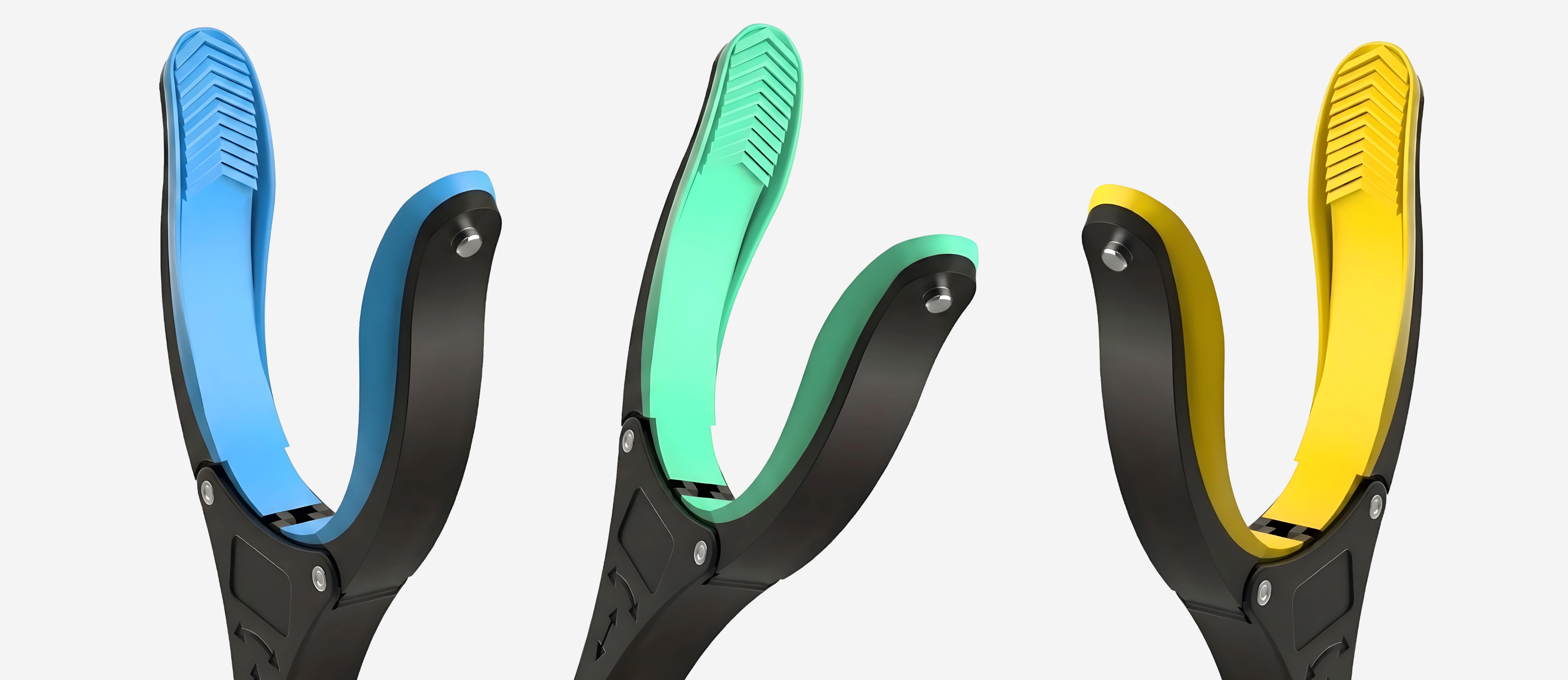
Direct answer: for cooking from a wheelchair, the primary adaptive tools are the GrabbersTool 43 inch Reacher Grabber (upper cabinet and floor access from seated position), the Electric Jar Opener and Electric Can Opener (positioned at front counter within seated reach), and the 5-in-1 Multi-Opener for compact portable opening on the counter. Full kitchen participation from a wheelchair additionally requires counter clearance at seated height (30-32 inch clearance) -- this is a home modification dimension outside GrabbersTool scope but essential for the complete setup.
Kitchen Layout Requirements for Wheelchair Cooking
Before adaptive tools, the kitchen environment itself must provide the physical access that the wheelchair user needs:
- Roll-under knee clearance: 29-32 inches of clearance beneath the work surface allows the wheelchair user to approach the counter directly and work close to the surface
- Counter height: 28-32 inches from floor -- lower than the standard 36 inches -- allows work-surface access from a seated position
- Stove and sink access: induction cooktop and roll-under sink are the most accessible configurations
- Pathway width: 36 inches minimum between parallel counters; 60 inches for a U-shaped kitchen with wheelchair turning radius
These are construction-level requirements. For renters or people in standard kitchens without modifications, the adaptive tool strategy compensates partially -- but full kitchen participation from a wheelchair is substantially easier in a modified kitchen.
Adaptive Tools for Wheelchair Kitchen Use
| Cooking Task | Wheelchair-Specific Challenge | Adaptive Solution |
|---|---|---|
| Upper cabinet access | Above wheelchair reach envelope | 43 inch Reacher Grabber |
| Floor-level access (dropped items) | Not reachable from wheelchair without transfer | 43 inch Reacher -- essential; no floor access without it |
| Jar opening | Counter stabilization possible; rotation more difficult if one hand occupied with chair control | Electric Jar Opener -- one-hand operation, no stabilization needed |
| Can opening | Same as jar -- countertop placement, single-hand limitation | Electric Can Opener |
| Bottle and cap opening | Counter stabilization usually possible | 5-in-1 Multi-Opener for all cap types at counter height |
Electric opener and reacher specifications are on the product pages. View Electric Jar Opener specifications
Appliance Placement for Wheelchair Cooks
Standard kitchen appliance placement often positions appliances at the rear of the counter -- out of convenient reach for standing users. For wheelchair users, the seated reach envelope is shallower (typically 10-18 inches of forward reach) than for standing users. Appliances must be positioned at the front edge of the counter within this seated reach range. GrabbersTool electric openers should be positioned as counter fixtures at the wheelchair user primary cooking position -- front edge, within comfortable arm reach. This positioning principle applies to all counter appliances: coffee maker, microwave, toaster.
One-Handed Wheelchair Cooking
Wheelchair users who have hemiplegia or unilateral upper limb involvement cook with one hand while occasionally using the wheelchair with the other. One-handed cooking technique for wheelchair users combines the one-handed kitchen principles (see the One-Handed Cooking guide) with wheelchair-specific positioning. The electric openers are particularly suited to one-handed wheelchair cooking because they complete the task without bilateral stabilization -- place, press, done.
Community Resources for Wheelchair Kitchen Design
The National Kitchen and Bath Association (NKBA) provides universal design guidelines for accessible kitchen renovation. Certified aging in place specialists (CAPS) can assess and design wheelchair-accessible kitchen modifications. Independent living centers often offer consultation on kitchen accessibility design. GrabbersTool tools serve the current-state kitchen; the renovation resources address the structural changes that make full wheelchair kitchen participation possible without adaptive tool compensation.
See also: Wheelchair User Kitchen Setup: Adaptive Tools for Counter Height and Reach and One-Handed Cooking: Complete Techniques for One-Handed Kitchen Independence.
Browse Reacher Grabber Tools, Easy Grip Kitchen Openers, and Long Reach Grabber Tools.


