

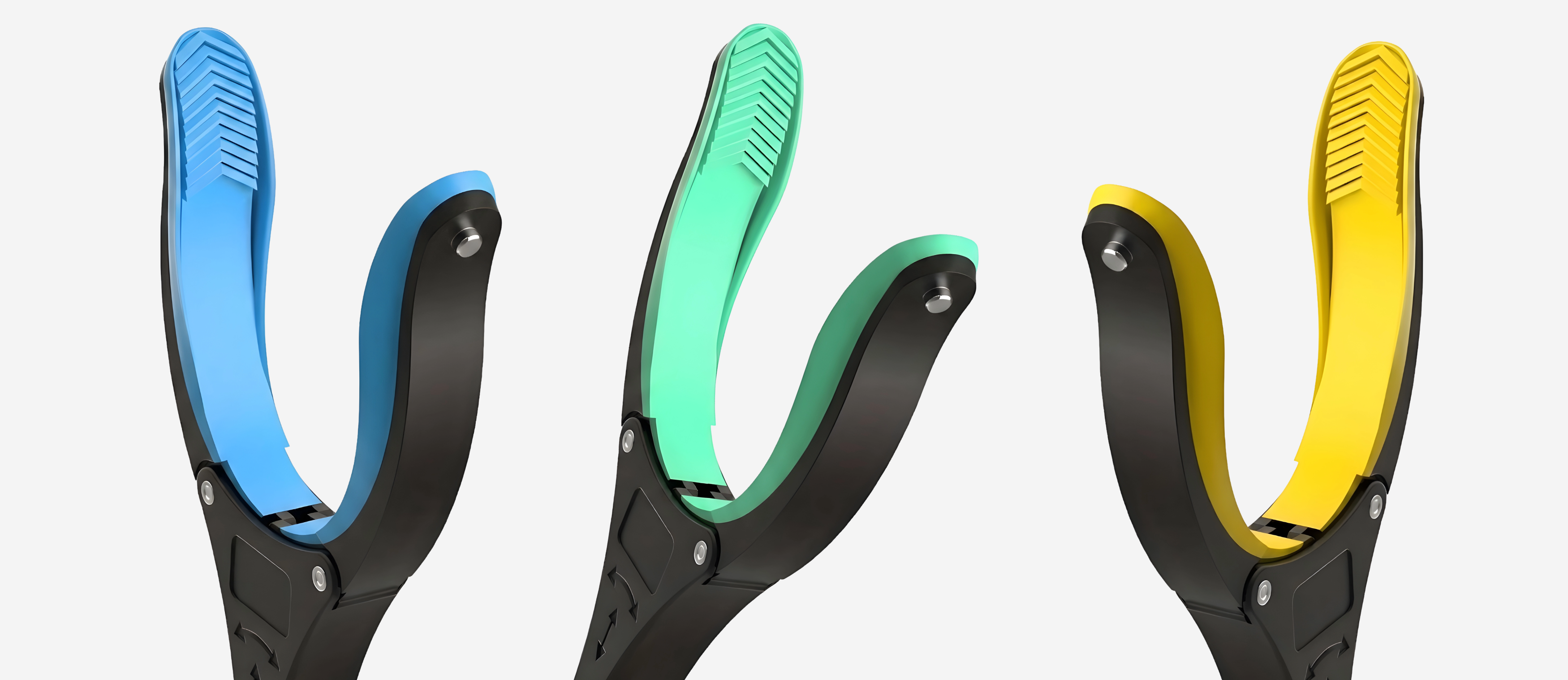
The grabber tool is one of those products that gets used every day without a second thought — until the jaw spring weakens to the point where it no longer holds objects reliably, or the rubber pads wear smooth and grip becomes inconsistent. At that point, the failure is experienced as a sudden decrease in tool reliability rather than a gradual degradation — which is how intermittent grip failure works. Understanding the wear pattern of a reacher grabber allows users to maintain it before failure occurs, rather than replacing it after it has already let an object drop.
Direct answer: the three components of a reacher grabber that degrade with use are the jaw spring (which weakens over time, reducing jaw return force and grip strength), the rubber jaw pads (which wear smooth, reducing friction), and the trigger pivot mechanism (which can develop play that reduces jaw closure precision). GrabbersTool reacher models are designed for long-term daily use; the jaw spring and rubber pads are the primary maintenance points. Cleaning the rubber pads and checking spring return force monthly, and replacing the tool when spring force noticeably decreases, maintains reliable performance.
The Three Wear Components
1. Jaw spring
The spring that returns the jaw to open position after trigger release is the highest-wear component of the reacher. It undergoes compression-extension cycles every time the tool is used. Spring fatigue produces a gradual reduction in return force — the jaw opens more slowly and eventually fails to return fully to open position without the user manually opening it.
2. Rubber jaw pads
The non-slip rubber surfaces that contact gripped objects wear down with use — particularly when used on abrasive surfaces (concrete floor, rough stone, outdoor terrain) or when gripping hard metal objects repeatedly. As the rubber surface becomes smoother, grip reliability on smooth objects decreases. This is the most common cause of objects slipping from a jaw that closes completely but cannot maintain grip during the return movement.
3. Trigger pivot
The pivot point where the trigger connects to the jaw mechanism can develop play with extended use — producing a small amount of lost motion where trigger compression begins but jaw closure has not yet started. This reduces the precision of jaw closure and the user's ability to apply controlled grip force.
Maintenance Schedule and Actions
| Component | Check Frequency | What to Check | Action |
|---|---|---|---|
| Rubber jaw pads | Monthly | Surface texture — still grippy or becoming smooth? | Clean with damp cloth; replace tool if smooth |
| Jaw spring return | Monthly | Does jaw open fully and promptly after trigger release? | If slow or partial return — spring weakening; replace tool |
| Trigger pivot | Quarterly | Any looseness or play in trigger before jaw movement begins? | Minor play is normal; significant play indicates pivot wear |
| Full jaw and rotating head | After outdoor or wet use | Any debris, grit, or moisture in the mechanism? | Wipe with damp cloth; allow to dry before storage |
| Shaft | Monthly | Any bends, cracks, or deformation? | A bent shaft indicates overload; assess jaw for damage too |
GrabbersTool publishes the jaw spring force specifications and expected service life for each reacher model on the product pages. These specifications serve as the baseline for assessing whether the spring return force during use has declined below reliable operating range. View 32" model → | View 43" model →
Cleaning Procedure
Standard cleaning (weekly or as needed):
- Wipe the shaft and jaw body with a damp cloth — mild soap solution is appropriate for general cleaning
- Pay specific attention to the jaw pad surfaces — any accumulated residue (cooking oils, outdoor debris, floor grime) reduces friction and should be removed
- Rinse with a clean damp cloth — remove any soap residue from rubber surfaces
- Allow to air dry before storage — moisture in the spring mechanism accelerates oxidation
After contact with food or cooking surfaces:
- Clean immediately — cooking oils on rubber pads reduce grip significantly and can become sticky if allowed to dry
- Dish soap on a cloth is appropriate for food residue removal
After outdoor use:
- Remove any grit or soil from the jaw mechanism — grit in the spring housing accelerates wear
- Ensure the rotating head mechanism is clear of debris
When to Replace Rather Than Maintain
A reacher grabber should be replaced when:
- The jaw spring no longer returns the jaw to fully open position after trigger release
- Objects slip from the jaw during the return movement despite a firm trigger squeeze — indicating rubber pad wear past the functional threshold
- The shaft shows any deformation — a bent shaft produces unpredictable jaw approach angles
- The magnetic tip has lost significant attraction force — this indicates the magnet has degraded
- The rotating head locks or fails to rotate freely — debris accumulation or pivot wear
For a tool used several times daily during post-surgical recovery (high frequency, high consequence use), GrabbersTool recommends replacing the tool at any sign of spring weakness rather than continuing to use it with degraded reliability.
Storage: The Overlooked Factor in Tool Longevity
Storage significantly affects jaw spring longevity. A spring stored in a compressed position (jaw closed) degrades faster than one stored in the open position (jaw resting open). This means:
- Do not store the reacher with the trigger compressed — allow the jaw to rest in its natural open position
- Do not store the reacher under weight or compressed between objects
- A vertical storage position (hanging or standing in a container) is preferable to horizontal storage where the jaw may rest against a surface
See also: 7 Mistakes People Make When Using a Grabber Tool for technique guidance that also extends tool life, and Grabber Tool Magnetic Tip: What It Picks Up and When It Matters for the magnetic component.
Browse the Reacher Grabber Tools collection for current GrabbersTool models with updated specifications.


