

Charcot-Marie-Tooth disease (CMT) is the most common inherited peripheral neuropathy, affecting approximately 1 in 2,500 people. CMT is caused by mutations in genes encoding myelin proteins or axonal proteins of peripheral nerves, producing a hereditary length-dependent peripheral neuropathy that affects the feet and lower legs first (most distal), then the hands and forearms. The distal lower extremity involvement produces foot drop (weakness of ankle dorsiflexion and foot eversion), high arched feet (pes cavus) with prominent clawing of the toes, ankle instability, and progressive difficulty with balance and walking. In the kitchen, foot drop creates tripping risk (failing to clear obstacles with the toes) and ankle instability creates fall risk on hard kitchen floors. Progressive hand involvement in CMT produces distal small hand muscle atrophy (thenar and hypothenar muscle wasting), intrinsic hand muscle weakness, and sensory loss -- all of which reduce grip force and fine motor kitchen capability over time. CMT is slowly progressive, so adaptive kitchen needs increase over the years as the disease advances.
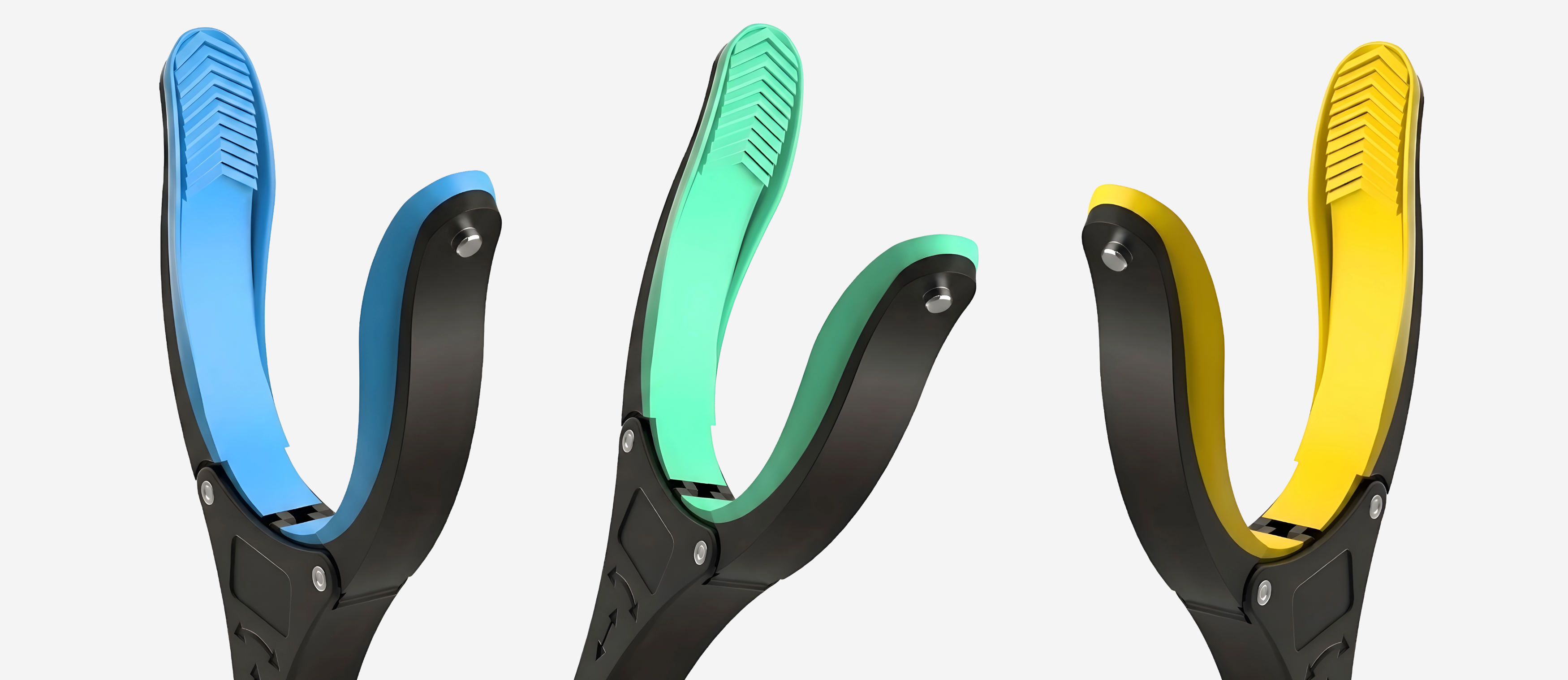
Direct answer: CMT kitchen adaptive tools address both lower extremity (foot drop, ankle instability, fall risk) and upper extremity (progressive hand weakness and intrinsic muscle atrophy) manifestations. The electric jar opener addresses progressive hand weakness (grip force loss). The reacher addresses floor-level access without the tripping and bending risk that foot drop creates. The GrabbersTool Electric Jar Opener and 32-inch Reacher address the two most common CMT kitchen functional limitations.
CMT Kitchen Adaptive Strategy by Manifestation
| CMT Feature | Kitchen Impact | Adaptive Solution |
|---|---|---|
| Foot drop and high arch (lower extremity) | Toe drag during kitchen walking creates tripping risk on kitchen floor transitions, rug edges, and any floor unevenness; kitchen throw rugs are dangerous; kitchen floor debris not cleared by foot -- toe catches on debris; ankle fatigue limits kitchen standing tolerance | AFO (ankle-foot orthosis) for kitchen use if prescribed; remove all kitchen rugs; anti-fatigue mat (smooth, non-curling edge); seated kitchen workstation for longer cooking sessions; clear kitchen floor of all debris with reacher rather than bending |
| Intrinsic hand muscle weakness (upper extremity) | Thenar and hypothenar atrophy reduces grip and pinch strength; finger extension and abduction weakened; all grip-dependent kitchen tasks progressively limited: jar opening, can opening, heavy pot handling, peeling; grip loss increases over years of CMT progression | Electric jar opener (GrabbersTool) -- motor replaces reduced intrinsic grip force; electric can opener; lightweight cookware; built-up handles to reduce required grip force; adaptive tools scaled to progressive loss as CMT advances |
| Ankle instability | CMT ankle instability on hard, smooth kitchen floors creates fall risk, especially with wet floors (spills), uneven floor transitions, or narrow kitchen spaces; ankle may give way during kitchen standing or walking | Non-slip footwear in kitchen; ankle support brace if prescribed; anti-slip floor mats at sink and stove; clear wide kitchen pathway; seated cooking option for stability |
| Sensory loss (distal feet and hands) | Temperature sensation loss in feet (similar to diabetic neuropathy) creates burn risk from hot kitchen floor surfaces; hand sensation loss impairs fine kitchen manipulation and heat detection from hot cookware | Always wear protective footwear in kitchen; visual monitoring of all hand contact with kitchen surfaces; insulated handles and oven mitts regardless of perceived heat level |
See the Electric Jar Opener and 32-inch Reacher for CMT kitchen adaptive independence as the disease progresses.


