

Hypermobility spectrum disorder (HSD) is the term for symptomatic generalized joint hypermobility that does not meet the full 2017 International Criteria for hypermobile Ehlers-Danlos syndrome (hEDS). The distinction between HSD and hEDS is clinical and definitional rather than reflecting a clear biological difference: HSD includes all patients with symptomatic hypermobility -- joint pain, instability, proprioceptive deficits, recurrent soft tissue injuries -- who do not meet the specific hEDS criteria. Functionally, many HSD patients have the same kitchen challenges as hEDS patients: joint instability with torsional kitchen tasks (jar opening subluxing the wrist or finger joints), shoulder subluxation with overhead reach, and lumbar instability with bending. The practical difference is that HSD patients may be at an earlier point in their diagnostic journey and may have milder overall connective tissue laxity than hEDS patients, but the adaptive kitchen tools recommended are identical to those for hEDS because the mechanism of kitchen joint injury (subluxation from torsional and shear forces) is the same.
Direct answer: HSD kitchen adaptive tools are identical to hEDS kitchen tools because the underlying mechanism is the same: joint hypermobility with subluxation risk during kitchen torsional tasks. The electric jar opener eliminates the forearm rotation torque and grip force that most reliably sublux hypermobile wrist and finger joints during jar opening. The GrabbersTool Electric Jar Opener is the most important HSD and hEDS kitchen adaptive tool for hand and wrist joint protection.
HSD Kitchen Joint Protection Strategy
| HSD Joint Instability Area | Kitchen Subluxation Risk | Adaptive Solution |
|---|---|---|
| Wrist and finger joints (HSD hand instability) | Manual jar opening: forearm supination torque subluxes the radiocarpal or inferior radioulnar joint; grip force on lid overloads MCP and IP joints; same mechanism as hEDS but may be milder; still painful and functionally limiting | Electric jar opener (GrabbersTool) -- eliminates all supination torque and grip force; most important HSD kitchen tool regardless of severity level |
| Shoulder (HSD glenohumeral instability) | Overhead reach into kitchen cabinets places the glenohumeral joint in the hyperabducted position where hyperlax capsular ligaments cannot stabilize; may sublux or produce pain and clunking without full dislocation | 43-inch reacher for overhead kitchen access; avoid sustained overhead positions; kinesiology tape if prescribed; shoulder stability exercises as part of HSD management program |
| Lumbar spine and sacroiliac (HSD spinal instability) | Forward bending for floor items and combined bending-twisting for kitchen low-reach tasks strain hypermobile lumbar facet joints and sacroiliac joints; recurrent episodes of SI joint locking and lumbar instability pain after kitchen bending | 32-inch reacher for all floor-level kitchen item retrieval; avoid combined bending and twisting; seated kitchen workstation for prolonged cooking; core stabilization exercises as HSD management strategy |
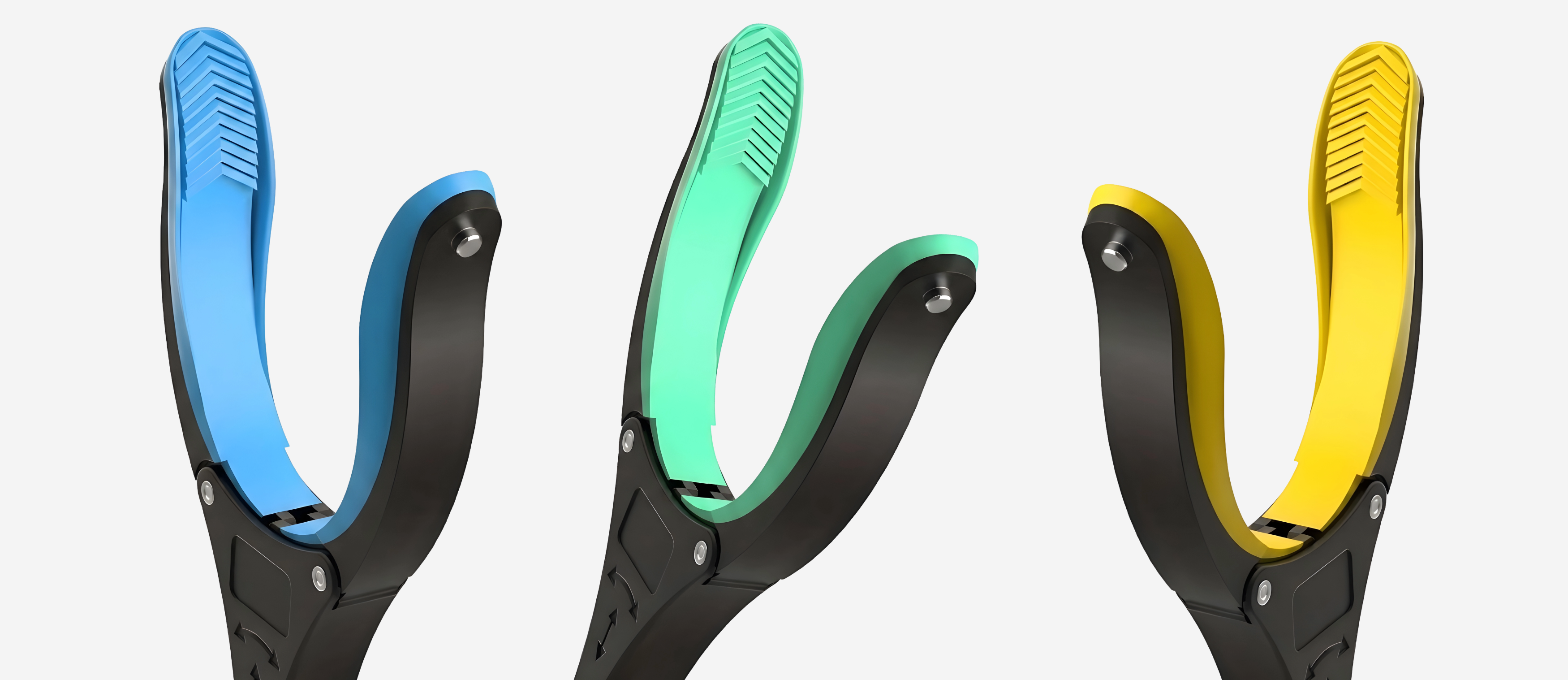
See the Electric Jar Opener, 32-inch Reacher, and 43-inch Reacher for HSD kitchen joint protection.


