

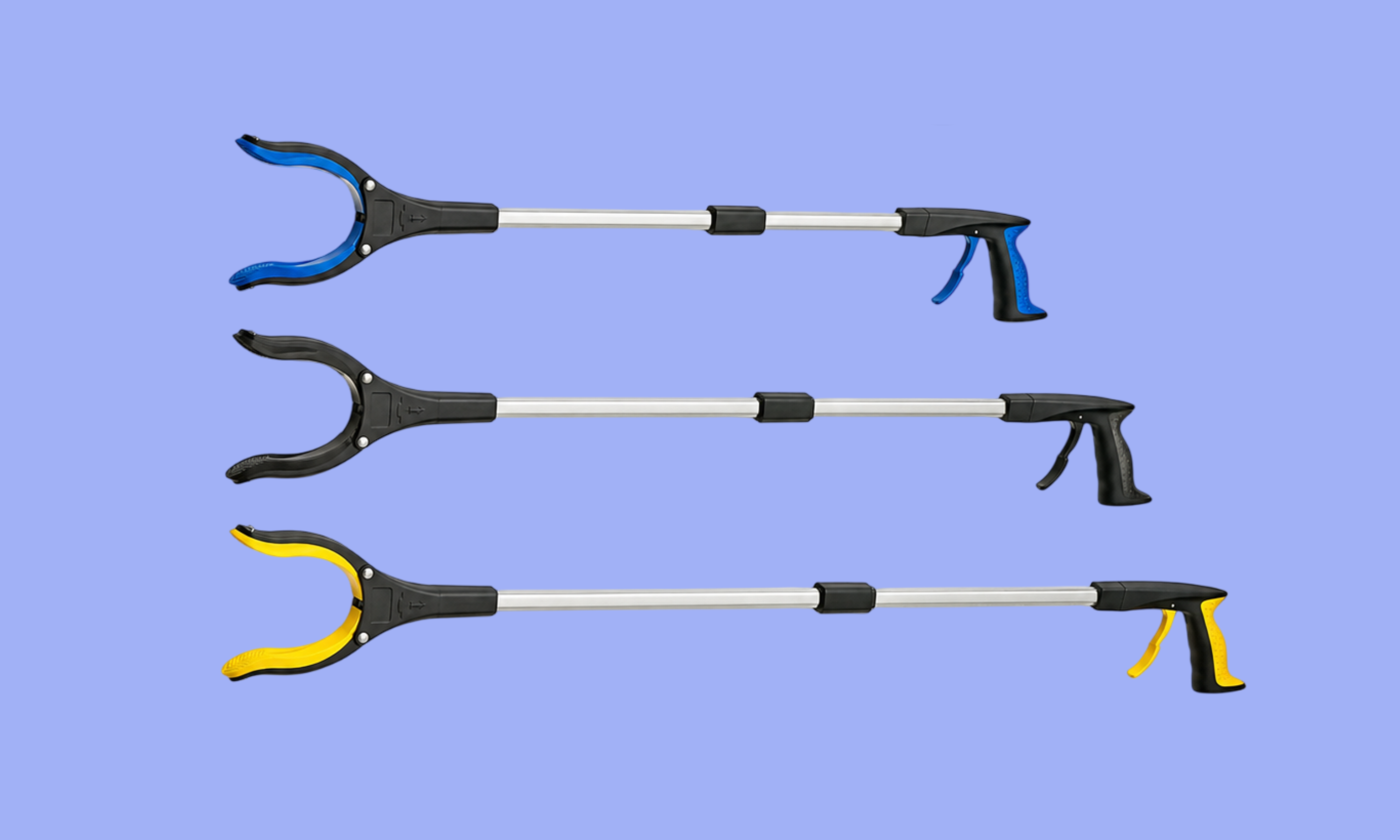
Best Grabber Tool Under $50 — Real Value for Seniors and Active Adults
Finding the best grabber tool does not have to mean spending a lot of money. Whether you are a senior managing daily independence at home or an active adult recovering from surgery, a high-quality reacher grabber tool under $50 can meaningfully change how you move through your day. This guide covers three standout models from GrabbersTool, breaks down the specs that matter, and helps you choose the right tool for your needs — confidently and without guesswork.

What Makes a Grabber Tool Worth Buying Under $50
There is a common assumption that affordable means fragile. When it comes to reacher grabber tools, that assumption is simply wrong. The $50 price point is a sweet spot in this category. At this range, manufacturers are working with durable aluminum or reinforced composite shafts, non-slip jaw pads, and ergonomic trigger handles — all the features that make a grabber tool genuinely useful day after day.
What separates a worth-buying grabber from a cheap one is not price — it is construction. A well-built grabber tool under $50 will have a jaw mechanism that closes securely without flexing, a shaft that does not bend under moderate load, and a handle that is easy to squeeze even with reduced grip strength. GrabbersTool engineers every model with exactly these priorities in mind, which is why their lineup consistently lands under $50 without cutting corners.
The $50 ceiling also matters practically. Most insurance programs and Medicare supplemental benefits that cover assistive devices set reimbursement ceilings around this range. An affordable, quality grabber tool means you get the tool you need without navigating complex out-of-pocket calculations.
The 3 Best Grabber Tools Under $50 at GrabbersTool
GrabbersTool's current lineup covers three distinct use profiles, each under $50. Here is a close look at each model — what it does well, who it is designed for, and what makes it worth choosing.
Reacher Grabber Tool 32"
- Length32 inches (~81 cm)
- Jaw TypeWide non-slip jaws
- PortabilityLightweight, easy to carry
- PriceUnder $50
Best for: Seniors and adults of average height who need a reliable daily-use grabber for home — reaching under furniture, floor pickup, low shelves.
View Product →Reacher Grabber Tool 43"
- Length43 inches (~109 cm)
- Jaw TypeWide non-slip jaws
- PortabilityLong reach, lightweight shaft
- PriceUnder $50
Best for: Taller adults, wheelchair users, and anyone who needs extra reach to access high shelves or minimize bending entirely.
View Product →Precision Grabber Tool 33"
- Length33 inches (~84 cm)
- Jaw TypeNarrow precision jaws
- PortabilityCompact, easy to manoeuvre
- PriceUnder $50
Best for: Users who frequently grip small or irregularly shaped objects — coins, pill bottles, paper, small utensils — where a wide jaw is too imprecise.
View Product →
Side-by-Side Comparison Table
Choosing between models is much easier when the key differences are laid out clearly. The table below compares all three GrabbersTool grabbers across the factors that matter most.
| Product | Length | Jaw Type | Portability | Ideal User | Price | Link |
|---|---|---|---|---|---|---|
| Reacher Grabber Tool 32" Most Popular | 32 in / 81 cm | Wide non-slip | High | Home use, seniors, average height adults | Under $50 | View → |
| Reacher Grabber Tool 43" Best Reach | 43 in / 109 cm | Wide non-slip | Medium | Taller adults, wheelchair users, max reach | Under $50 | View → |
| Precision Grabber Tool 33" Best Precision | 33 in / 84 cm | Narrow precision | High | Small object tasks, detail-focused use | Under $50 | View → |
All three models are priced under $50. The right choice comes down to your primary use case. The sections below break down the two most common user profiles in detail.
Best Grabber Tool for Seniors: What Actually Matters
For seniors, a reacher grabber tool is not a convenience item — it is a meaningful part of staying safe and independent at home. The ability to pick up a dropped item without bending over, reach something on a high shelf without straining, or retrieve an object from under the bed without kneeling can be the difference between managing confidently at home and needing assistance for tasks that should be simple.
When choosing the best grabber tool for an elderly user, four factors consistently matter most: grip handle comfort, overall weight, jaw security, and shaft rigidity. A tool that is too heavy causes fatigue quickly. A handle that requires significant squeeze force is unusable for someone with arthritis or reduced grip strength. Jaws that do not close securely lead to dropped items and frustration — precisely the outcome a grabber tool is meant to prevent.
GrabbersTool's 32-inch Reacher Grabber Tool is an ideal starting point for most seniors. Its length is appropriate for floor-to-hand retrieval for adults of average height, the trigger handle is designed to work with minimal hand strength, and the non-slip jaw pads hold securely without requiring excessive grip pressure. For taller seniors or those with greater mobility limitations, the 43-inch model adds meaningful reach without significantly increasing weight.
For a deeper look at features specifically relevant to older adults, the best grabber tool for elderly guide covers additional considerations including jaw rotation, wrist angle, and how to assess a tool's suitability for conditions like Parkinson's or severe arthritis.

When testing a grabber tool for the first time, hold it at the handle end and practice opening and closing the jaw ten times in a row. If it causes hand fatigue before ten repetitions, the spring tension is too high for your grip strength. The right tool should feel effortless with minimal squeeze force. Learn more in GrabbersTool's full guide to staying safe and independent at home.
Best Grabber Tool for Active Adults: Different Demands
Active adults — whether post-surgery patients, outdoor enthusiasts, or people managing a temporary mobility limitation — bring a completely different set of demands to a grabber reacher tool. Where seniors typically need a tool that is forgiving and low-effort, active adults often need one that is versatile, durable, and portable enough to travel or move between environments.
Post-surgery use is one of the most common reasons active adults turn to grabber tools. Hip replacement and knee surgery patients are given strict movement precautions — no bending past 90 degrees, no crossing the legs — and a reacher tool becomes essential for picking up shoes, retrieving items from the floor, and managing clothing independently. In this context, the 32-inch Reacher Grabber Tool is a strong choice for most adults. Its length covers floor retrieval without requiring bending, and it is light enough to use repeatedly throughout a recovery day without adding strain.
For active adults assessing which length suits their height and use case, the 32-inch vs 43-inch comparison guide walks through the decision in detail. If portability is a top concern — for travel, outdoor use, or moving between locations — the foldable vs non-foldable guide covers that trade-off thoroughly.
- Post-hip or knee surgery at average height → choose the 32-inch Reacher Grabber Tool
- Taller than 6 feet or using from a wheelchair → choose the 43-inch Reacher Grabber Tool
- Need to grab small items precisely (pill bottles, paper) → choose the Precision Grabber Tool 33"
- Traveling or moving between environments → check foldable model availability
- Need a long outdoor reach (garden, litter picking) → see the best long reach grabber tool guide
Active adults tend to use grabber tools under more varied and demanding conditions than seniors. The good news is that all three GrabbersTool models are built to handle this kind of use — and all remain under $50, making it genuinely practical to buy a second tool for a different environment or task.
What to Check Before You Buy: 5 Key Features
Not every grabber reacher tool on the market is worth your money. Before purchasing, run through these five features as a quick checklist. A tool that passes all five is almost certainly a good buy.
- 01 LengthMatch the tool's length to your height and primary task. A 32-inch tool is right for floor-to-hand retrieval for most adults. A 43-inch tool is better for tall individuals or those working from a seated position. Getting the length wrong means either bending when you should not, or struggling with excess shaft that is hard to control.
- 02 Jaw WidthWide jaws are better for everyday household objects — bottles, cans, remote controls, clothing. Narrow precision jaws are better for small or thin objects. Check that the jaw opening is wide enough for the largest item you plan to pick up regularly, and that the closure is tight enough for the smallest.
- 03 Jaw RotationA rotating jaw significantly expands a grabber tool's versatility. Fixed jaws can only pick up objects at a single angle. A rotating jaw lets you adapt the angle of the grab without moving your body — especially valuable for senior users and post-surgery patients with restricted movement.
- 04 WeightTotal tool weight matters more than most buyers realize. A heavier shaft causes fatigue quickly — especially for seniors using the tool many times per day. Look for aluminum or lightweight composite shafts. The best grabber tool under $50 should feel light enough to hold comfortably at full arm extension for several seconds without strain.
- 05 Grip Handle ComfortThe handle is where the user makes continuous contact with the tool. A well-designed handle will have a soft-grip or non-slip coating, a trigger mechanism that operates with low spring resistance, and a shape that does not force the wrist into an uncomfortable angle. For users with arthritis, this is the single most important feature to evaluate before buying.

To explore the full range of available models before deciding, the GrabbersTool collection page lists all current options with full specs. For users focused on maximum distance tasks, the best long reach grabber tool guide covers extended-reach scenarios in detail.
Frequently Asked Questions
What is the best grabber tool for seniors on a budget?
The best grabber tool for seniors on a budget is one that is lightweight, has a comfortable non-slip grip handle, and features non-slip jaws for secure picking. GrabbersTool's 32-inch Reacher Grabber Tool is an excellent affordable option — it is light enough for daily use, easy to grip with reduced hand strength, and priced well under $50. For seniors who need extra reach to access floor-level items without bending, the 43-inch model offers more range without sacrificing ease of use. Both tools are designed to serve elderly users in daily home settings reliably and safely.
Are grabber tools under $50 durable enough for daily use?
Yes. Grabber tools under $50 can absolutely be durable enough for daily use when they are made with quality materials and reinforced jaw mechanisms. GrabbersTool products are built with this in mind — each model is designed to handle repeated daily tasks such as picking items off the floor, retrieving objects from shelves, and assisting with dressing. The key is to choose a model with a solid shaft, secure jaw locking, and non-slip jaw pads rather than simply opting for the cheapest option available. A well-built grabber at this price point will last through years of regular daily use.
What length grabber tool is best for picking items up off the floor?
For picking items up off the floor, a 32-inch to 43-inch grabber reacher tool is ideal for most adults. A 32-inch reacher is best for users of average height, allowing them to reach the floor while standing without bending. Taller individuals or those with greater mobility limitations typically benefit from the 43-inch model, which provides extra reach without requiring any forward lean. If you are unsure which length suits you best, the detailed guide comparing the 32-inch vs 43-inch models walks through the decision based on height and specific use case.
Can I use a grabber reacher tool after hip surgery?
Yes. A grabber reacher tool is one of the most recommended assistive devices for post-hip surgery recovery. It allows you to pick up dropped items, retrieve shoes, pull up clothing, and manage daily tasks without bending past the restricted hip angle prescribed by your surgeon. Occupational therapists frequently include reacher grabber tools as part of hip precaution kits provided after surgery. Choose a lightweight model with a comfortable grip handle and a reach length that lets you operate without any bending — typically 32 to 43 inches depending on your height. GrabbersTool's home independence guide covers post-surgery use in more detail.
What is the difference between a regular grabber and a precision grabber tool?
A regular grabber tool features wider jaws designed to grip a broad range of everyday objects such as bottles, cans, clothing, and larger household items. A precision grabber tool — such as GrabbersTool's Precision Grabber Tool 33-inch — features a narrower, more refined jaw design optimized for gripping smaller or irregularly shaped objects with greater accuracy. Precision models are ideal when you need to pick up small items like coins, pills, thin paper, or small utensils without fumbling. A wide-jaw grabber would close around these items imprecisely or miss them entirely. Both types serve important roles — the right choice depends on the primary tasks you need to perform most frequently.


