

Bone metastasis changes the risk calculus of ordinary movement. A task that is inconvenient for a person with arthritis -- bending to pick up a dropped object from the floor -- may carry pathological fracture risk for a person with spinal or long-bone metastases. The load placed on weakened bone during certain positions and movements may exceed what the compromised bone can withstand. Adaptive tools in this context are not about convenience -- they are about eliminating movement patterns that create fracture risk at affected skeletal sites.
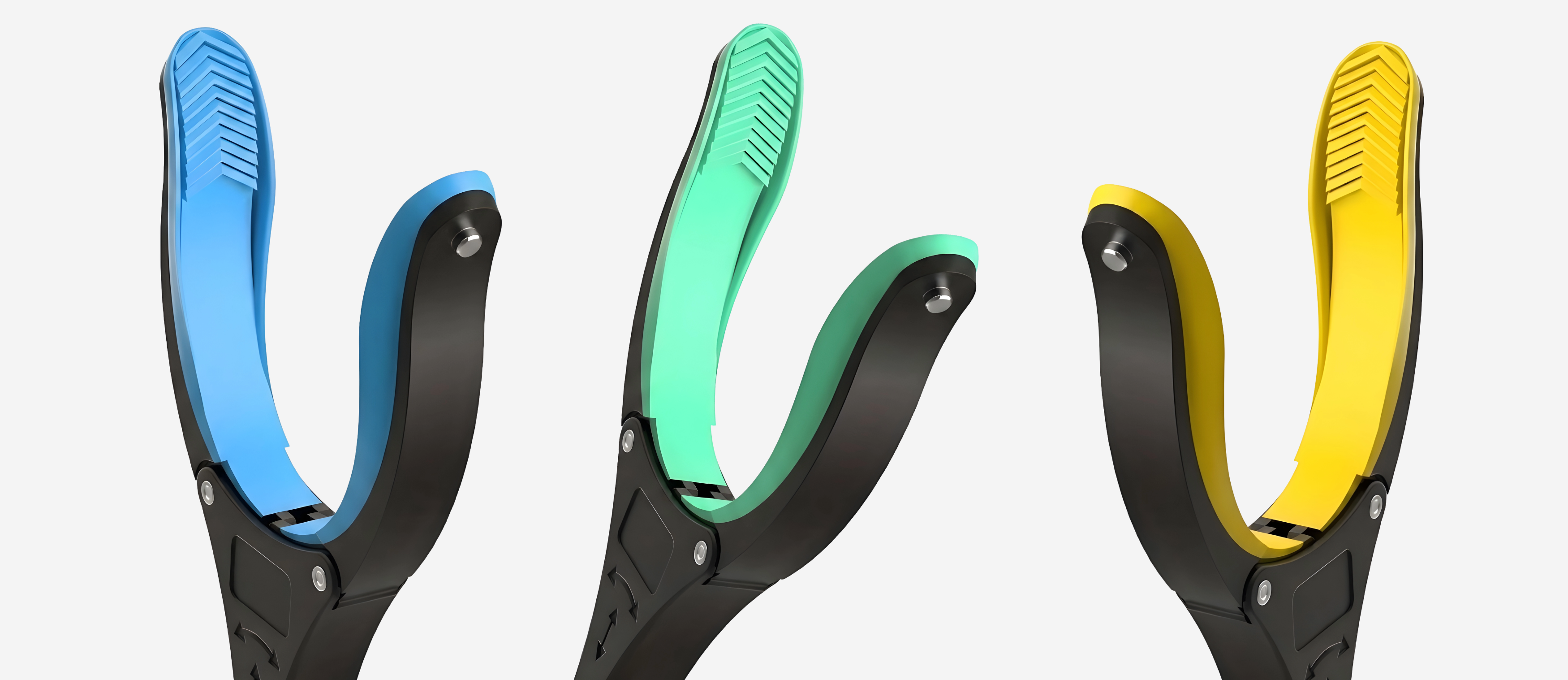
Direct answer: for people with bone metastasis, adaptive tools primarily serve fracture prevention by eliminating high-risk movement patterns. The GrabbersTool 43 inch Reacher Grabber eliminates trunk flexion and bending movements that load the spine. The Standing Assist Tool reduces torsional loading during chair-to-stand transfers. Electric kitchen openers reduce the torque applied through wrist and forearm. The specific tools required depend on which skeletal sites are affected -- this plan should be developed with the oncology or palliative care team.
Movement Patterns That Create Fracture Risk
Pathological fractures in bone metastasis occur when bone weakened by tumor involvement is loaded beyond its reduced capacity. The movements most commonly associated with pathological fracture risk include:
- Trunk flexion (bending forward): compressive load on vertebral bodies -- particularly relevant for spinal metastases
- Axial loading on compromised long bones: weight-bearing through a femur or humerus with metastatic involvement
- Rotational movements: twisting of the spine or limbs -- torsional load is particularly fracture-risky
- Sudden force: dropping into a chair, carrying heavy loads, catching a fall
- High-grip-force tasks: relevant when upper extremity bones are involved
Adaptive Tools by Skeletal Site
| Metastasis Location | High-Risk Movements to Avoid | Adaptive Tool Priority |
|---|---|---|
| Spine (vertebral) | Trunk flexion, bending, carrying weight | 43 inch Reacher Grabber -- eliminates all bending; Standing Assist Tool for transfers |
| Femur (thigh bone) | Full weight-bearing without aid, stairs without support | Walking Cane for load distribution; Standing Assist Tool |
| Humerus (upper arm) | Lifting, carrying, gripping against resistance | Electric Jar Opener, Electric Can Opener -- eliminates torque through arm |
| Ribs | Twisting, coughing with unsupported trunk, reaching across body | 32 inch Reacher Grabber for close-range tasks without cross-body reach |
| Pelvis | Weight shift, rising without arm support | Standing Assist Tool -- arm support during all transfers |
Full specifications including weight capacity and height adjustability are on the product pages. View Standing Assist Tool specifications
The Reacher Grabber as a Spinal Protection Tool
For spinal bone metastasis, trunk flexion (bending forward) is the movement pattern most associated with vertebral compression fracture risk. The 43 inch reacher grabber addresses this directly: it retrieves objects from floor level without any trunk flexion, and reaches items from lower shelves without bending. GrabbersTool customers managing spinal metastases and their caregivers identify floor-level object retrieval as the daily task most tempting to do manually -- and the highest-risk. The reacher converts a fracture-risk task into a safe one.
Caregiver Role in Movement Safety
For people with bone metastasis, caregivers often need to assist with tasks that would be independent for most people -- not because the person lacks strength or motivation, but because the movement required carries fracture risk that outweighs the independence value. Adaptive tools extend the category of tasks that can be done safely and independently, reducing caregiver burden while maintaining safety. When a person with spinal metastasis can retrieve a dropped item safely with a reacher rather than bending, both independence and safety are served.
Coordination With the Oncology Team
Adaptive tool selection for bone metastasis should be coordinated with the oncology team, palliative care team, or physical therapist with oncology experience. The specific metastatic sites, the degree of bone involvement, and whether radiation to the bone has occurred all affect which movements and load levels are appropriate. GrabbersTool tools address the mechanical side of this equation; the medical team determines the clinical parameters. The tools described here represent general principles -- they are not a substitute for individualized oncology team guidance.
See also: Cancer Treatment Fatigue and Adaptive Tools: Managing Chemotherapy Side Effects and Osteoporosis and Fracture Prevention: Adaptive Tools That Reduce Fall Risk.
Browse Reacher Grabber Tools, Ergonomic Mobility, and Easy Grip Kitchen Openers.


