

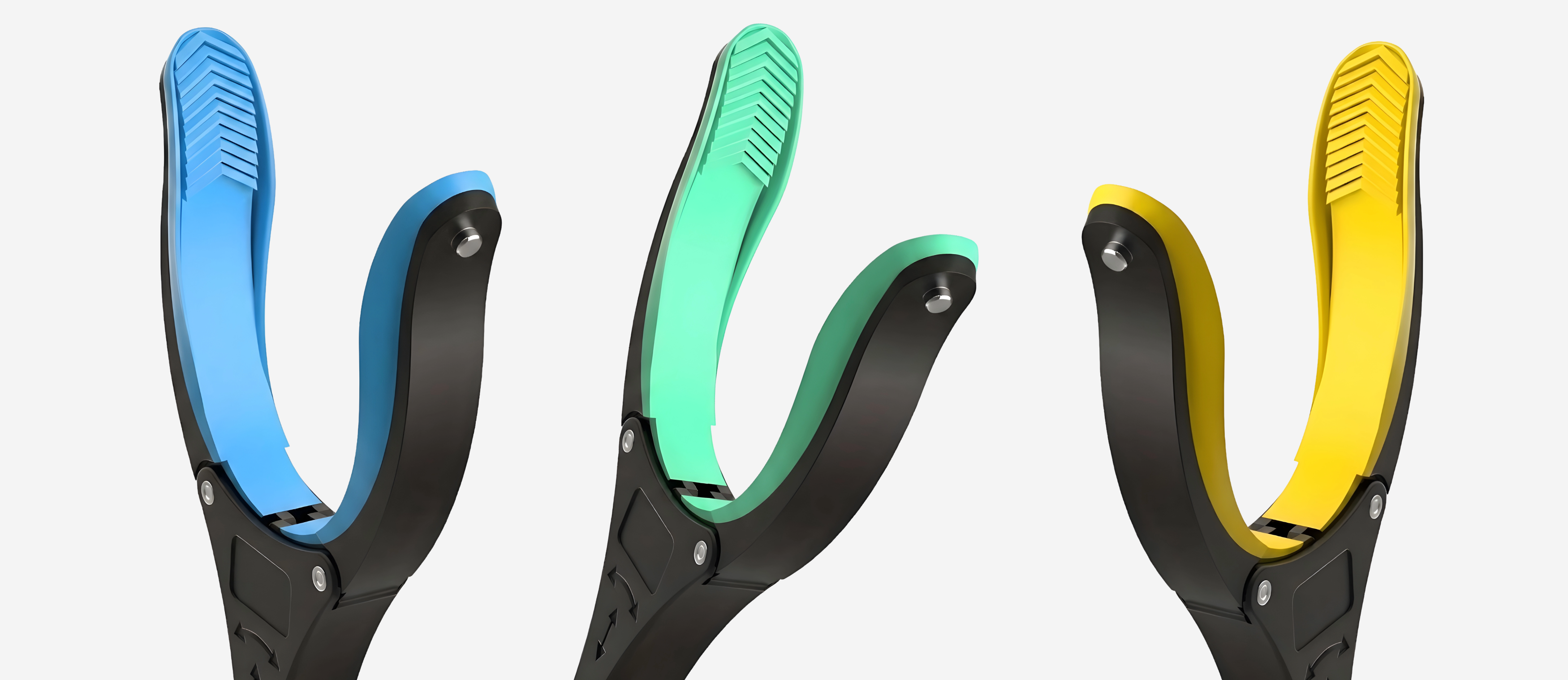
Adaptive equipment for children with disabilities is usually discussed in the context of school accommodations and therapy settings. The home environment — where children spend the majority of their time and where daily living skills are practiced — receives less structured attention. A child who has a reacher grabber in the OT clinic but not at home misses the high-repetition practice that builds independence. The home is where the functional goals of pediatric occupational therapy are actually lived out or not.
Direct answer: for children with physical disabilities affecting grip, reach, or mobility, the home adaptive tools with the highest daily living impact are: the GrabbersTool Reacher Grabber (for floor retrieval without caregiver assistance), the Precision Grabber (for smaller objects and toys), and the 5-in-1 Multi-Opener (for kitchen independence in food and drink access). These tools address the most common home independence barriers for children with upper limb involvement, spinal conditions, or wheelchair use.
Conditions Most Likely to Benefit From Home Adaptive Tools
Several pediatric conditions commonly create the reach, grip, or mobility limitations that adaptive tools address:
- Cerebral palsy (hemiplegic or diplegic): upper limb involvement reduces grip on one or both sides; reaching from a wheelchair or assistive seating is limited
- Spina bifida: lower-limb paralysis with wheelchair use; upper limb function is typically intact but low-level reach (floor) is limited by sitting height
- Juvenile idiopathic arthritis: grip strength and joint pain limit fine motor tasks including container opening
- Muscular dystrophy: progressive muscle weakness reducing grip and upper limb reach over time
- Upper limb difference (limb reduction, amputation): one-handed function for all bimanual tasks
Size and Handle Considerations for Pediatric Use
Adult-sized adaptive tools may not fit children effectively. Key considerations:
- Handle grip diameter: a child with small hands or reduced grip needs a handle that fits their palm — handles sized for adult grip may be too wide for smaller hands, requiring a modified grip that reduces control
- Trigger force: the force required to close a reacher grabber jaw must be within the child child capacity — children with weakness need tools with low-resistance triggers
- Tool weight: lighter tools are easier for children to manage through a full reach; a heavy reacher held at extension is more difficult for a smaller arm
- Reach length: a 32-inch reacher on a child in a standard wheelchair may be more reach than needed; a shorter reacher may be more controllable
GrabbersTool product pages include handle dimensions, trigger force, and weight specifications. These are the measurements to compare against the child occupational therapist evaluation when selecting a tool. View reacher grabber specifications
Building Independence Through Tool Use at Home
Pediatric occupational therapy goals typically include increasing independence in age-appropriate daily living tasks. At home, adaptive tools support this by:
| Age Group | Independence Goal | Adaptive Tool Support |
|---|---|---|
| Preschool (3-5) | Picking up toys independently | Precision Grabber for small toy retrieval |
| School age (6-12) | Getting own snacks, picking up belongings | Reacher Grabber for floor items; Multi-Opener for drink access |
| Adolescent (13-18) | Independent kitchen use, clothing management | Full kitchen opener set; reacher for dressing assistance |
The Caregiver Workload Dimension
Every task a child completes independently is a task that does not require caregiver intervention. For families caring for a child with significant physical disabilities, the cumulative caregiver workload is substantial. Adaptive tools that extend the range of independently completable tasks — even by one or two activities — reduce daily caregiver effort and give the child genuine experience of self-sufficiency.
GrabbersTool correspondence from families of children with physical disabilities consistently identifies the reacher grabber as a high-impact home addition, particularly for wheelchair-using children who previously required adult assistance for any floor-level retrieval.
Coordinating With the Pediatric OT Team
Before purchasing home adaptive tools for a child, coordinate with the pediatric occupational therapist if one is involved in the child care. The OT has evaluated the child grip strength, reach capacity, and functional goals. They can specify which tool types are appropriate and may be able to provide a Letter of Medical Necessity for FSA/HSA reimbursement. GrabbersTool product specifications (dimensions, weight, trigger force) are the data points to share with the OT for evaluation.
See also: Cerebral Palsy and Daily Living: Adaptive Tools for Independence and Caregiver Burnout: How Adaptive Tools Reduce Physical Strain.
Browse Reacher Grabber Tools and Easy Grip Kitchen Openers for the full range of home adaptive tools.


