

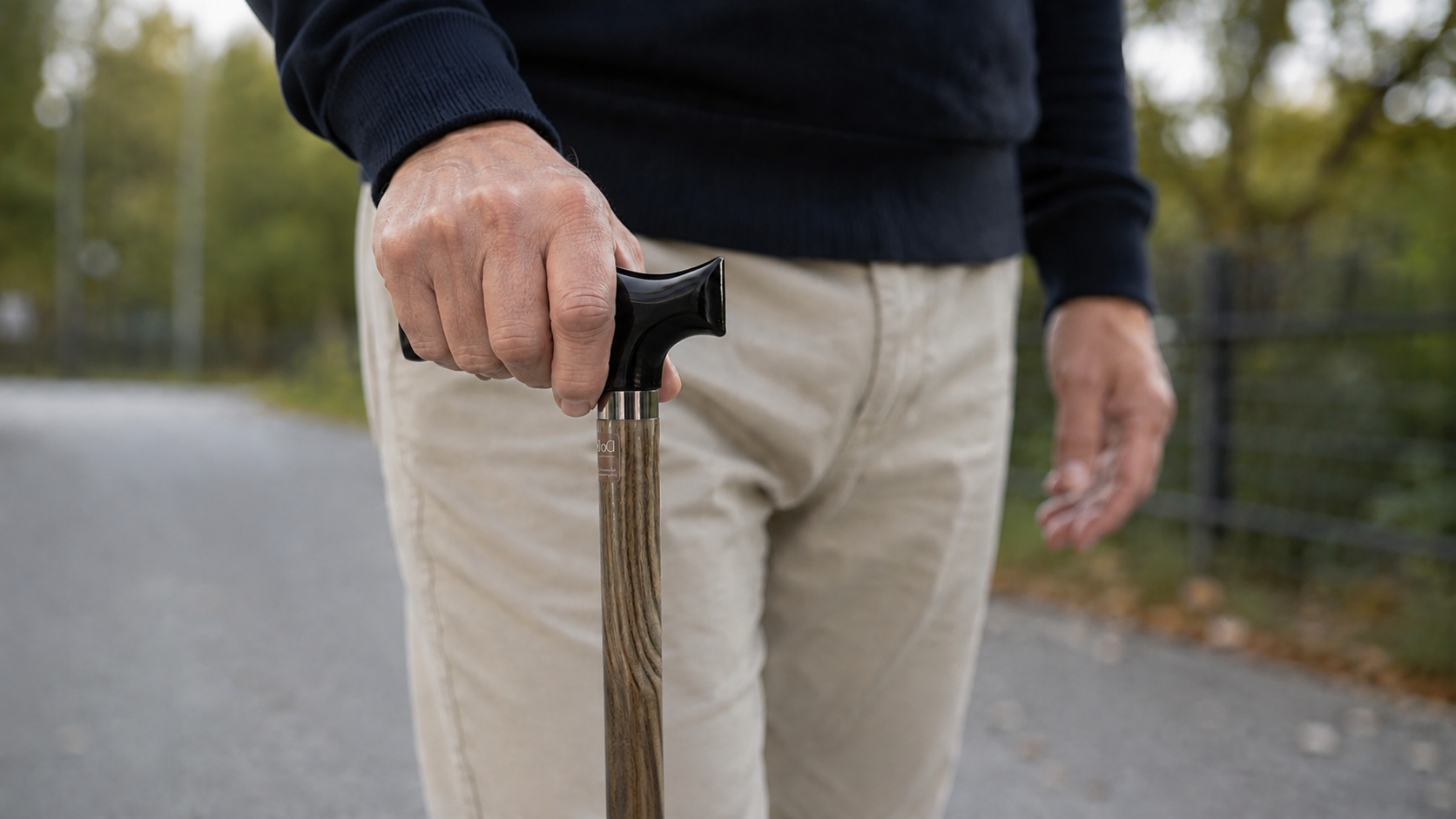
Choosing the wrong walking cane — one that's too short, too long, or the wrong style for your needs — can actually increase fall risk rather than reducing it. This guide covers everything you need to know to choose the right cane, fit it correctly, and use it safely.
How to Find the Correct Cane Height
Cane height is the single most important factor. An incorrectly fitted cane forces you to lean, which throws off balance and stresses joints.
The Wrist Method (Most Accurate)
- Stand in your normal shoes
- Let your arms hang naturally at your sides
- Measure from the floor to the crease of your wrist
- That measurement = your correct cane height
Most standard canes range from 30" to 40". Many modern canes are adjustable in height (typically 1" increments), which is ideal because you can fine-tune fit as needed.
Cane Length Calculator
Which Side Should You Hold a Cane?
This is one of the most common mistakes. Hold the cane on the opposite side from your injury or weak leg. When your weak leg steps forward, your cane steps forward on the other side — creating a stable triangle with your legs.
Example: If your left knee is weak or injured, hold the cane in your right hand.
Types of Walking Canes
| Type | Best For | Stability Level |
|---|---|---|
| Standard single-tip cane | Mild balance issues, light support | Low |
| Offset handle cane | People who need to bear weight through the cane | Medium |
| Derby/Fritz handle cane | Comfortable long-term gripping, arthritis | Medium |
| Quad cane (4-point base) | Significant balance issues, stroke recovery | High |
| Folding cane | Travel, occasional use, storage | Low–Medium |
Handle Types and Arthritis
The handle matters most for people who use a cane daily or who have hand arthritis:
- Derby handle — curved, distributes grip pressure widely, easiest for arthritis
- Fritz/functional handle — allows the wrist to stay neutral, reduces strain
- T-handle — traditional, inexpensive, but concentrates pressure on a small area
- Ergonomic foam grip — cushions the palm, good for extended daily use

Cane Tip Safety
The rubber tip at the bottom of the cane is a safety item, not just a detail. Replace the tip when:
- The rubber is worn smooth (no tread pattern visible)
- The tip has a crack or tear
- The tip wobbles or feels loose
A worn cane tip on a wet floor is a fall waiting to happen. Most tips are replaceable and cost under $5. Check your tip monthly.

Cane Strap: Do You Need One?
A cane wrist strap prevents the cane from falling when you need both hands — opening a door, carrying something, or sitting down. Without a strap, canes slide down walls, tip over, or require you to hang them awkwardly. A strap keeps the cane on your wrist so you can use both hands freely while keeping the cane accessible.
Our Cane Strap is adjustable and works with all standard walking canes.

When to See a Physical Therapist About Cane Use
A walking cane can help — but using it incorrectly can reinforce bad movement patterns or cause shoulder or back pain over time. See a physical therapist if:
- You've recently had hip, knee, or back surgery
- You're transitioning from a walker to a cane
- You're experiencing shoulder or wrist pain from cane use
- Your balance issues are getting worse despite using a cane
Browse our Ergonomic Mobility collection, which includes walking canes, cane straps, and standing assist tools designed for daily independent living.


