

GrabbersTool frequently hears from customers who are not adjusting a functional kitchen -- they are building an accessible kitchen from nothing. New diagnosis, new home, or a sudden change in physical status creates this scenario: a kitchen that was designed for full mobility that now needs to function for someone with significantly different physical capability. The mistake most people make at this stage is purchasing individual tools reactively -- buying an electric can opener because they cannot open cans -- without a systematic analysis of where the actual friction points are. The result is a kitchen with one adaptive tool addressing one problem while six other problems remain unsolved.
Direct answer: an adaptive kitchen setup has three layers: (1) storage reorganization (most critical and free), (2) appliance replacement (electric openers for manual openers), and (3) retrieval and mobility tools (reacher, standing assist, walking cane). Start with storage reorganization, then assess which electric appliances eliminate the most friction, then add retrieval tools. The Electric Jar Opener, Electric Can Opener, 5-in-1 Multi-Opener, and Reacher Grabber form the core kit for most adaptive kitchen setups.
The Three-Layer Adaptive Kitchen Framework
Layer 1: Storage Reorganization (Free, Highest Impact)
Storage reorganization is the highest-impact, lowest-cost intervention in adaptive kitchen setup. The principle is simple: everything used daily must be at mid-level (between hip and shoulder height) without requiring bending or reaching. This means moving frequently used items from floor-level cabinets and overhead shelves to countertops or mid-level cabinets. For most people, this requires relocating 30-40% of kitchen items. GrabbersTool customers who have done a full kitchen reorganization consistently report that this single step reduces daily adaptive tool use more than any purchase they made -- because the tools become unnecessary for items that have been moved to accessible positions.
Layer 2: Appliance Replacement
| Manual Appliance | Barrier Created | Adaptive Replacement |
|---|---|---|
| Manual jar opener (or none) | Grip strength, wrist rotation, two-hand coordination required | Electric Jar Opener -- one button, no grip strength required |
| Manual can opener (turn-key) | Continuous grip-and-turn motion; sustained coordination required | Electric Can Opener -- one-button activation, hands-free operation |
| No bottle cap opener | Push-off bottle caps require precise grip and palm pressure | 5-in-1 Multi-Opener -- handles caps, tabs, ring-pulls, and more |
Full specifications for each electric tool are on the product page. View Electric Jar Opener specifications.
Layer 3: Retrieval and Mobility Tools
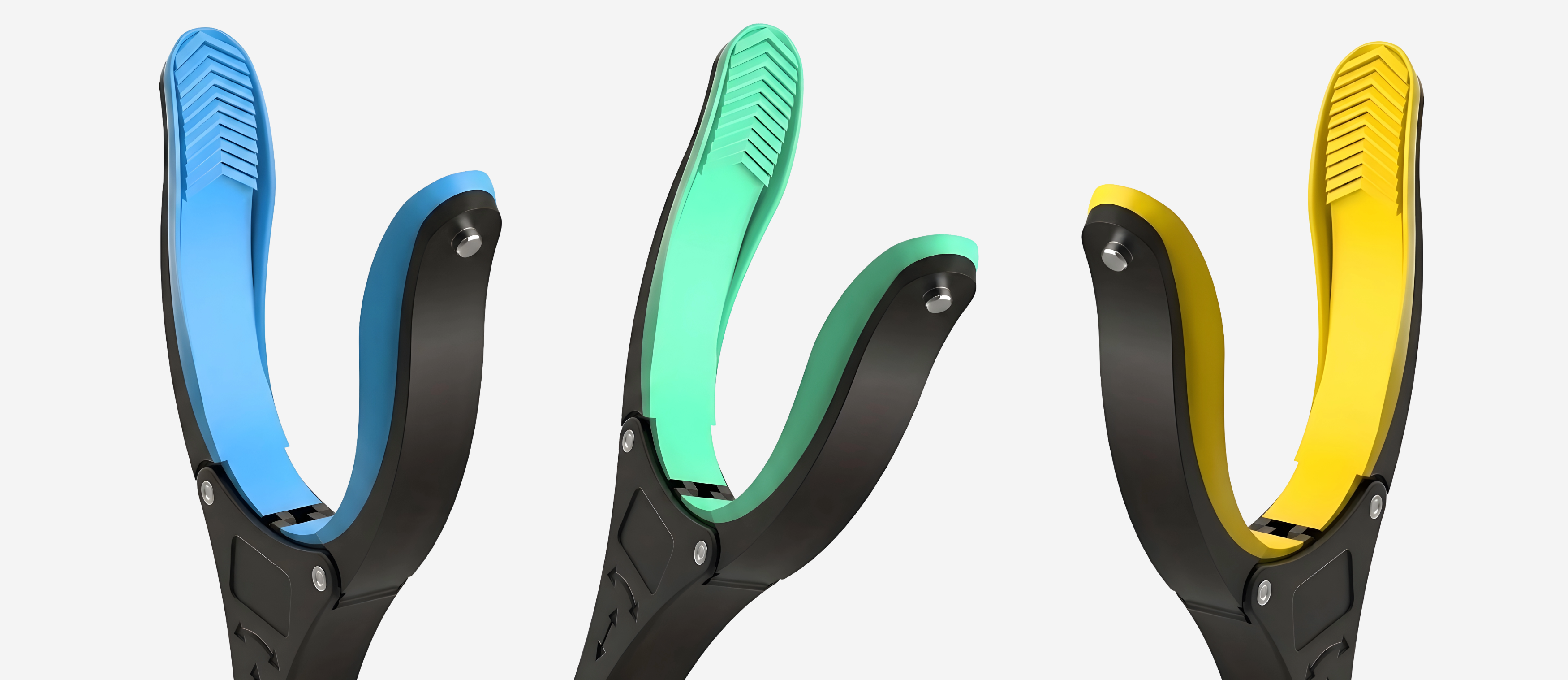
After storage reorganization and appliance replacement, the remaining barriers are typically: (1) items that cannot be moved to mid-level (floor items, very high cabinets), and (2) mobility support for sustained standing during cooking. The Reacher Grabber addresses category 1: floor items, dropped objects, and items at heights that cannot be reorganized. The Standing Assist Tool addresses transitions between sitting and standing at the kitchen counter. For patients using a walking cane, the Cane Strap allows the cane to remain with the patient when both hands are occupied with food preparation.
Adaptive Kitchen Priority by Condition
The order of priority shifts by condition. For grip weakness (RA, neuropathy, post-stroke): electric openers first, reacher second. For bending restriction (hip replacement, ankylosing spondylitis, back pain): reacher first, storage reorganization second, electric openers third. For balance issues (Parkinson disease, vestibular disorders, elderly): counter support and walking cane first, everything else second. For fatigue conditions (MS, heart failure, fibromyalgia): energy conservation via electric tools first -- the goal is reducing the physical effort each kitchen task requires, not compensating for a specific physical barrier. See also: Adaptive Tools for Fatigue Management: MS, Fibromyalgia, and Chronic Illness.
The Adaptive Kitchen Starter Kit
For customers who want a starting point without a full assessment, GrabbersTool recommends the following as a functional adaptive kitchen starter kit: one electric jar opener (counter-positioned, always accessible), one electric can opener, one 5-in-1 multi-opener (stored on the counter), one 32-inch reacher (in the kitchen for floor retrieval). This covers the majority of kitchen independence barriers for most conditions at the lowest entry cost. Expand from this base based on which remaining friction points the starter kit does not resolve. Browse the complete range at Easy Grip Kitchen Openers and Reacher Grabber Tools.


