

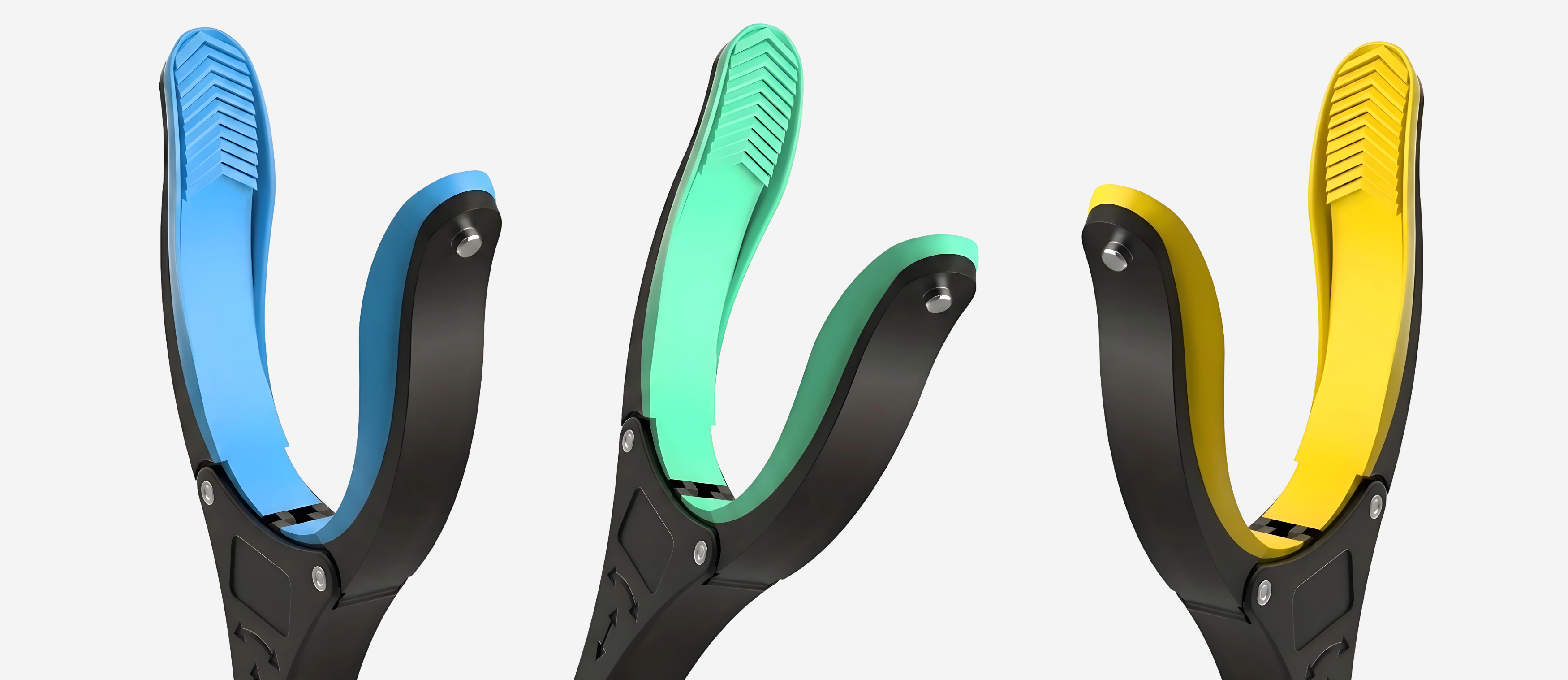
Kitchen injury statistics for older adults are dominated by two events: burns (from stovetop and oven) and falls (from reaching and stepping on step stools). The reaching and lifting tasks that create fall risk in the kitchen are often not recognized as fall hazards because they do not involve the walking or stair-climbing scenarios most associated with falls. A person who manages their front steps safely may have a serious fall reaching into a low cabinet or climbing a step stool to reach an upper shelf. Kitchen fall risk is task-specific and often overlooked in standard fall prevention assessments.
Direct answer: the highest-risk kitchen tasks for falls and injury in older adults are: reaching into high cabinets (step stool falls), bending to low cabinet and floor level (balance disruption during bend-and-rise), opening difficult jars and cans (grip failure causing hand injury), and carrying heavy items while walking (dual-task fall risk). The GrabbersTool 43" Reacher Grabber eliminates step stool use for high-shelf access. The 32" Reacher Grabber eliminates floor-level bending. The Electric Jar Opener and Electric Can Opener address grip failure and jar-injury risk.
The Step Stool Problem
Step stool falls in the kitchen are a leading cause of serious injury in adults over 65. The step stool is used to reach upper cabinet shelves that are not accessible from floor level — typically the second and third shelf of standard-height kitchen cabinets. The physics of this situation make it inherently risky for older adults:
- Stepping up from floor to step stool requires weight transfer onto one leg — a movement that tests single-leg balance
- Reaching forward and upward from an elevated platform shifts the center of gravity in the direction of least stability (forward and up)
- Carrying a retrieved object from step height to floor level requires a controlled descent with occupied hands
The GrabbersTool 43" Reacher Grabber eliminates all three of these movement sequences for most standard-height kitchen shelving. At 43 inches, the reacher reaches above the second shelf level from floor-standing position, without step stool use. The only exception is third-shelf or above items on very deep shelves — which may remain inaccessible regardless of reach aid and should be reorganized to a lower shelf for regular access items.
Low-Cabinet and Floor-Level Risk
Bending to access low cabinets (below counter level) requires forward trunk flexion that shifts the center of gravity forward. The rise from this position requires a muscular effort that, in balance-compromised older adults, is a fall risk. Studies of kitchen falls in community-dwelling older adults consistently identify the bend-and-rise sequence as a contributor to kitchen fall events.
The GrabbersTool 32" Reacher Grabber reaches the back of standard under-counter cabinets from a standing position for most adults. Items on the floor of a cabinet require the 32" length from a slight forward lean — still significantly safer than a full forward bend.
Jar and Container Opening Injury
Grip failure during jar opening — when the lid suddenly slips — can cause hand and wrist injuries as the force is unexpectedly redirected. Grip failure during can opening with a manual opener can cause cuts from the sharp edge. These injuries are not typically counted in fall statistics but contribute to kitchen injury rates in older adults with reduced grip strength.
| Kitchen Task | Primary Injury Mechanism | Adaptive Solution |
|---|---|---|
| High shelf access | Step stool fall | 43" Reacher Grabber — eliminates step stool |
| Low cabinet access | Bend-and-rise fall | 32" Reacher Grabber — eliminates full forward bend |
| Floor item retrieval | Balance loss during stoop | 32" Reacher Grabber — standing retrieval |
| Jar opening | Grip failure, wrist sprain | Electric Jar Opener — no grip or rotation required |
| Can opening | Cut from sharp edge; wrist strain | Electric Can Opener — smooth edge, no direct contact |
| Carrying while walking | Dual-task fall (occupied hands reduce balance attention) | Trip planning; reacher to avoid secondary retrieval trips |
The 43" Reacher Grabber reach specifications — at what cabinet height the jaw can operate from floor-standing position — are on the product page. This is the measurement to compare against the actual upper cabinet height in the specific kitchen. View 43" Reacher Grabber specifications
Kitchen Organization as a Fall Prevention Strategy
The highest-impact kitchen safety change for older adults is often not a tool but a reorganization: moving frequently used items from high and low shelves to the counter-height zone (between hip and shoulder height) where they can be accessed without reaching or bending. This cannot always be achieved — kitchens have limited counter height storage — but reorganizing daily-use items to accessible storage is complementary to, not a replacement for, reacher grabber tools.
Items that must remain at high or low storage: seasonal items, infrequently used equipment. These are the items that the reacher tools address when needed. Daily-use items should be at accessible height so the reacher is used for occasional retrieval rather than constant kitchen navigation.
See also: Fall Prevention at Home: What Adaptive Tools Actually Reduce Risk and Aging in Place: The Adaptive Tool Strategy That Actually Works.
Browse Reacher Grabber Tools and Easy Grip Kitchen Openers for the full kitchen safety adaptive range.


