

GrabbersTool support team fields a specific category of complaint: the reacher grabber did not work -- the item dropped, the person overreached and lost balance, or the tool slipped. In nearly all of these cases, the product itself is functioning correctly. The problem is technique. A reacher grabber used with poor technique is less reliable than no tool at all, because the user relies on it at a moment of balance compromise (bending toward the floor) and it fails at that moment. These seven mistakes cover the vast majority of reacher-related incidents reported to GrabbersTool.
Direct answer: the most common reacher grabber safety mistakes are: exceeding comfortable reach (the user leans instead of repositioning), trying to carry too heavy an item (reachers are retrievers, not carriers), using the wrong jaw type for the item (rounded jaws fail on flat objects), using the reacher from an unstable standing position, trying to open a container with the reacher (it is not a gripping tool for torque), and using a worn or dirty gripping pad. Each is preventable with correct technique and product selection.
Mistake 1: Leaning Instead of Repositioning
The most dangerous reacher mistake: leaning the body toward the item rather than moving the feet closer. A reacher extends reach by approximately 32 or 43 inches -- it does not eliminate the need to position the body appropriately. When users lean to reach an object rather than moving their feet, the center of gravity shifts outside the base of support, creating fall risk at exactly the moment the reacher is engaged. The correct technique: move your feet until the item is within comfortable (not maximum) reacher range, then retrieve without leaning.
Mistake 2: Attempting to Carry Heavy Items
A reacher grabber retrieves items; it is not designed for carrying. The jaw clamping force is appropriate for retrieving and transferring objects to an immediately adjacent surface -- not for transporting objects across a room at arm length. Attempting to carry a full water bottle, heavy book, or loaded dish across a room with a reacher creates a progressively destabilizing forward load as the arm extends. Items weighing more than approximately one pound should be slid along a surface rather than lifted and carried at reacher length. The GrabbersTool 43 inch Reacher weight capacity specifications are detailed on the product page.
Mistake 3: Wrong Jaw Type for the Object
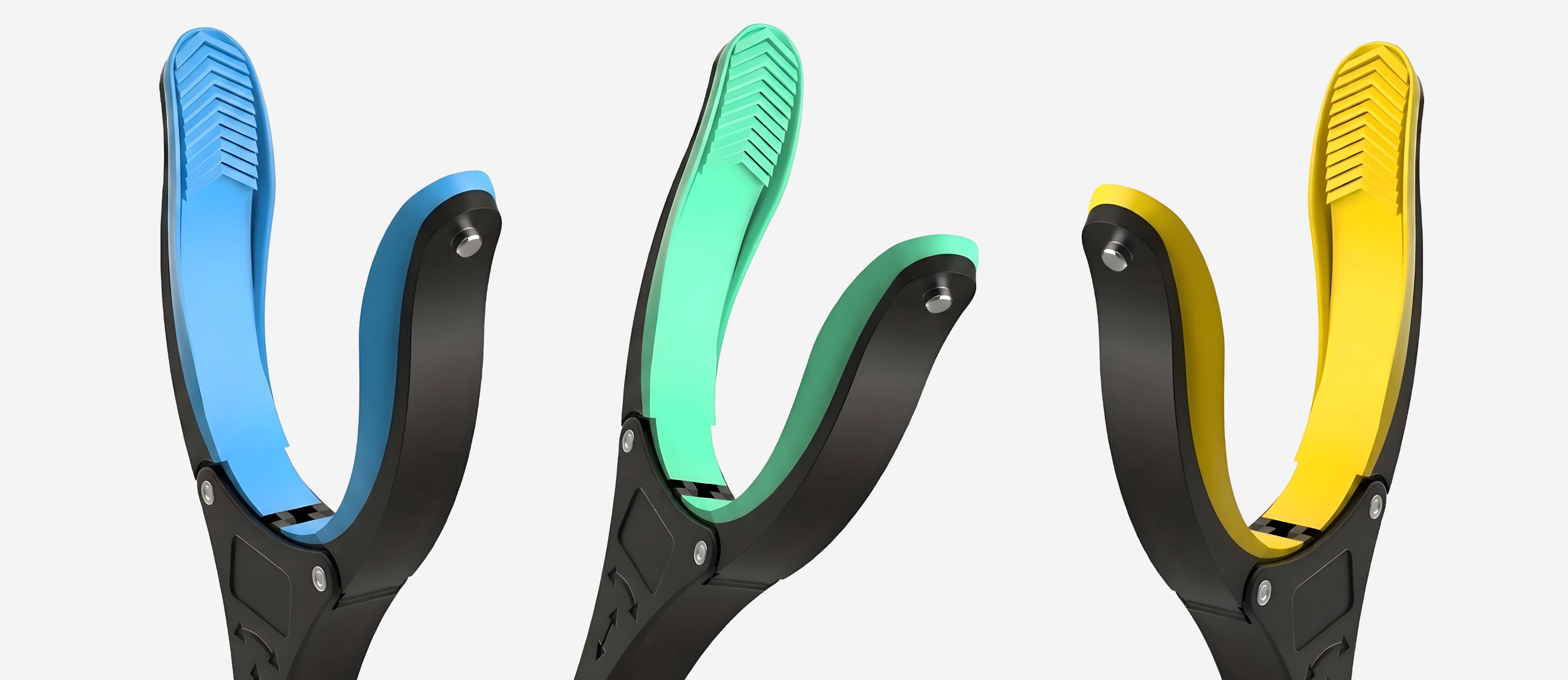
Reacher jaws vary in design: rotating jaws, fixed jaws, soft rubber gripping surfaces, and magnetic tips each have different object-type suitability. Attempting to retrieve a flat, lightweight object (a piece of paper, a thin card) with a jaw designed for rounded objects frequently fails. For flat object retrieval, reachers with rotating claw mechanisms or magnetic tips perform better. For smooth, round objects, wider rubber-padded jaws perform better. GrabbersTool product pages specify jaw type and optimal use cases.
Mistake 4: Unstable Standing Position During Retrieval
Floor-level retrieval is the highest-risk reacher task: the user is bending toward the floor while the weight distribution changes. This task should be performed from a stable base -- feet shoulder-width apart, no leaning on the reacher itself for balance support. The reacher is a retrieval tool, not a balance device. Users who use the reacher as a stabilizer while bending create a fall risk if the reacher jaws slip. For users with balance impairment, floor-level retrieval should be performed from a seated position (low chair, couch edge) rather than standing.
Mistake 5: Using the Reacher to Apply Torque
A reacher grabber cannot open a jar, unscrew a cap, or pull a stuck drawer. Attempting to apply rotational or pulling force through a reacher creates jaw slip and potential projectile risk if the item releases suddenly. For container opening, the appropriate tools are dedicated openers: the GrabbersTool Electric Jar Opener, 5-in-1 Multi-Opener, or Electric Can Opener. The reacher retrieves the container; a dedicated opener opens it.
Mistake 6: Worn or Contaminated Gripping Pads
Rubber gripping pads on reacher jaws wear over time and lose friction effectiveness when coated with food residue, lotion, or oil. A reacher that functioned reliably when new may drop objects unpredictably when the grip pad is worn or contaminated. GrabbersTool recommends inspecting gripping pads regularly and cleaning with a damp cloth. When grip pads are worn smooth, the reacher should be replaced. See the Reacher Grabber Maintenance Guide for cleaning and inspection intervals.
Mistake 7: Length Mismatch for the Task
Using a 32 inch reacher for tasks that require 43 inches forces the user into the leaning posture described in Mistake 1. Using a 43 inch reacher for close-range tasks (bedside table retrieval, chair-side item pickup) creates a lever-arm that amplifies technique errors and reduces control. Length selection should match the primary use case. GrabbersTool offers both 32 inch and 43 inch models -- the product pages detail the primary use applications for each length.
When Reacher Technique Cannot Compensate for Fit
If consistent reacher technique correction does not resolve reliability issues, the problem may be product fit rather than technique. The GrabbersTool Precision Grabber is designed for smaller, lighter items requiring more precise jaw control -- tasks where a standard reacher jaw is too large for reliable engagement. Selecting the correct tool for the task category eliminates the technique workaround requirement.
See also: Reacher Grabber Maintenance and Lifespan: When to Clean and When to Replace and Small Object Pickup Technique: Getting the Most From Your Reacher Grabber.
Browse the full Reacher Grabber Tools collection and Long Reach Grabber Tools.


