

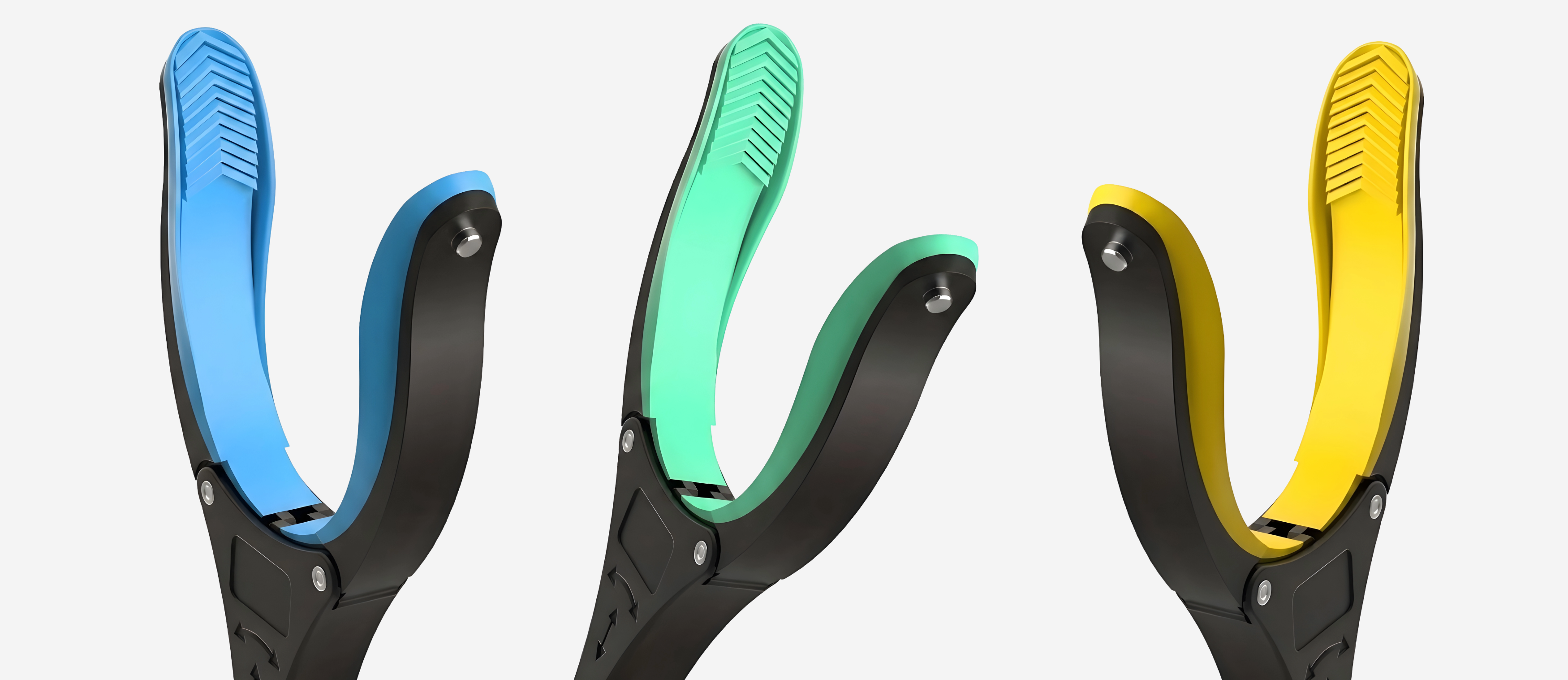
Knee replacement recovery differs from hip replacement recovery in one critical way: the restriction is not hip angle — it is weight-bearing progression and knee flexion range. This changes the adaptive equipment list significantly. The tools that matter are not primarily about preventing a dangerous movement; they are about managing the swollen, stiff joint through a daily routine that must continue despite the limitation.
Direct answer: the adaptive equipment that makes the most functional difference in the first month of knee replacement recovery is: an adjustable walking cane or crutches (as prescribed), a long-reach reacher grabber for floor retrieval without bending the trunk, a raised toilet seat (knee flexion past 90 degrees is often restricted early), and a cane management solution for when both hands are needed. The GrabbersTool Walking Cane and 32" Reacher Grabber address the two highest-frequency needs: ambulation support and object retrieval without painful knee loading.
How Knee Replacement Restrictions Differ From Hip Replacement
Hip replacement recovery is primarily managed through angle restrictions (no hip flexion beyond 90 degrees). Knee replacement recovery is managed through:
- Weight-bearing progression: the surgeon specifies when and how much weight the operated leg can bear — this progresses from partial to full over weeks
- Knee flexion range: bending the knee past prescribed angles is restricted initially and increased with physical therapy
- Swelling management: elevation and compression affect all activity scheduling
- Gait pattern: abnormal gait during recovery loads the joint differently than full walking and requires careful attention to prevent compensatory injuries
Equipment Priority in the First Month
| Equipment | Purpose | Priority | GrabbersTool Option |
|---|---|---|---|
| Walking aid (cane/crutches) | Weight distribution during ambulation | Essential — surgeon-prescribed | Walking Cane |
| Reacher grabber tool | Floor retrieval without trunk bend or knee loading | Essential — daily use | 32" Reacher Grabber |
| Raised toilet seat | Knee flexion angle management when sitting | Essential — high-frequency task | Not sold by GrabbersTool |
| Shower chair or bench | Eliminates standing on operated leg during washing | Essential — safety | Not sold by GrabbersTool |
| Leg elevation support | Swelling management — knee above heart level | Essential for swelling control | Not sold by GrabbersTool |
| Cane strap/holder | Keeps cane accessible when both hands needed | High — reduces fall risk | Cane Strap |
| Sock and shoe aids | Lower limb dressing without excessive knee flexion | High — daily dressing | Reacher assists sock aid use |
The handle height adjustment range and grip design of the GrabbersTool Walking Cane — which must align with the user's height at the moment of transition from crutches — are detailed on the product page. Cane height is calibrated at the time of transition, not before. View full specifications →
The Reacher Grabber's Specific Role in Knee Recovery
The knee replacement patient's restriction is not primarily about bending forward — it is about knee loading. But floor retrieval still causes a problem: reaching an item on the floor while using a crutch or cane requires the user to balance on one or both aids while bending — a complex, unstable maneuver.
The reacher grabber solves this by eliminating the bend entirely. The user stands with the walking aid in one hand and retrieves floor items with the reacher in the other. No knee loading increase, no balance disruption, no need to call for assistance.
GrabbersTool customers in knee recovery consistently identify the floor retrieval scenario as the highest-frequency use case — dropped medication, phone, items from low storage — and report that having the reacher accessible in each room eliminates the repeated choice between struggling to retrieve safely or calling for help.
The Kitchen in Week One
The kitchen presents specific challenges in early knee recovery because most kitchen tasks require sustained standing and often require bending or crouching for lower storage access. Practical adaptations during the first week:
- Reorganize storage temporarily: move frequently used items to counter height. The reacher handles anything slightly above or below without bending.
- Use a perching stool: a stool at counter height allows semi-seated food preparation, reducing the standing duration on the operated leg.
- Simplify meal preparation: the first week is not the time for complex cooking requiring extended standing. Planning for simple preparation reduces the total kitchen time requiring weight-bearing.
- Use adaptive openers: the GrabbersTool Electric Jar Opener and Electric Can Opener eliminate the grip-and-force kitchen tasks that require stable two-handed standing.
The Walking Aid Transition: From Crutches to Cane
The progression from bilateral (crutches or walker) to unilateral (single cane) walking support is determined by the surgeon and physical therapist based on weight-bearing tolerance and gait quality. The transition point varies significantly between patients and between anterior and posterior surgical approaches.
At the transition point, the cane must be correctly fitted to the user's height — the same wrist-crease measurement used for any cane selection. An incorrectly fitted cane at this transition point creates compensatory gait patterns that can persist beyond recovery and cause secondary problems in the hip and lumbar spine.
The GrabbersTool Walking Cane is adjustable for height calibration at the exact moment of transition. The Cane Strap keeps the cane accessible at the bedside, toilet, and kitchen — the three locations where transitions between sitting and standing occur most frequently.
See also: The First Week Home After Hip Replacement for comparison with the hip recovery equipment context, and How to Choose a Walking Cane: The 4 Specifications That Actually Matter for cane selection guidance at the transition point.
Browse the Ergonomic Mobility collection for the full range of GrabbersTool recovery equipment.


