

Rotator cuff surgery recovery is frequently more disabling than patients anticipate because surgeons typically immobilize the arm in a sling for six weeks or longer — and in many cases, the dominant arm is the one repaired. Six weeks of single-arm living, often with restrictions on what the sling arm can do even within the sling, requires specific preparation. Patients who arrive home from surgery without adaptive tools typically spend the first week discovering what they cannot do rather than focusing on rest and recovery.
Direct answer: for rotator cuff surgery recovery, the highest-impact adaptive tools address four functional deficits: (1) floor and low-object pickup without bending and reaching — solved by a reacher grabber tool; (2) jar and container opening with one hand — solved by an electric jar opener; (3) can and bottle opening — solved by an electric can opener and multi-opener; (4) safe standing from a chair without pushing off with the operated arm — solved by a standing assist tool. The GrabbersTool 32" Reacher Grabber, Electric Jar Opener, Electric Can Opener, and Standing Assist Tool directly address these.
What the Sling Phase Actually Restricts
Post-surgical sling restrictions for rotator cuff repair vary by surgeon and repair type, but common restrictions during the immobilization phase include:
- No reaching forward or overhead with the operated arm
- No lifting beyond small, specified weights (often 0-1 lb initially)
- No pushing or pulling motions with the operated arm
- No external rotation of the shoulder (relevant to many grip and reach tasks)
The result is functionally single-arm living, plus the physical awkwardness of wearing a sling that shifts the center of gravity and changes how the patient bends, sits, and moves through doorways.
The Four Recovery Challenges
1. Picking Up Objects Without Bending and Reaching
With one arm in a sling, bending to pick up objects from the floor requires using only the non-operated arm — which involves bending forward and reaching down in a movement that strains the low back and can disrupt shoulder position if the person instinctively reaches with the sling arm. A reacher grabber tool eliminates the floor-reach: objects are retrieved from standing height with the non-operated hand managing the tool.
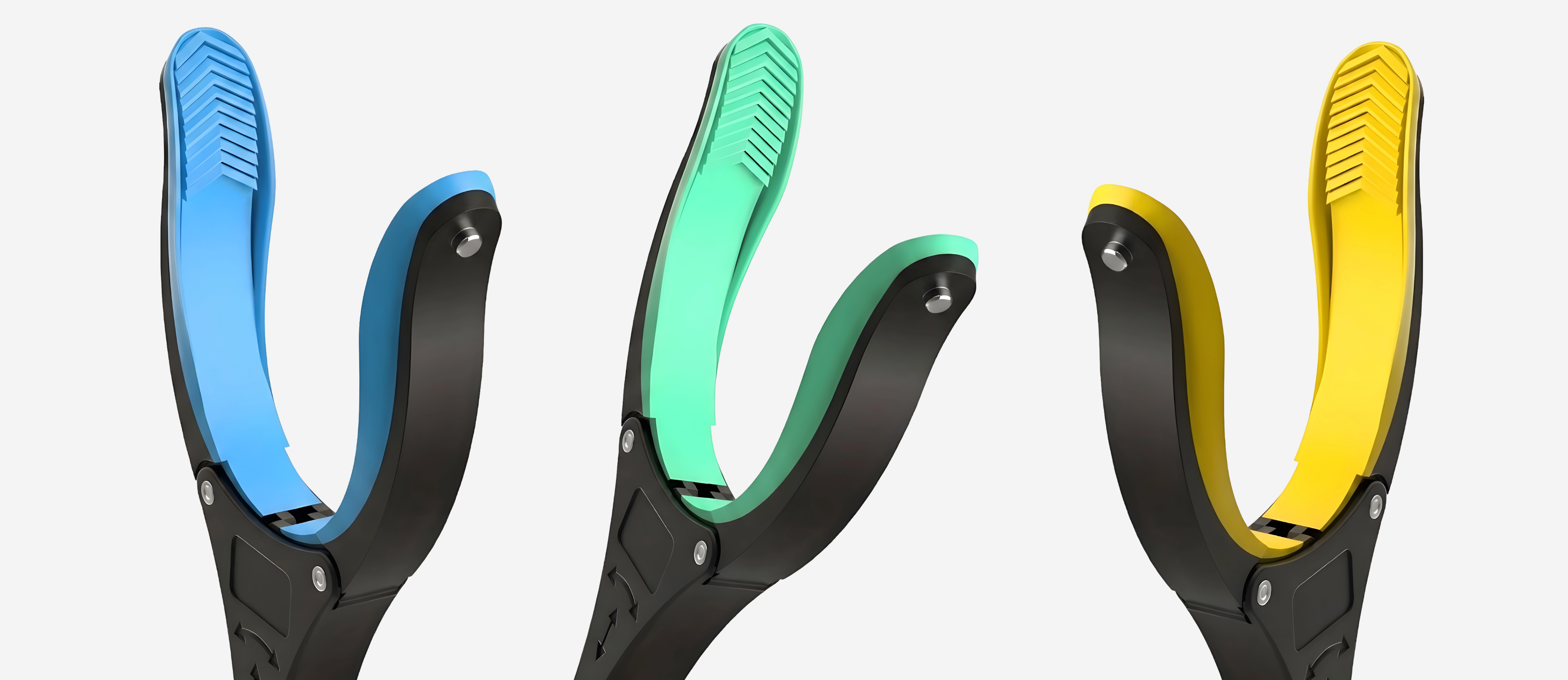
The GrabbersTool 32" Reacher Grabber is appropriate for most uses. For reaching into low cabinets and the back of closet shelves — which the sling arm cannot assist with — the 43" Reacher Grabber provides additional reach. Full jaw mechanism specifications are on the product pages. View 32" specifications
2. Opening Jars and Containers
Jar opening requires two hands by design: one to grip and rotate the lid, one to stabilize the jar body. With a rotator cuff sling, neither function can be performed safely on the operated side. The GrabbersTool Electric Jar Opener motorizes the rotation; the non-operated hand holds only the jar body — no grip force required from the operated arm. The automatic stop mechanism means no manual reversal is needed after opening.
3. Cans, Bottles, and Packaging
The GrabbersTool Electric Can Opener handles standard cans with one-hand placement and automatic shutoff. The 5-in-1 Multi-Opener addresses bottle tops, pop-tops, pull-tabs, and other packaging types that the operated arm cannot safely assist with.
4. Getting Up From a Chair or Bed
The standard sit-to-stand motion involves a bilateral arm push from armrests or the mattress edge. With a sling arm restricted from pushing, the patient either uses only the non-operated arm (unstable) or attempts to push from an elbow position with the sling arm (which may violate surgical restrictions). The GrabbersTool Standing Assist Tool provides a vertical grip rail that allows the patient to pull-stand using only the non-operated arm, without any push force from the operated side.
| Recovery Phase | Sling Status | Primary Adaptive Needs |
|---|---|---|
| Weeks 1-2 | Full sling, no active movement | All four tools: reacher, openers, standing assist |
| Weeks 3-6 | Sling for most activities; pendulum exercises | Same tools; grip and reach restrictions remain |
| Weeks 6-12 | Sling removed; active range-of-motion begins | Jar opener remains useful; reacher for fatigue management |
| Phase 3+ | Strengthening; full activity progression | Kitchen openers as fatigue aid during strengthening |
Timeline is illustrative and varies significantly by repair type (partial vs. full thickness tear), repair technique, and surgical outcome. Follow the orthopedic surgeon and physiotherapist protocol precisely.
Pre-Surgery Preparation
The most effective adaptive tool strategy for rotator cuff recovery is to have all tools in place before the surgery date. Post-surgery, the patient typically returns home within hours, often with pain and sedation effects still active. Setting up adaptive tools in that state is difficult and carries risk. GrabbersTool allows pre-surgery ordering so the recovery environment is ready before the patient arrives home.
Key setup considerations: the reacher grabber should be positioned at the bedside (for morning object pickup), at the main chair (for TV watching recovery), and in the kitchen. The standing assist tool should be fitted to the primary chair the patient will use during recovery before surgery day.
See also: Preparing Your Home for Spine Surgery Recovery and Wrist Fracture Recovery: Adaptive Tools That Restore Daily Independence.
Browse the recovery toolkit at Reacher Grabber Tools and Easy Grip Kitchen Openers.


