

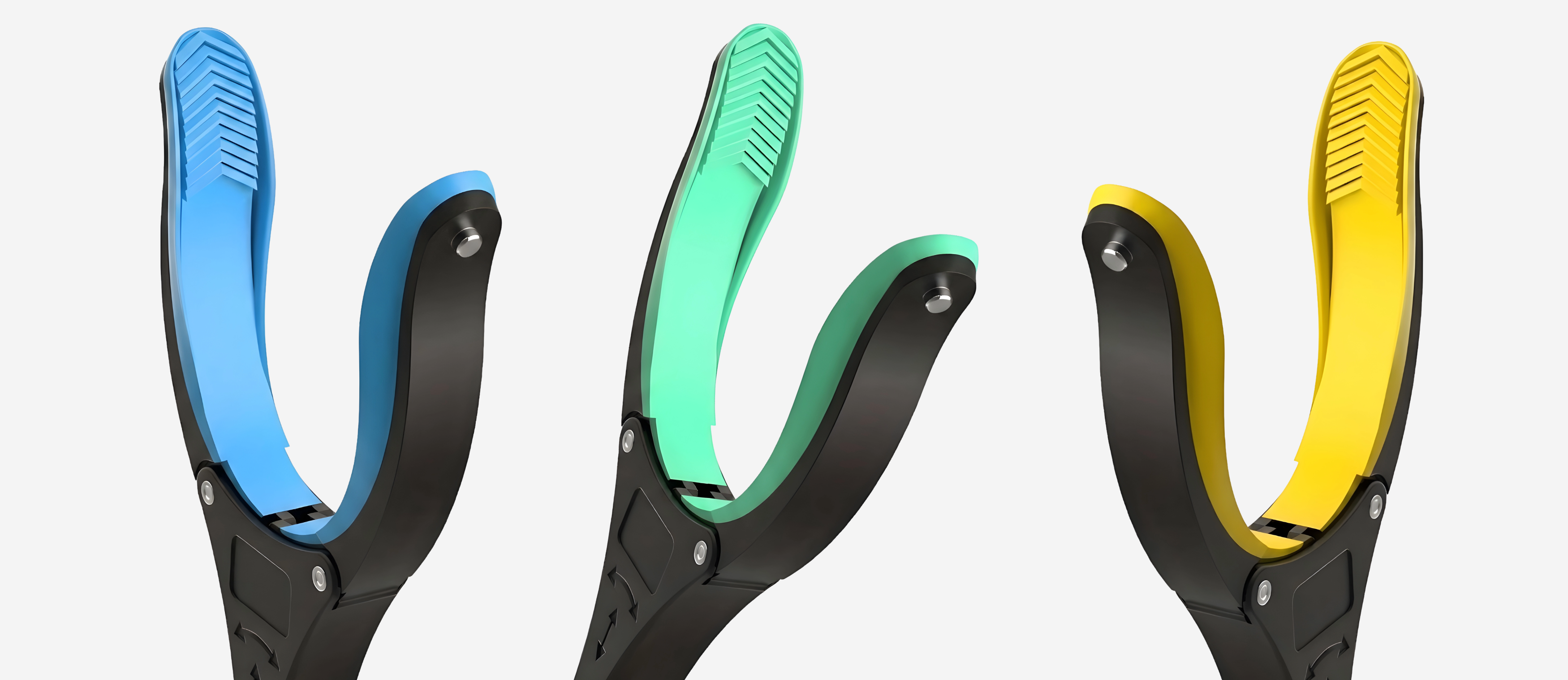
Total knee replacement recovery is one of the most precisely mapped surgical recovery timelines in orthopedic surgery -- and yet most patients go home with adaptive tool recommendations that treat the recovery as a single phase rather than a staged progression. The tools that support the first two weeks of post-TKR recovery (maximum restriction, walker dependence, pain peak) are different from the tools appropriate at six weeks (walker to cane transition, progressive weight-bearing) and twelve weeks (near-normal ambulation, return to most daily activities). GrabbersTool has mapped the TKR recovery arc to specific adaptive tool transitions so patients can plan ahead rather than improvise at each stage.
Direct answer: TKR adaptive tool needs change across recovery. Weeks 1-2: 43 inch Reacher Grabber is essential (no bending knee past 90 degrees, no floor bending), Standing Assist Tool at primary chair. Weeks 3-6: same tools plus Walking Cane with Cane Strap as walker is phased out. Weeks 6-12: cane as primary mobility aid, reachers maintained for fatigue management. Full specifications for each tool are on the product pages.
TKR Recovery Timeline and Adaptive Tool Map
| Recovery Phase | Functional Status | Primary Adaptive Tool Needs |
|---|---|---|
| Week 1-2 (acute) | Walker dependent, pain peak, limited knee flexion (0-90 degrees) | 43 inch Reacher (no floor bending), Standing Assist Tool, electric kitchen openers |
| Week 2-6 (subacute) | Progressive weight-bearing, PT-directed knee bend increases, walker to cane transition begins | Same tools; Walking Cane introduced, Cane Strap for carrying items |
| Week 6-12 (rehabilitation) | Cane primary, significant improvement in knee flexion, fatigue still significant | Cane with strap, reachers for fatigue management, electric openers for energy conservation |
| Week 12 and beyond | Near-normal ambulation for most patients, 90-120 degrees flexion achieved | Tools as ongoing convenience; reassess with surgeon and PT which restrictions are lifted |
Walking Cane height adjustability and Cane Strap specifications are on the product pages. View Walking Cane specifications
Week 1-2: The Bending Restriction
The most important adaptive tool for the first two weeks of TKR recovery is the 43 inch reacher grabber. The primary restriction in early TKR recovery is knee flexion: bending the knee past the permitted range (typically 90 degrees initially) is both painful and surgically counterproductive in the acute phase. Floor-level bending -- retrieving dropped items -- violates this restriction. The 43 inch reacher allows floor-level retrieval from standing, without any knee bending, eliminating the most common early recovery restriction violation that GrabbersTool hears from TKR customers.
The Operated Leg and Standing Assist
Rising from a chair after TKR is painful and requires specific technique: the operated leg moves forward, partial weight shift to the unaffected leg, arms push off the armrests. The Standing Assist Tool provides the arm-push support for this sequence, reducing the load on the operated leg during the critical transfer moment. For patients without chairs with armrests at the appropriate height, the standing assist tool substitutes for the armrest function. This is particularly important for the living room (couch height) and dining room (chair height may vary).
Walker to Cane Transition: The Cane Strap Advantage
The transition from walker to cane is a meaningful independence milestone in TKR recovery, typically occurring between weeks 3-6 depending on surgical progress and PT clearance. When patients transition to a cane, they gain one hand back for carrying -- the other hand holds the cane. The GrabbersTool Cane Strap attaches the cane to the wrist, making it possible to briefly release the cane handle for carrying tasks without the cane falling. This feature is particularly practical at the kitchen counter, where one hand may be needed for a task while the cane must remain accessible.
Bilateral TKR: Modified Timeline
Some patients undergo bilateral simultaneous TKR. The recovery is significantly more demanding -- both legs are restricted simultaneously, walker dependence is longer, and independence in transfer tasks is lower. For bilateral TKR, adaptive tool dependence extends longer and the standing assist tool is particularly important because there is no unaffected leg to compensate. Bilateral TKR recovery planning should be explicitly discussed with the surgical team regarding adaptive equipment needs before the procedure.
See also: Best Reacher for Hip Replacement: Recovery Setup and Technique Guide and Standing Assist Tool Buyer Guide: What to Know Before Purchasing.
Browse Reacher Grabber Tools, Ergonomic Mobility, and Easy Grip Kitchen Openers.


