

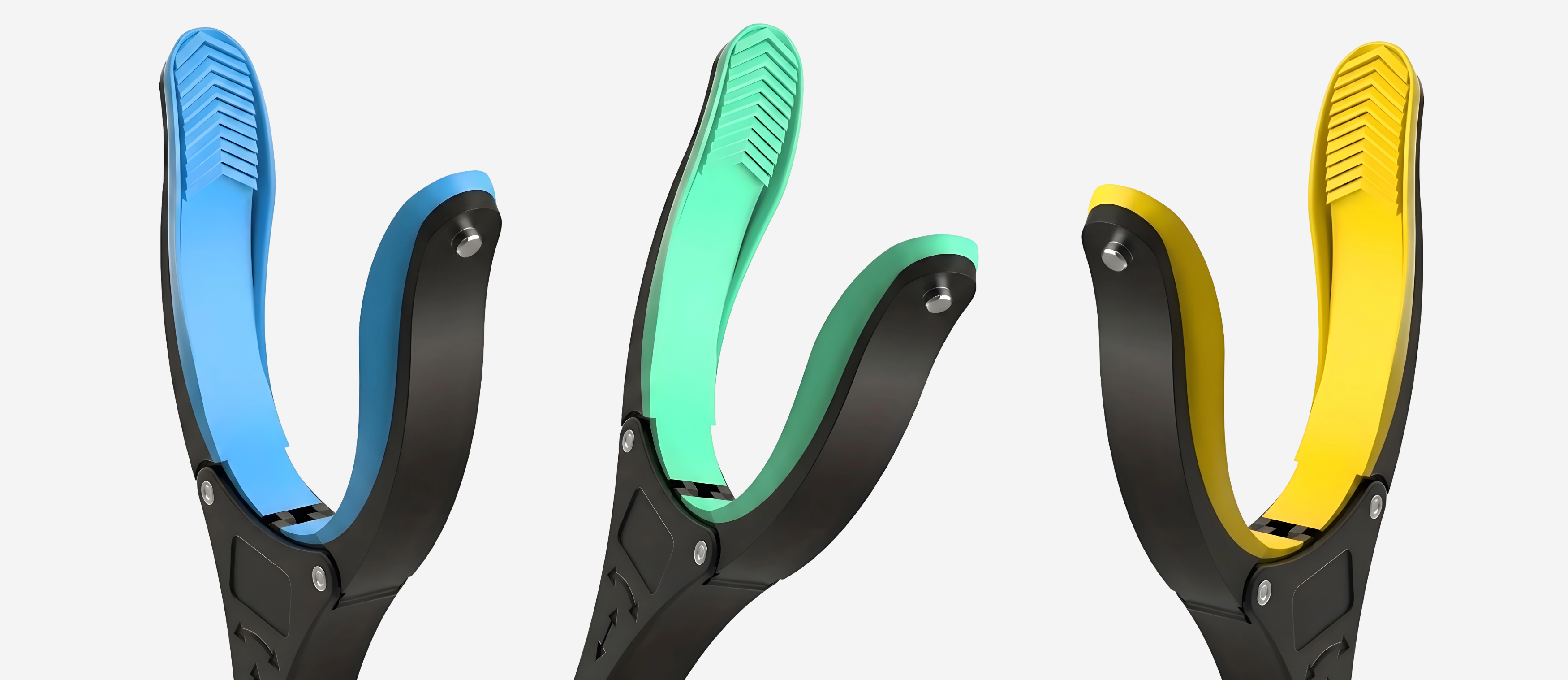
An occupational therapist does not hand a patient the first reacher on the shelf. They match the tool to the person. Reacher grabbers are one of the most frequently recommended adaptive tools in occupational therapy, and the reason they work so well is that a good OT assesses several specific factors before choosing one. Understanding what they check helps anyone choose the right reacher, whether or not an OT is involved.
Direct answer: Before recommending a reacher grabber, an occupational therapist assesses the users hand strength and grip effort, their height and bending restriction (to choose length), the specific tasks and objects they need to handle, their coordination and one-handed needs, and their safety and fall risk. The GrabbersTool 32-inch Reacher and 43-inch Reacher are chosen against these same factors. This guide walks through each one.
The Factors an OT Assesses
| What the OT Checks | Why It Matters | How It Shapes the Choice |
|---|---|---|
| Hand strength and grip effort | A stiff trigger is unusable for a weak or arthritic hand | A low-effort, cable-amplified trigger is prioritized |
| Height and bending restriction | Length must match the body and any no-bending precaution | 32-inch for general use; 43-inch for tall users and post-surgery no-bending |
| The actual task and objects | Retrieving keys differs from reaching high cabinets or dressing | Length, jaw type, and grip are matched to the real daily tasks |
| Coordination and one-handed needs | Tremor, stroke, or single-arm use change what works | A secure jaw and reliable one-handed trigger are prioritized |
| Safety and fall risk | The reacher must remove, not add, hazard | The tool is chosen to eliminate risky reaching, bending, and climbing |
The specifications an OT reviews for each model -- trigger effort, length, and jaw design -- are documented on the GrabbersTool 32-inch Reacher page and across the reacher grabber collection.
How the Assessment Translates to a Choice
- Arthritis and weak grip: the OT prioritizes a low-effort trigger -- the 32-inch Reacher for general daily use.
- Post-hip or knee surgery: the no-bending precaution drives the choice to the 43-inch Reacher for dressing and floor retrieval.
- Stroke and one-handed use: a reliable single-hand trigger and secure jaw are the priority.
- Kitchen grip tasks: the OT often pairs a reacher with the Electric Jar Opener, since jar opening is a separate problem from reach.
Getting an Assessment
An occupational therapy assessment matches the tool to the person, not the person to the tool. An OT can evaluate the specific hand strength, height, tasks, coordination, and safety factors and recommend the right reacher and any complementary adaptive tools. It is especially valuable after surgery, a stroke, or a new diagnosis. The models an OT commonly recommends are the GrabbersTool 32-inch Reacher and 43-inch Reacher.
The Assessment Rule
The right reacher is the one matched to your strength, height, task, coordination, and safety -- exactly the factors an OT checks. Choose against those five, and the tool fits. See the full reacher grabber collection and the arthritis kitchen tools collection for OT-recommended options.


