

Limb amputation requires a comprehensive kitchen adaptive approach that differs fundamentally depending on whether the amputation is of an upper or lower limb, the level of amputation, and whether the dominant or non-dominant limb is involved. Upper limb amputation directly impacts kitchen manipulation tasks: one-handed kitchen techniques are available for many tasks, but bilateral tasks (those requiring two hands to stabilize and manipulate simultaneously -- the most common being jar opening) require specific adaptive equipment or prosthetic solutions. Lower limb amputation does not directly impair hand function but affects kitchen standing tolerance, prosthetic fit in the kitchen environment (hard non-slip floors, hot environments that affect socket comfort), and the ability to bend and reach at floor level. Transtibial (below-knee) amputation is more functionally capable in the kitchen than transfemoral (above-knee) amputation, as the knee is preserved. Bilateral amputation creates exponentially greater challenges requiring comprehensive adaptive equipment assessment with a certified prosthetist and occupational therapist.
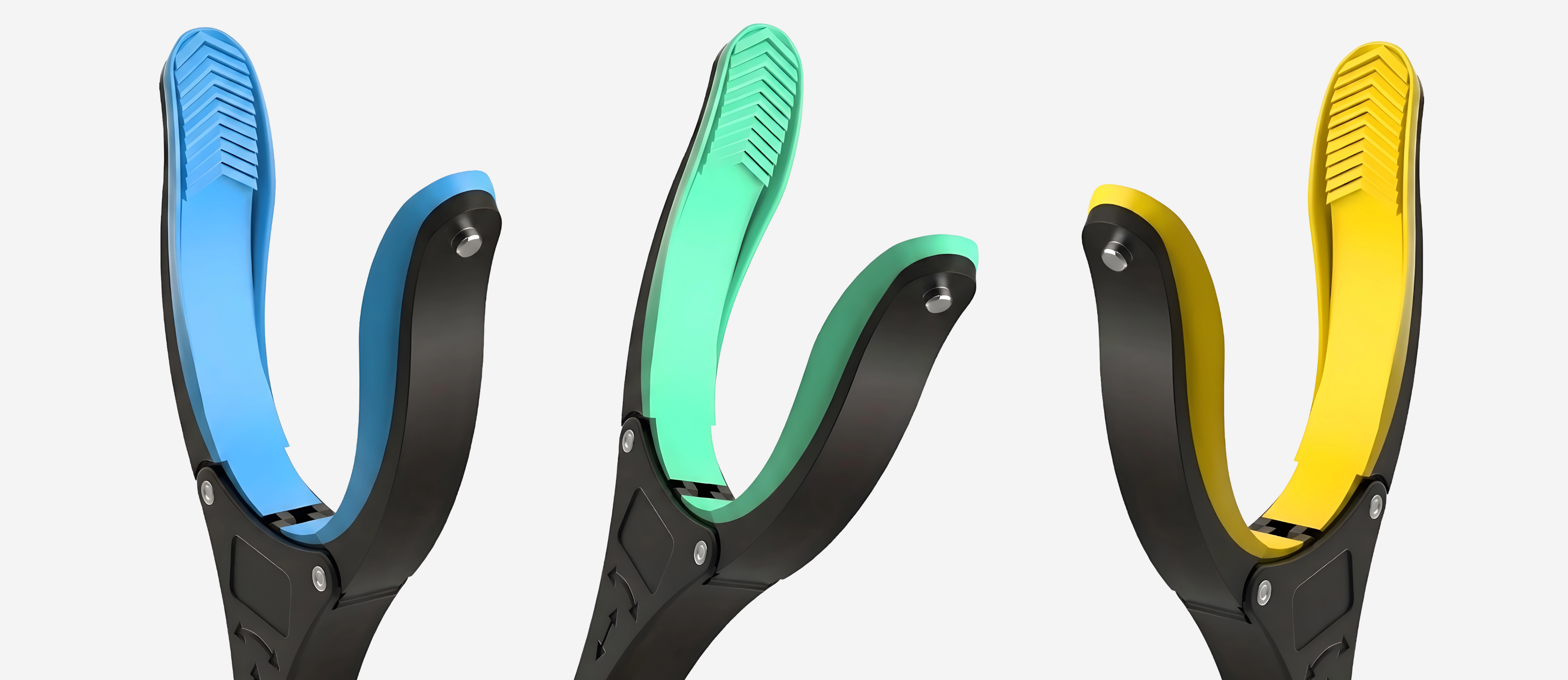
Direct answer: For upper limb amputees, the electric jar opener is the critical adaptive tool: it enables the only kitchen task that truly requires two-handed stabilization-plus-rotation to be performed one-handed. For lower limb amputees, the reacher compensates for reduced floor-level access without bending. The GrabbersTool Electric Jar Opener is the most important upper limb amputation kitchen tool; the 32-inch Reacher is recommended for lower limb amputation kitchen floor access.
Amputation Level and Kitchen Adaptive Tool Priority
| Amputation Type and Level | Primary Kitchen Challenge | Adaptive Tool Priority |
|---|---|---|
| Transradial (below elbow) -- unilateral | One-handed kitchen limitation: all bilateral tasks require adaptation; jar opening is the most common insurmountable one-handed kitchen task; stabilizing cutting boards, mixing, and opening containers all require two-hand techniques or adaptive equipment | Electric jar opener (stabilizes jar, rotates lid) -- enables jar opening with one hand; suction cup cutting board for one-handed cutting; one-handed jar-stabilizing device; universal cuff for utensil holding if prosthesis not used |
| Transhumeral (above elbow) -- unilateral | Greater proximal control loss; prosthetic terminal device (hook or hand) less dexterous than below-elbow prosthesis; kitchen one-handed challenges same as transradial but with more limited prosthetic assistance | Electric jar opener is essential; one-handed kitchen techniques extensively; OT and certified prosthetist collaboration for prosthetic terminal device selection for kitchen tasks |
| Transtibial (below knee) -- unilateral | Standing kitchen tolerance varies with prosthetic fit; hard kitchen floors can increase residual limb discomfort; floor-level item retrieval requires bending with prosthesis; prosthetic socket heat and sweat in warm kitchen environment | 32-inch reacher for floor-level item retrieval; anti-fatigue mat (also cushions prosthetic socket interface); seated kitchen workstation for longer cooking sessions; waterproof shower prosthesis option for kitchen wet work |
| Transfemoral (above knee) -- unilateral | Greater prosthetic energy cost for standing kitchen work; knee prosthesis management during kitchen tasks; squatting for low-level access impossible with most prosthetic knees; longer rehabilitation before independent kitchen use | 32-inch reacher essential (no squatting or bending possible with prosthetic knee); seated kitchen workstation; kitchen work surface at appropriate height for standing or seated prosthetic kitchen use |
See the Electric Jar Opener and 32-inch Reacher for amputation kitchen adaptive independence.


