

Huntington disease (HD) is an autosomal dominant neurodegenerative disease caused by CAG repeat expansion in the HTT gene, producing progressive motor, cognitive, and psychiatric deterioration. Caregivers face a specific challenge in managing kitchen safety across HD stages because the disease progresses over 15-20 years through predictable phases, each requiring different safety interventions. Early HD caregivers must balance preserving the patient independence and dignity against increasing safety risks from chorea (involuntary movements), cognitive decline, and swallowing changes. Mid-stage HD caregivers provide increasing supervision and assistance as falls, dysphagia, and cognitive impairment make independent kitchen use dangerous. Late-stage HD requires full caregiver meal preparation and feeding. Understanding this progression helps caregivers anticipate and prepare rather than react to each new safety crisis.
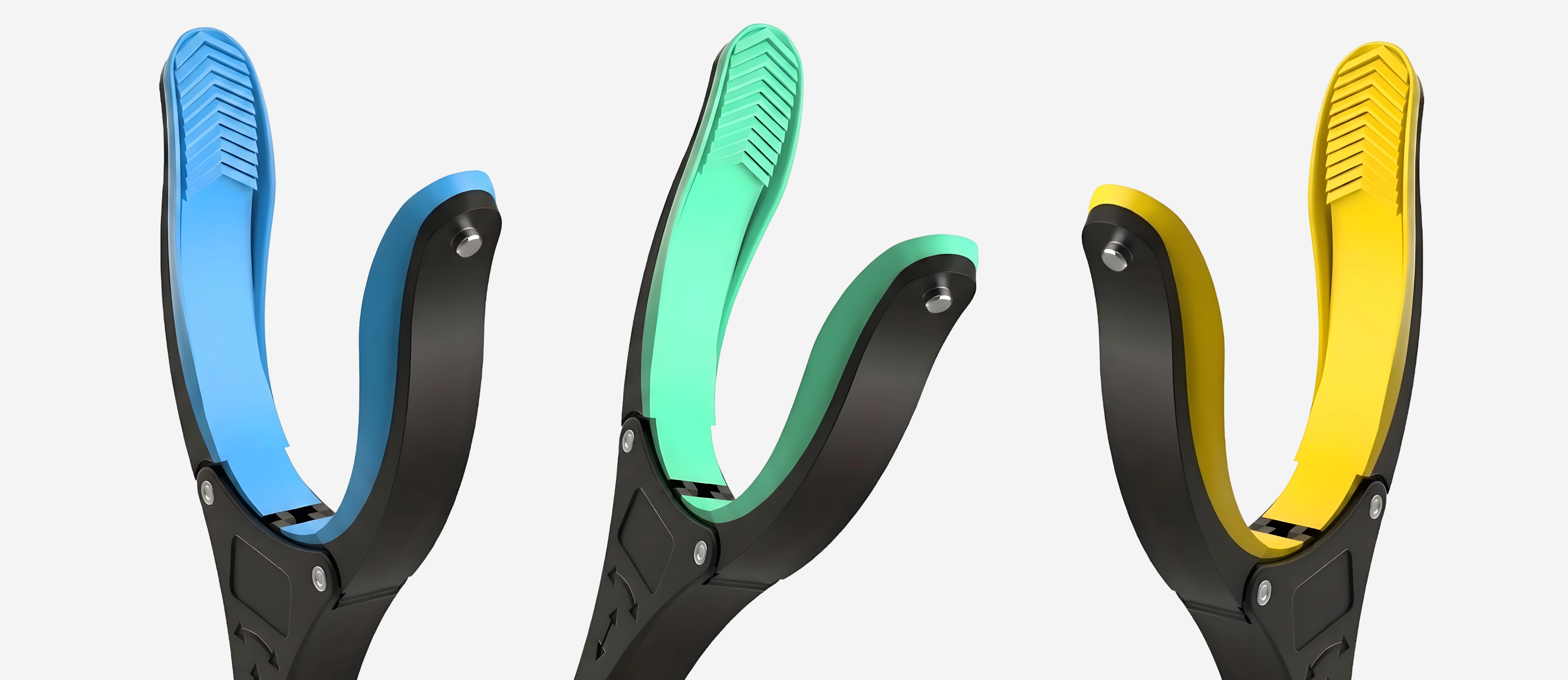
Direct answer: HD caregiver kitchen adaptive tools must evolve with the disease stage. In early HD, the electric jar opener helps the person with HD maintain jar-opening independence despite choreiform movement in the hands. In mid-stage HD, the reacher reduces fall risk during bending episodes complicated by chorea. In late HD, caregiver takes full kitchen responsibility. The GrabbersTool Electric Jar Opener is most relevant in early-to-mid stages when some kitchen participation remains possible.
HD Stage and Caregiver Kitchen Safety Strategy
| HD Stage | Kitchen Safety Risk | Caregiver Strategy |
|---|---|---|
| Early HD (chorea mild, cognition mildly affected) | Mild involuntary movements affecting carrying and precision tasks; some cognitive slowing; driving may be ending; relatively independent | Supervision for stove and sharp items; electric jar opener for coordination-sensitive jar task; unbreakable cookware; non-slip mats; caregiver presence during cooking; simple familiar meals |
| Mid-stage HD (significant chorea, cognitive decline) | Falls risk with chorea; swallowing changes beginning; significant cognitive impairment affects kitchen safety judgment; cannot safely use stove unsupervised | Caregiver present for all cooking; stove knob covers when unsupervised; electric jar opener for caregiver-supervised jar tasks; reacher if bending risky; texture modification for dysphagia; no sharp implements unsupervised |
| Late HD (severe chorea or rigidity, marked cognitive decline) | Cannot participate in kitchen safely; falls very common; severe dysphagia requiring texture modification; full care dependence | Caregiver prepares all meals; patient does not participate in kitchen; texture-modified diet per SLP; PEG tube consideration if dysphagia is life-threatening; focus on safe eating environment not kitchen independence |
Browse the adaptive kitchen tools and Electric Jar Opener for Huntington disease caregiver kitchen planning.


