

Lambert-Eaton myasthenic syndrome (LEMS) is a rare autoimmune neuromuscular disorder affecting the neuromuscular junction, in which antibodies against voltage-gated calcium channels impair the release of acetylcholine from the nerve endings, reducing the signal transmission to the muscles and causing weakness. LEMS is often associated with an underlying cancer (particularly small cell lung cancer -- paraneoplastic LEMS, in about half of cases) and requires evaluation for this, while other cases are autoimmune without cancer. LEMS causes: proximal muscle weakness (particularly affecting the legs and hips -- causing difficulty with standing, walking, climbing stairs, and rising from seated positions, and also the arms and shoulders), a characteristic feature of the weakness temporarily improving with brief exercise (the warm-up phenomenon -- unlike myasthenia gravis, where activity worsens the weakness; in LEMS, brief repeated muscle use can temporarily increase the strength before fatigue sets in), autonomic symptoms (dry mouth -- a common feature, and others), and reduced reflexes. The proximal leg and hip weakness is often the most prominent functional feature -- affecting mobility, standing, and rising. LEMS is treated with medications (that improve the neuromuscular transmission -- such as amifampridine/3,4-diaminopyridine, and other treatments), treating any underlying cancer, and immunotherapy. Kitchen function in LEMS is affected by: proximal leg and hip weakness (affecting kitchen standing, mobility, and rising from seated positions), proximal arm and shoulder weakness (affecting overhead reach and lifting), fatigue and the weakness (though with the characteristic warm-up phenomenon -- brief activity can temporarily improve the strength), and the autonomic symptoms (dry mouth affecting eating). Adaptive tools and strategies support LEMS kitchen function. This guide covers kitchen adaptation for Lambert-Eaton myasthenic syndrome.
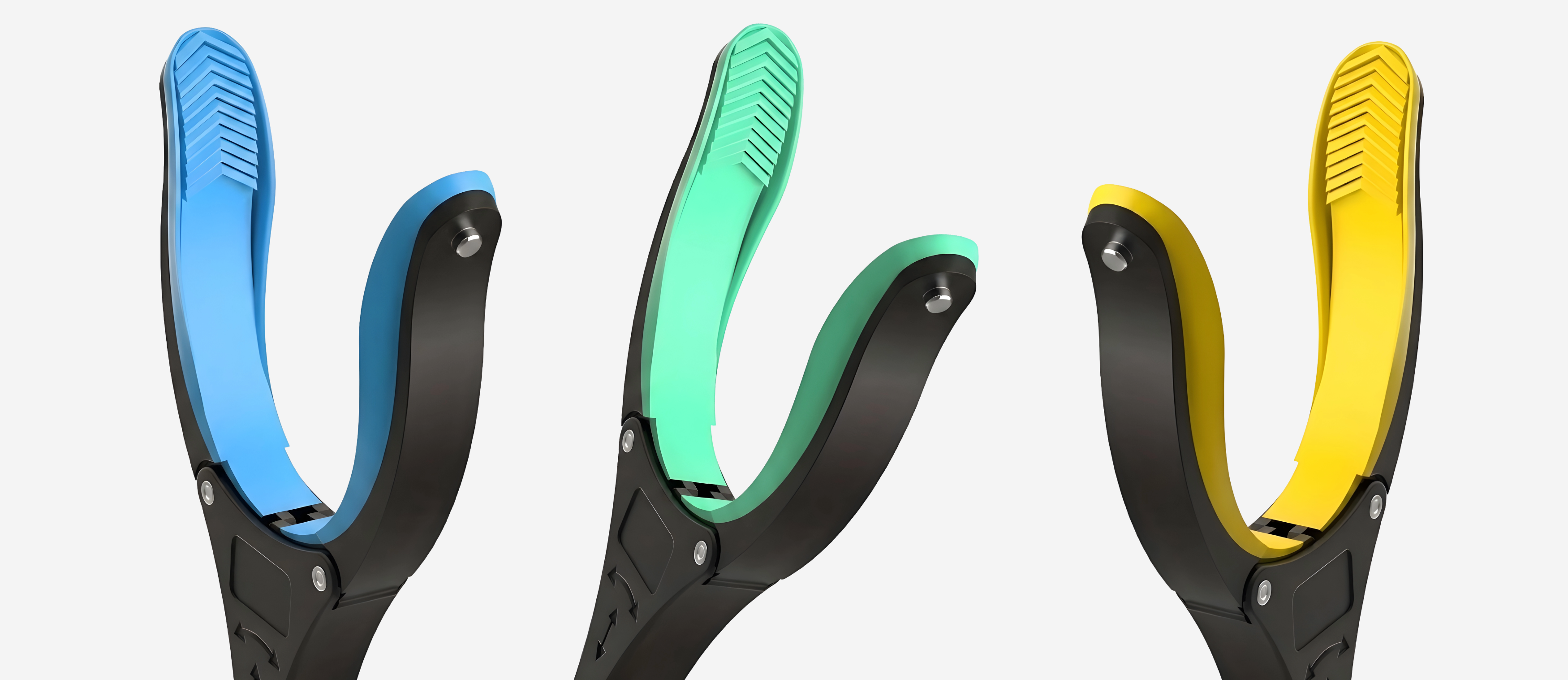
Direct answer: Lambert-Eaton syndrome kitchen adaptive tools address the proximal leg and hip weakness (seating and support for standing and rising), proximal arm weakness (reachers for overhead reach), and the fatigue -- alongside the LEMS treatment. The GrabbersTool 32-inch Reacher compensates for LEMS proximal arm weakness affecting overhead reach, and kitchen seating addresses the proximal leg weakness.
Lambert-Eaton Syndrome Kitchen Adaptive Strategy
| LEMS Feature | Kitchen Impact | Adaptive Solution |
|---|---|---|
| Proximal leg and hip weakness affecting standing and mobility | LEMS proximal leg and hip weakness (often the most prominent feature) affects kitchen standing, mobility, and rising -- the leg and hip weakness causes difficulty with prolonged kitchen standing (at counters and the stove), walking and mobility in the kitchen, climbing stairs to the kitchen, and rising from seated positions (sit-to-stand from kitchen chairs -- requiring the hip and leg strength that LEMS reduces); the proximal leg and hip weakness affects the standing, mobility, and rising aspects of kitchen tasks; this proximal lower body weakness is a key LEMS kitchen limitation | Seated kitchen preparation to reduce the proximal leg weakness standing demand (a kitchen stool or perch to sit while working); kitchen chair with high armrests for the sit-to-stand difficulty (push up with the arms to compensate for the leg and hip weakness) and raised seating (reduces the strength needed to rise); stability support and mobility aids for the kitchen mobility as appropriate; the seated preparation and rising support address the proximal leg and hip weakness; the LEMS treatment (improving the strength) helps; the adaptations support kitchen standing, mobility, and rising with the leg and hip weakness |
| Proximal arm weakness and the warm-up phenomenon | LEMS proximal arm and shoulder weakness affects overhead reach and lifting -- the shoulder girdle weakness affects raising the arms to reach overhead cabinets and lifting items overhead, and the proximal arm weakness affects lifting and carrying; a characteristic LEMS feature is the warm-up phenomenon -- the weakness temporarily improving with brief repeated muscle use (unlike myasthenia gravis; in LEMS, brief activity can temporarily increase the strength before fatigue sets in); the proximal arm weakness affects overhead reach and lifting; the warm-up phenomenon is a distinctive LEMS feature that can briefly improve the strength | Reacher grabber (GrabbersTool 32-inch) for overhead and high kitchen reach when the LEMS proximal shoulder weakness limits arm elevation (retrieving items without raising the arms); lightweight kitchen tools and cookware to reduce the lifting demand on the weak proximal arms; kitchen reorganization to accessible heights (avoiding overhead reach); the reacher and lightweight tools address the proximal arm weakness; the characteristic warm-up phenomenon may briefly improve the strength (though fatigue follows -- pace to manage the fatigue); the LEMS treatment improves the strength; the adaptations support the reach and lifting with the proximal arm weakness |
| Fatigue, autonomic symptoms, cancer evaluation, and LEMS support | LEMS involves fatigue and the weakness (with the characteristic warm-up phenomenon -- brief activity temporarily improving the strength, but with underlying fatigue), affecting kitchen endurance; autonomic symptoms (dry mouth -- a common LEMS feature, affecting eating and requiring hydration; and others) are relevant; importantly, LEMS is often associated with an underlying cancer (particularly small cell lung cancer -- requiring evaluation and, if present, treatment -- which is important for the LEMS and the cancer); the LEMS treatment (medications improving the transmission -- amifampridine and others, treating any underlying cancer, and immunotherapy) controls the condition and improves the strength; the combination of adaptive tools, energy management, and the LEMS treatment supports kitchen function | Energy management for the LEMS fatigue (pacing -- though noting the warm-up phenomenon; seated preparation; simple meals; and managing the fatigue); for the dry mouth (frequent water sips available during kitchen work and meals; moist foods for easier eating; and saliva management); the LEMS treatment (medications -- amifampridine and others improving the strength, treating any underlying cancer -- the important cancer evaluation and treatment, and immunotherapy -- per the neurologist) controls the condition and improves the strength; the important evaluation for underlying cancer (particularly small cell lung cancer -- per the physician); the combination of adaptive tools, energy management, and the LEMS treatment supports kitchen function; neurologist for the LEMS management; the adaptations support kitchen function alongside the LEMS treatment |
See the 32-inch Reacher for Lambert-Eaton syndrome kitchen proximal weakness support, alongside the LEMS treatment.


