

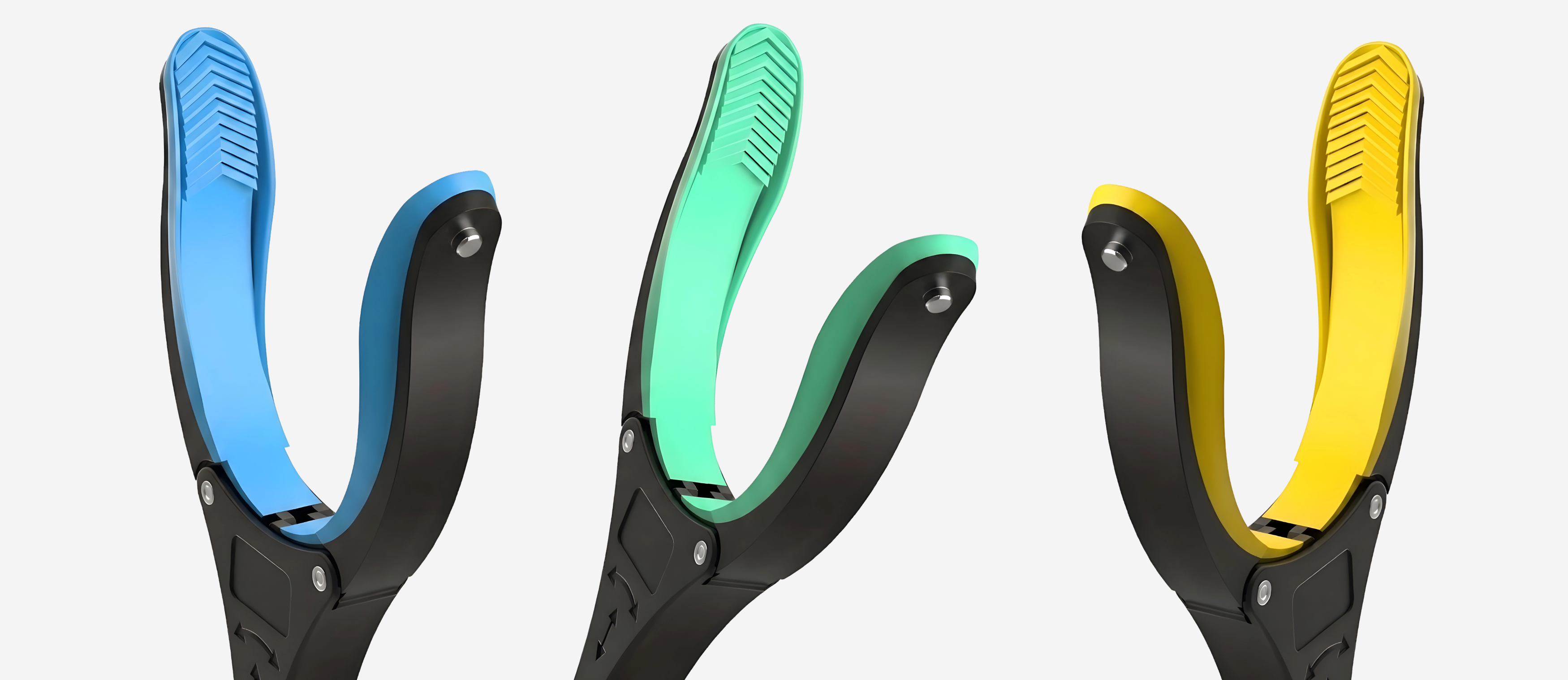
Occupational therapists consistently observe that male patients delay adaptive equipment adoption longer than female patients with equivalent functional limitations. The average delay is significant — often months of managed difficulty rather than immediate adoption after the functional need emerges. The reasons are documented in health psychology research: men more consistently report adaptive equipment as signaling dependence and loss of capability, and are more likely to interpret a reacher grabber or jar opener as evidence that they can no longer perform tasks rather than as a tool that expands what they can do. Understanding this pattern allows caregivers, healthcare providers, and the patients themselves to reframe the decision accurately.
Direct answer: men delay adaptive tool adoption because the conventional framing — "you need help with tasks" — conflicts with the self-concept of competence and capability that many men hold about household function. The accurate reframe is: adaptive tools are efficiency tools that expand functional range, not evidence of incapacity. A reacher grabber that retrieves floor objects without bending is no different from any other tool that extends human reach. The relevant question is not "does using this tool mean I cannot do the task?" — it is "does this tool let me do the task better?"
The Research Basis for the Pattern
Health psychology research on gender differences in adaptive equipment adoption identifies several consistent findings:
- Men are more likely than women to attribute difficulty with tasks to temporary factors rather than persistent functional change, delaying the recognition that an adaptive tool is warranted
- Men more frequently describe adaptive equipment as "for old people" or "for sick people" — categorical framing that creates distance from personal applicability
- Male patients are more responsive to efficiency and performance framing than to dependence-reduction framing — "this extends what you can do" outperforms "this helps you when you need it"
- Social context matters: men are more likely to adopt adaptive tools when the recommendation comes from a respected source (physician, physio) rather than a family member, because the clinical recommendation de-personalizes the decision
The Efficiency Reframe in Practice
The reframe that most consistently moves male patients toward adaptive tool adoption is the efficiency and capability expansion argument rather than the limitation-acknowledgment argument:
| Task | Limitation Framing (less effective) | Efficiency Framing (more effective) |
|---|---|---|
| Floor retrieval | "You need this because bending is too hard" | "This lets you pick up anything without stopping what you are doing" |
| Jar opening | "You cannot open jars anymore" | "One-second lid removal without any effort — faster than manual every time" |
| Standing from chair | "You need support to get up" | "Eliminates the awkward chair-push and gets you vertical cleanly" |
| Walking cane | "You need a cane for safety" | "Extends your range on outdoor terrain that would otherwise be limiting" |
The performance and specification framing of GrabbersTool products — jaw force specifications, reach extension distances, motor performance on electric openers — directly supports the efficiency narrative. These are the specifications that communicate tool capability rather than user limitation. Product specifications for each tool are on the respective product pages. View reacher grabber specifications
The Post-Surgery Window
The post-surgery period is the single most receptive window for male patient adaptive tool adoption. The clinical context — surgeon and physiotherapist instructions — provides the respected-source recommendation that is most effective for this population. The functional need is explicit and temporary: the tools are for recovery, not permanent dependency. And the time pressure of returning home from surgery creates urgency that overcomes habitual delay.
GrabbersTool sells a significant portion of reacher grabbers and standing assist tools to male patients in surgical recovery contexts — hip replacement, knee replacement, and spinal surgery being the most common. These patients often report that the tools remain in use long after the formal recovery period because the efficiency value continues to apply.
The Long-Term Outcome of Earlier Adoption
Earlier adaptive tool adoption — before the functional limitation becomes severe rather than after — produces better outcomes for the same reason that any tool is easier to learn when not urgently needed. A man who adopts a reacher grabber when his arthritis is moderate has time to integrate the tool naturally into his routine. The man who adopts only after a fall has a disrupted relationship with the tool (associated with the fall event) and less opportunity to develop fluent technique.
Healthcare providers who present adaptive tools to male patients as performance optimization rather than disability management consistently report earlier adoption and higher satisfaction with tool use.
See also: Aging Parent at Home: The Adaptive Tool Conversation You Need to Have and The True Cost of Not Using Adaptive Tools.
Browse Reacher Grabber Tools and Ergonomic Mobility for the full GrabbersTool range.


