

Occupational therapy is one of the most consistently underutilized healthcare services for people with mobility and functional limitations — not because it is inaccessible but because most people do not know what occupational therapists actually do. The common misconception is that OTs are primarily for children with developmental conditions or for vocational rehabilitation. In reality, the largest single domain of occupational therapy practice for adults is exactly what the name says: helping people perform the daily occupations of life — dressing, cooking, bathing, working, and managing a household — when injury, illness, or aging has compromised the ability to do so.
Direct answer: occupational therapists conducting home assessments evaluate six core areas: transfers (sitting, standing, bed mobility), mobility (ambulation and wheelchair use in the home environment), upper limb function (grip, reach, coordination), kitchen independence, bathroom safety, and cognitive function as it relates to self-care. Their adaptive equipment recommendations across these domains overlap significantly with the GrabbersTool product range: reacher grabbers, kitchen openers, standing assist tools, walking canes, and cane accessories are among the most frequently recommended OT adaptive equipment categories for community-dwelling adults.
What an OT Home Assessment Covers
A home occupational therapy assessment — conducted either in the patient home or in a simulated home environment in a rehabilitation facility — evaluates the fit between the person functional capacity and their specific home environment. Key assessment components:
- Transfer assessment: can the patient safely perform sit-to-stand at their specific chairs, toilet, and bed? What equipment or modification is needed?
- Reach and grip assessment: can the patient access items at all heights in their home? What is the functional grip strength and pattern?
- Kitchen assessment: can the patient safely operate kitchen equipment, access stored items, open standard containers?
- Bathroom assessment: can the patient safely enter and exit the bath or shower, use the toilet, and complete hygiene tasks?
- Mobility assessment: is the walking aid appropriate for the home environment? Are there fall hazards on primary paths?
- Cognitive assessment: can the patient manage multi-step tasks safely (stove use, medication management)?
The Most Commonly Recommended Adaptive Equipment Categories
| OT Assessment Area | Commonly Recommended Equipment | GrabbersTool Category |
|---|---|---|
| Kitchen independence | Electric jar opener, electric can opener, multi-opener | Easy Grip Kitchen Openers |
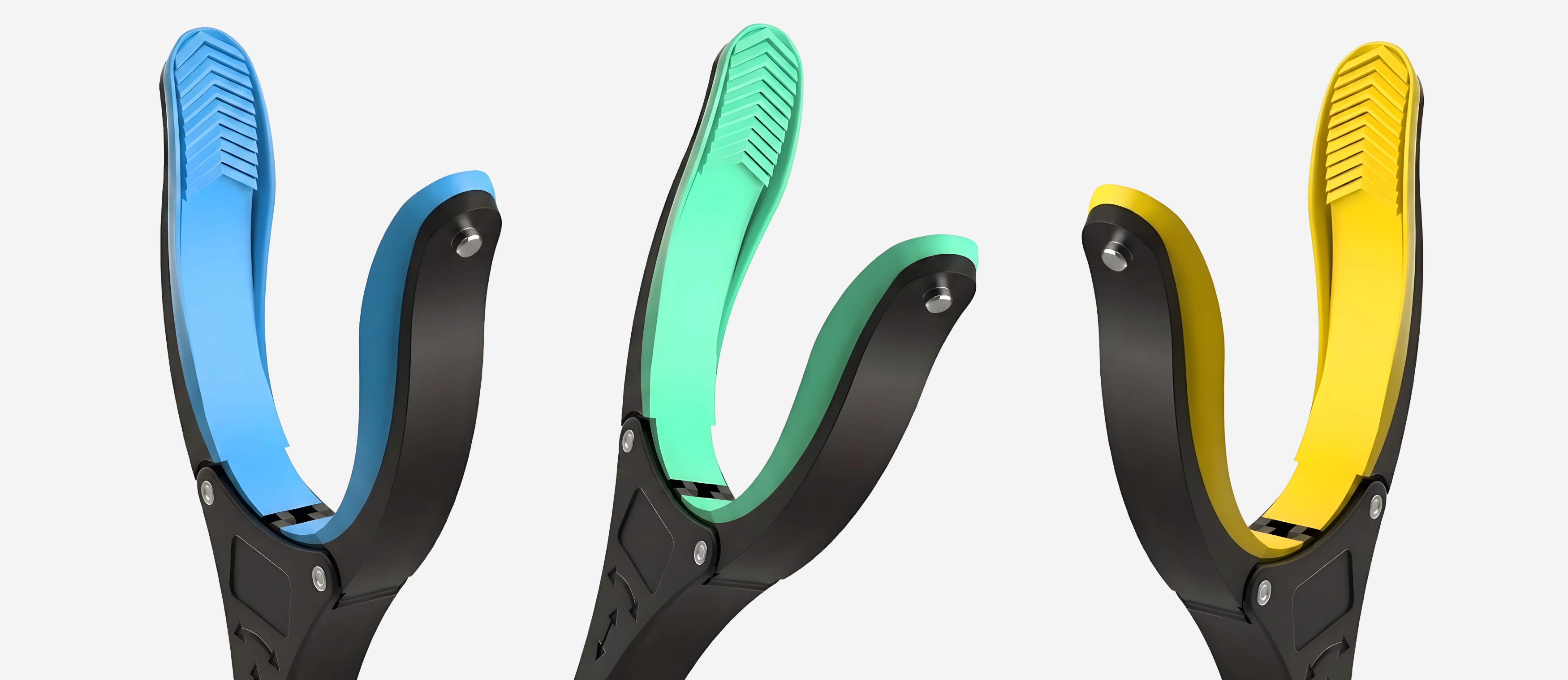
| Floor object retrieval | Reacher grabber (32" or 43" depending on use) | Reacher Grabber Tools |
| Chair transfers | Standing assist rail for primary chair | Standing Assist Tool |
| Ambulation safety | Walking cane at correct height; cane management solution | Walking Cane, Cane Strap |
| Dressing | Reacher grabber for clothing management; sock aid | Reacher Grabber Tools |
When an OT recommends a reacher grabber, the length and jaw type specification comes from the assessment findings — the user mobility pattern, home layout, and primary tasks. GrabbersTool product specifications (jaw opening width, reach length, trigger force) allow OTs to match the recommendation to exact functional requirements. View 32" specifications | View 43" specifications
How OT Recommendations Translate to GrabbersTool Products
Occupational therapists recommend adaptive equipment by category and functional specification — not by brand. Their prescription might read: "reacher grabber, 32 inches, soft jaw, low trigger force" or "electric jar opener, automatic shutoff." GrabbersTool product specifications are designed to allow direct comparison against OT recommendations: the specifications published on each product page — jaw type, reach length, mechanism type — correspond to the categories OTs use when prescribing.
An OT referral to GrabbersTool typically comes through one of two pathways: the OT writes a generic prescription that the patient fills by searching online, or the OT provides a specific product recommendation directly. Either way, the product page specifications are the reference point for confirming the product matches the prescription.
When to Request an OT Assessment
An OT assessment is appropriate at any of the following transitions:
- Discharge from hospital after surgery or major illness — most hospitals offer OT discharge planning
- Any fall that resulted in injury or near-miss — falls indicate a mismatch between functional capacity and home environment
- Significant increase in the difficulty of daily tasks — a change in what is manageable is a clinical indicator, not an aging "normal"
- New diagnosis of a progressive condition (MS, Parkinson's, ALS) — early OT engagement allows proactive rather than reactive adaptation
- Post-surgical recovery where the surgeon or physio has noted that home setup needs review
OT assessments are typically covered by Medicare and most private insurance when ordered by a physician for a specific medical indication.
See also: The Occupational Therapy Toolkit: Essential Adaptive Equipment Explained and Aging in Place: The Adaptive Tool Strategy That Actually Works.
Browse the full GrabbersTool range at Reacher Grabber Tools, Easy Grip Kitchen Openers, and Ergonomic Mobility.


