

Duchenne muscular dystrophy (DMD) and Becker muscular dystrophy (BMD) are X-linked recessive muscular dystrophies caused by mutations in the DMD gene encoding dystrophin, a protein essential for muscle fiber membrane stability. In DMD (the more severe form), dystrophin is virtually absent, causing progressive muscle degeneration from early childhood; in BMD (the milder allelic form), reduced or partially functional dystrophin causes a later-onset, slower-progressing disease. DMD progression: proximal muscle weakness beginning in early childhood (difficulty running, jumping, climbing stairs; Gower sign -- using the hands to climb up the legs to stand); progressive loss of ambulation (typically by early adolescence in DMD); progressive weakness affecting the upper extremities, respiratory muscles (requiring ventilatory support), and cardiac muscle (dystrophic cardiomyopathy); and contractures and scoliosis. Modern DMD care (corticosteroids, cardiac and respiratory management, and emerging genetic therapies -- exon-skipping and gene therapies) has extended survival into adulthood. BMD has a more variable and milder course, with many patients remaining ambulatory into adulthood and some with predominantly cardiac involvement. Kitchen function in DMD and BMD is affected by progressive proximal weakness (shoulder and hip girdle weakness affecting reach, lifting, and mobility), progressive distal weakness in later stages (hand grip), wheelchair use (in DMD from adolescence; variable in BMD), contractures (limiting range of motion), and reduced endurance (from muscle weakness and respiratory involvement). Kitchen adaptation evolves with disease progression.
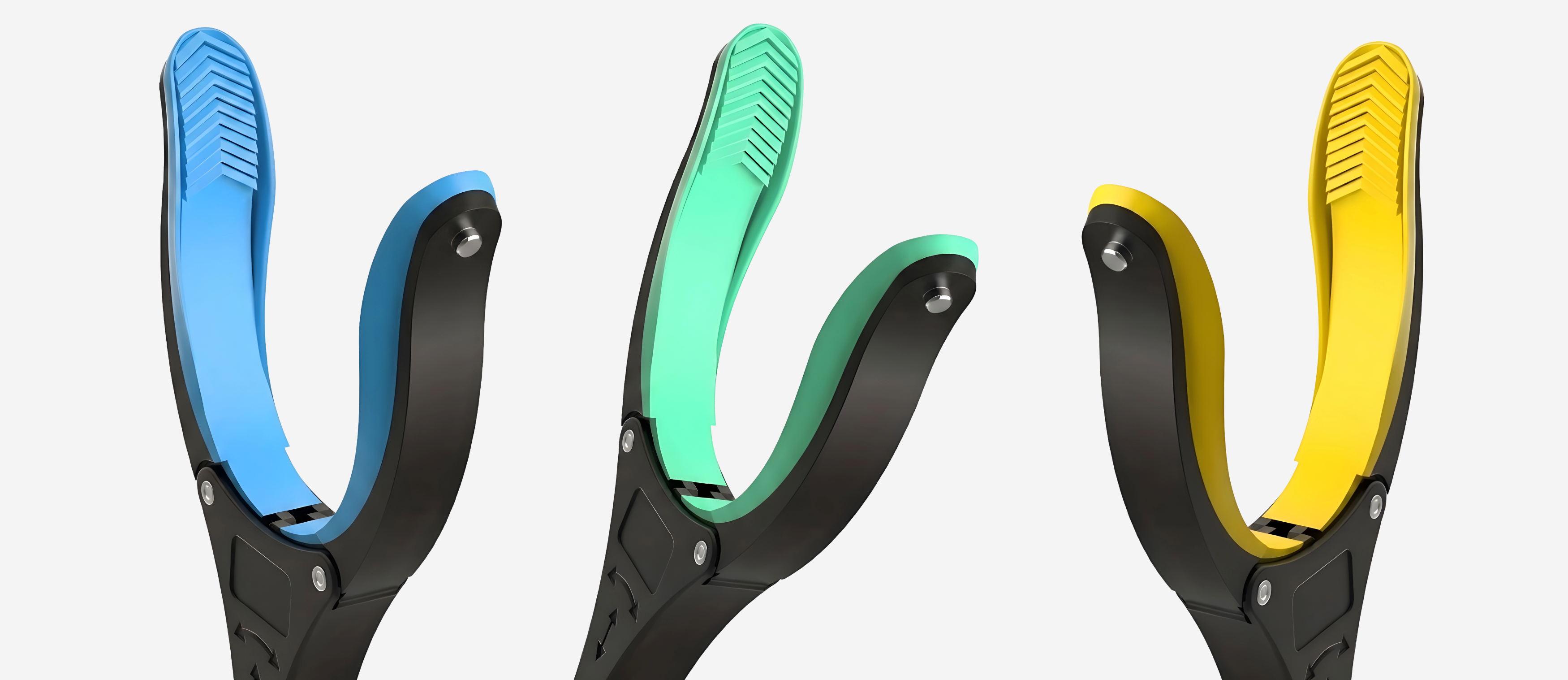
Direct answer: Muscular dystrophy kitchen adaptive tools address progressive proximal weakness (reachers, lightweight tools, wheelchair-accessible setup), progressing to distal weakness support (electric appliances). The GrabbersTool 32-inch Reacher compensates for muscular dystrophy proximal shoulder weakness and wheelchair reach limitations, and the Electric Jar Opener compensates for hand weakness in later stages.
Muscular Dystrophy Kitchen Adaptive Strategy
| MD Feature | Kitchen Impact | Adaptive Solution |
|---|---|---|
| Progressive proximal weakness and reach limitation | DMD and BMD proximal weakness (shoulder and hip girdle) develops and progresses -- shoulder girdle weakness limits kitchen overhead reach and arm elevation (the patient cannot lift arms to reach cabinets or lift items overhead); proximal arm weakness limits lifting and carrying kitchen items; hip girdle weakness (and eventual loss of ambulation in DMD) affects kitchen mobility and standing; the weakness is progressive, so kitchen adaptive needs increase over time; lifting even light kitchen items becomes difficult as proximal weakness advances; the shoulder weakness makes any overhead kitchen task increasingly impossible | Reacher grabber (GrabbersTool 32-inch) for kitchen overhead and distant reach when muscular dystrophy shoulder weakness limits arm elevation -- and for wheelchair reach in non-ambulatory patients; lightweight kitchen tools and cookware (critical as proximal strength declines -- every gram matters); kitchen reorganization to place all items within the accessible reach zone (avoiding overhead storage); wheelchair-accessible kitchen setup for non-ambulatory patients; power mobility and positioning; occupational therapy for progressive muscular dystrophy kitchen adaptation as weakness advances |
| Progressive distal weakness and hand function in later stages | As muscular dystrophy progresses (particularly in advanced DMD), distal weakness affects the hands -- grip strength declines, affecting the ability to grasp kitchen items, open jars and containers, and use utensils; fine motor function is affected; the hand weakness in advanced DMD can be significant, making even light manipulation difficult; combined with the proximal weakness, comprehensive upper extremity limitation develops; the progressive nature means hand-function adaptive needs increase; residual hand function should be supported and preserved with energy conservation | Electric jar opener (GrabbersTool) and electric appliances for muscular dystrophy hand weakness -- removing the grip and force demands the weakened hands cannot meet; lightweight, easy-grip utensils and tools; adaptive equipment matched to residual hand function (as function declines, more of the task is done by the equipment); positioning support (arm supports, mobile arm supports/balanced forearm orthoses that support the weak arm for tabletop tasks); energy conservation to preserve limited strength; occupational therapy for progressive hand-function kitchen adaptation |
| Wheelchair use, contractures, endurance, and comprehensive MD kitchen support | DMD patients use wheelchairs from adolescence (and BMD patients variably) -- kitchen function is from a seated wheelchair position with the associated access requirements (counter clearance, reach zones, appliance accessibility); contractures (elbow, wrist, and hand contractures in advanced disease) limit range of motion for kitchen tasks; reduced endurance (from muscle weakness and respiratory involvement) limits sustained kitchen activity; respiratory involvement (nocturnal and eventually daytime ventilatory support) affects overall energy; cardiac involvement requires activity consideration; the comprehensive, progressive nature of muscular dystrophy requires evolving, individualized kitchen support | Wheelchair-accessible kitchen setup (counter clearance, items within seated reach, front-control and accessible appliances, power wheelchair maneuvering space); reacher grabber for extended wheelchair reach; positioning and seating optimization for kitchen tasks; energy conservation for reduced endurance (seated tasks, minimal exertion, simple meals, assistance for high-effort tasks); environmental control systems and assistive technology for appliance operation; caregiver assistance increases as muscular dystrophy progresses; multidisciplinary muscular dystrophy care team (neuromuscular, respiratory, cardiac, OT, PT) for comprehensive support; adaptive needs are reassessed as the disease progresses |
See the 32-inch Reacher and Electric Jar Opener for muscular dystrophy progressive weakness kitchen support.


