

Diabetic foot complications are one of the most preventable serious consequences of diabetes — and one of the most commonly undermanaged at home. The prevention protocol is straightforward: daily visual inspection of the feet for cuts, blisters, pressure areas, and changes in skin color or temperature. The reason daily inspection does not happen consistently is equally straightforward: for many people with diabetes, particularly those with neuropathy, obesity, or reduced flexibility, reaching the feet for inspection requires a level of flexibility or bending that is uncomfortable or impossible. The adaptive solution is not to change the inspection protocol — it is to make the inspection physically achievable.
Direct answer: for daily diabetic foot inspection, the most practical adaptive tools are a long-handled mirror (for viewing sole surfaces without bending) and the GrabbersTool Reacher Grabber (for managing socks and footwear without bending at the waist when peripheral neuropathy reduces tactile feedback from the feet). The reacher tool also supports the daily sock-on and sock-off routine that is essential for foot hygiene in diabetes — the low-bending approach to footwear management reduces both musculoskeletal strain and the visual inspection gap that occurs when footwear is managed without looking at the foot.
Why Diabetic Foot Inspection Is Technically Difficult
The clinical instruction to inspect the feet daily is given to most people with Type 2 diabetes and all people with diabetic neuropathy. The inspection requires:
- Visual access to the soles, heels, and between the toes — surfaces that are not visible without bending forward or lifting the foot
- Sufficient lighting to detect early-stage changes — color changes, skin cracks, blister formation
- A consistent daily routine that occurs at the same time — most effectively at sock removal in the evening
The physical barriers to consistent inspection are:
- Central obesity (common in Type 2 diabetes) that limits forward flexion — bending to foot level is physically obstructed
- Reduced hip and lumbar flexibility associated with inactivity
- Peripheral neuropathy that reduces the discomfort signal that might otherwise prompt inspection — the person does not feel that a wound is present
- Reduced vision (a common comorbidity in long-standing diabetes) that makes close foot inspection difficult
The Sock and Footwear Management Connection
The moment of sock removal is the natural inspection opportunity — the foot is visible, accessible, and about to be uncovered. But for people with the flexibility limitations described above, sock removal often happens by stepping on the sock heel with the other foot and pulling — a method that does not involve looking at the foot and misses the inspection opportunity entirely.
The GrabbersTool Reacher Grabber addresses this directly: the tool grips the sock from a seated or partially-bent position, controlling the sock removal while the user looks at the foot during the removal process. The foot is visible during the managed removal in a way it is not during the step-on-and-pull method.
| Foot Care Task | Standard Approach (with flexibility barrier) | Adaptive Approach |
|---|---|---|
| Sock removal for inspection | Step-on-pull method; foot not visible | Reacher Grabber — controlled removal with visual access |
| Sock application | Forward bend; back strain; foot not inspected at application | Reacher Grabber — sock threading from seated position |
| Shoe removal and inspection | Bending; interior of shoe often not inspected | Reacher Grabber for shoe management; long-handled mirror for interior check |
| Sole and heel inspection | Requires lifting foot to eye level — often skipped | Long-handled angled mirror placed under foot |
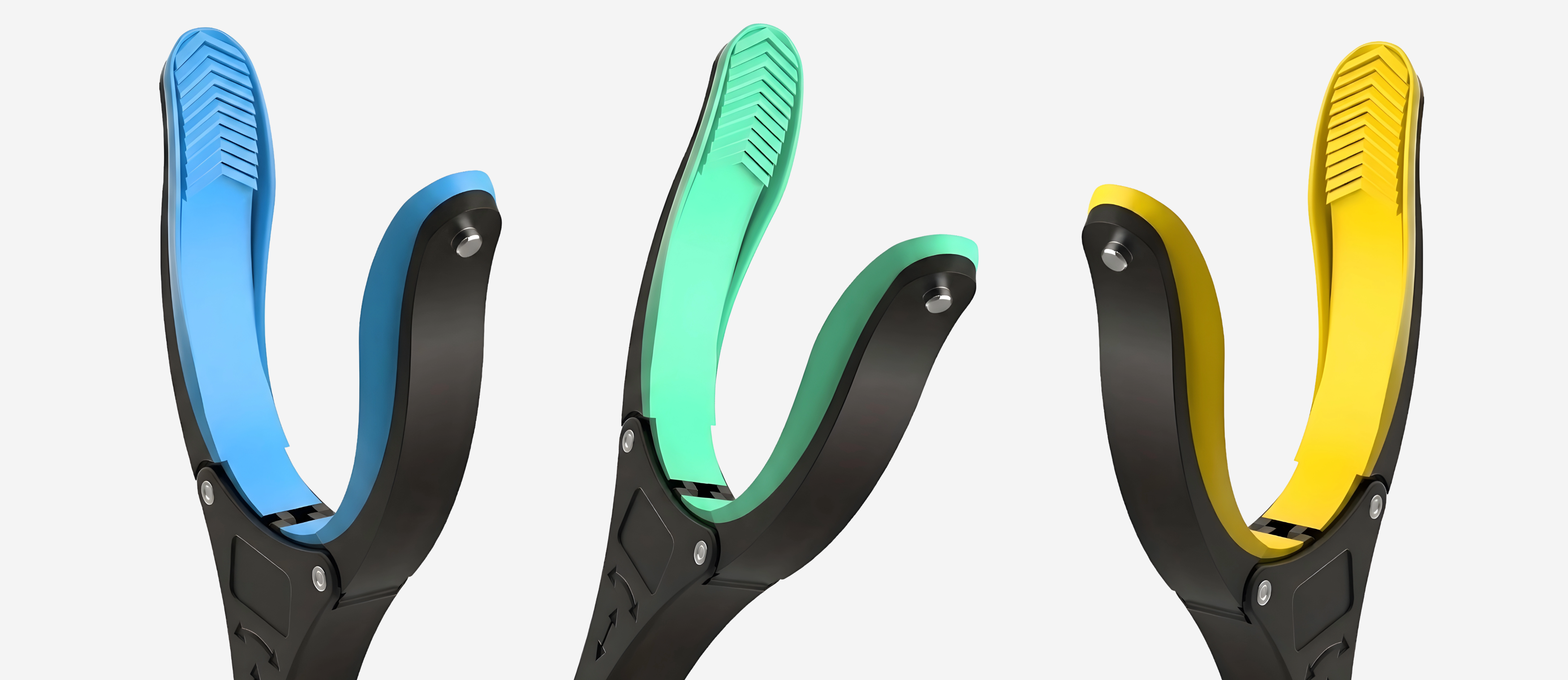
Reacher grabber jaw specifications — opening width and grip surface texture — determine whether the tool reliably manages sock fabric without tearing. The GrabbersTool jaw specifications for textile grip are on the product page. View 32" Reacher Grabber specifications
The Inspection Protocol With Adaptive Tools
A consistent daily inspection protocol that integrates the reacher grabber:
- Sit in a stable chair at the end of the day
- Use the reacher grabber to manage shoe and sock removal — looking at the foot during the process
- Use a long-handled mirror to inspect the sole, heel, and between the toes without bending
- Note any changes in color, skin condition, blisters, or cuts — report any concerns to the healthcare provider before the next appointment rather than waiting
- Use the reacher for morning sock application, checking for any overnight changes
Footwear and Sock Selection for Reduced Inspection Difficulty
Diabetic socks (non-constricting, seamless, moisture-wicking) reduce the risk of sock-induced pressure points and blisters. They are also typically easier to manage with a reacher than standard socks because the non-constricting design allows looser positioning for grip. Elastic-free tops and loose-fitting diabetic footwear also reduce the force required for reacher-assisted removal.
See also: Diabetes and Daily Living: Reducing Complication Risk With the Right Tools and Dressing Aids for Socks and Shoes: How to Get Dressed Without Bending.
Browse Reacher Grabber Tools for the full reacher range suited to foot care management.


