

Quick answer
Consumer reacher grabbers cost roughly $6 to $50. Budget models run about $6 to $20, mid-range models about $20 to $35, and the upper consumer tier about $35 to $50. The price is driven by four components: jaw pad material, trigger mechanism, shaft material, and whether the jaw rotates. Length adds surprisingly little cost, which is why paying for the length you actually need is the cheapest decision you can make.
Key takeaways
- A $6 reacher and a $40 reacher perform the same job on day one. The difference shows up under repeated load.
- Length is the cheapest upgrade available and the one that most affects whether the tool works for you.
- Silicone jaw pads and a light trigger are worth paying for. Built-in lights and novelty features usually are not.
- Many reachers are HSA and FSA eligible, which changes the effective price more than any discount.
- Original Medicare does not cover reachers at any price, because of how they are classified.
What do reacher grabbers actually cost?
Consumer models cluster into three clear tiers. The figures below reflect listings observed at a major U.S. retailer in August 2026, and prices move constantly.
| Tier | Typical price | What you get | Reasonable for |
|---|---|---|---|
| Budget | $6 to $20 | Aluminum shaft, hard plastic or thin rubber jaws, basic trigger, often fixed jaw angle | Occasional reaching, litter pickup, a spare for the garage |
| Mid-range | $20 to $35 | Better jaw pads, rotating head on many models, magnetic tip, folding shaft | Regular household use by someone who can still bend if needed |
| Upper consumer | $35 to $50 | Silicone jaw pads, full 360 degree rotation, low-force trigger, folding, magnetic tip | Daily dependence, post-surgery recovery, arthritis |
| Clinical and industrial | $50 and up | Heavier construction for commercial litter crews or specialist clinical designs | Commercial use or a specific clinical prescription |
For reference, budget 32 inch models were listed between roughly $6 and $20 in August 2026, with a folding store-brand model at $12.64 and a branded folding model with a rotating claw at $26.95. GrabbersTool prices its 32 inch reacher at $35.99 and its 43 inch at $45.99, which places both at the upper consumer tier rather than the budget one.
Why does one reacher cost $6 and another $40?
Four components account for nearly all of the difference, and none of them is visible in a product photo.
1. Jaw pad material
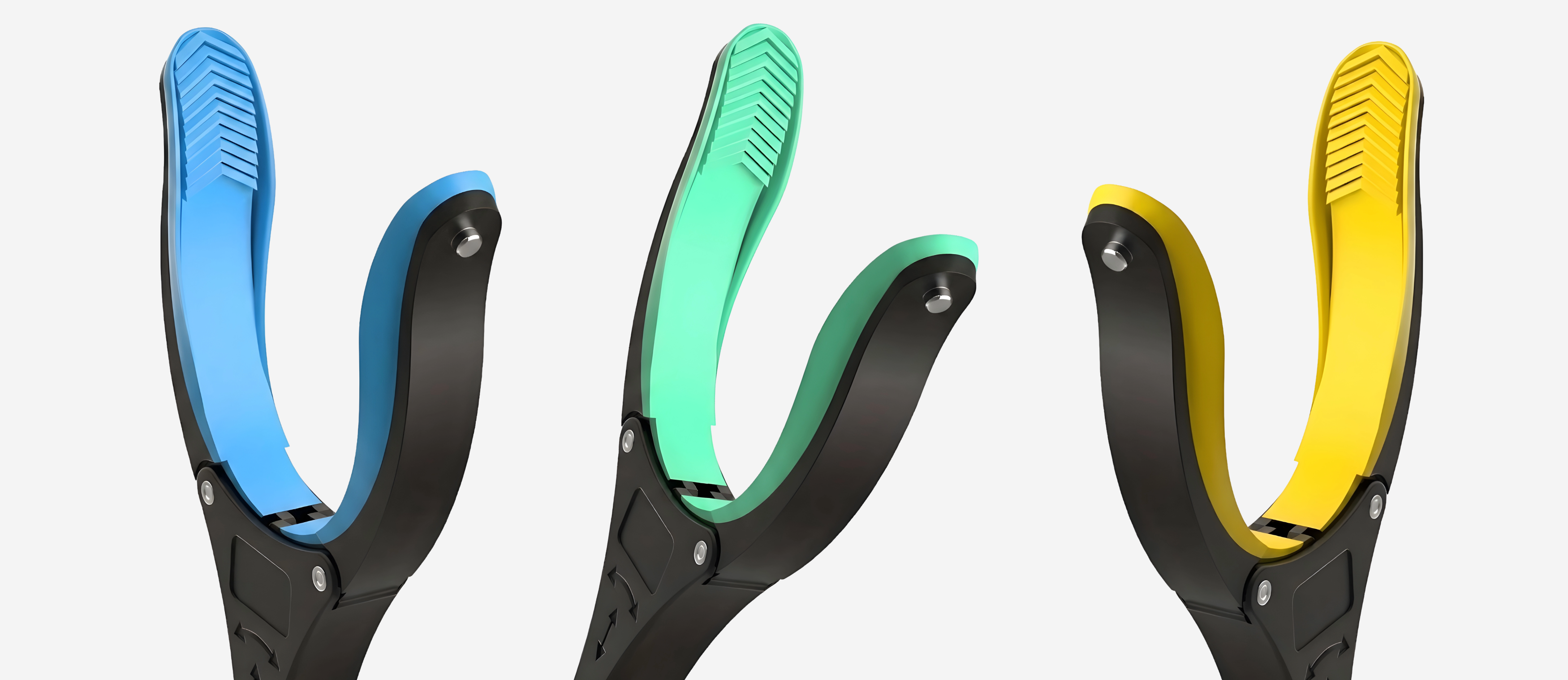
The single biggest functional difference. Hard plastic jaws are cheap to mold and slide off fabric, paper, and anything slightly damp. Silicone or rubberized pads grip those materials. If you are retrieving socks and laundry rather than cans, this is the component that decides whether the tool works.
2. Trigger mechanism
Budget triggers require a full-hand squeeze. Better mechanisms use a cable and lever geometry that closes the jaw with about one finger of pressure. For someone with arthritis this is not a comfort upgrade, it is the difference between using the tool and abandoning it in a drawer.
3. Jaw rotation
Fixed jaws force you to twist your wrist to match the object. A rotating head turns instead of your arm. Full 360 degree rotation costs more to build than a fixed or 90 degree head.
4. Shaft construction and folding
Aluminum is standard across nearly all tiers. What varies is wall thickness and whether the shaft folds. Folding adds a hinge, which adds cost and one more part that can loosen over time.
What length costs: almost nothing. Across the market, a 43 inch model typically carries a small premium over the same maker 32 inch model. In our own line the gap is $10.
This matters because length is the specification that most often determines whether the tool solves your problem. Paying a few dollars more for reach you actually need is far better value than saving those dollars on a tool that still makes you lean. Our free size calculator settles which length fits in two questions.
Is a more expensive reacher worth it?
It depends entirely on how often you use it. This is where most buying guides give a self-serving answer, so here is the honest version.
| How you will use it | Sensible spend | Why |
|---|---|---|
| A few times a month, can still bend | $6 to $20 | Light duty. A budget tool genuinely suffices |
| Litter pickup in the yard | $15 to $30 | Outdoor use is rough on tools, so buy replaceable rather than premium |
| Daily household use | $25 to $45 | Repeated load exposes weak jaws and stiff triggers |
| Post-surgery, arthritis, daily dependence | $35 to $50 | Failure has real consequences when bending is not an option |
| A spare for a second floor | $6 to $20 | A second cheap tool beats a single good one in the wrong room |
That last row is the recommendation most likely to save you money and least likely to appear in a store guide. If you have one good reacher and keep running out of the room where you need it, the fix is a cheap second unit, not an upgrade.
What is worth paying extra for, and what is not
Worth it:
- Silicone jaw pads. The difference between retrieving a sock and pushing it around.
- A light trigger. Especially with arthritis or reduced grip.
- The correct length. The cheapest meaningful upgrade in the category.
- Rotating jaw. Real ergonomic gain, not a marketing feature.
Usually not worth it:
- Built-in lights. A separate flashlight is brighter, and the battery compartment adds weight to a tool you hold at arm length.
- Extreme lengths beyond 43 inches. Control drops noticeably as reach grows; very long tools suit litter crews, not homes.
- Multi-packs of budget tools you do not need. Two-packs look like value but often mean two mediocre tools instead of one good one plus one cheap spare.
- Magnetic tips, if you have no metal problem. Useful for keys and coins, irrelevant otherwise.
Can you get one paid for?
Often yes, and this changes the effective price far more than shopping for discounts.
Many reachers are HSA and FSA eligible, and several major retail listings state this directly. If you have a flexible spending account, buying a reacher with pre-tax dollars reduces the real cost by whatever your marginal tax rate is, which typically outweighs the gap between a budget and a mid-range tool.
Original Medicare, by contrast, does not cover reachers at any price. They are classified as self-help devices rather than durable medical equipment, so the exclusion is about category, not cost. Medicare Advantage over-the-counter allowances, Medicaid waivers, and VA benefits are separate routes that often do work. We set out each option in does Medicare cover a reacher grabber tool.
Where to buy affects price more than people expect
The same tier costs different amounts depending on the channel. Pharmacies and medical supply stores carry a convenience and service premium; online marketplaces are cheapest but least consistent between batches; specialist sellers sit in between with a fixed specification per model. We compare all five channels in where to buy a reacher grabber tool.
Frequently asked questions
How much does a reacher grabber cost?
Consumer models generally cost $6 to $50. Budget tools run about $6 to $20, mid-range about $20 to $35, and the upper consumer tier about $35 to $50. Commercial and clinical models start above $50.
What is the average cost of a good quality reaching aid?
For daily household use, expect to spend roughly $25 to $45. That range is where silicone jaw pads, a low-force trigger, and a rotating jaw become standard rather than optional. Below about $20, at least one of those three is usually missing.
Are expensive reacher grabbers worth the money?
They are if you depend on the tool daily or cannot bend as an alternative. They are not if you use it occasionally and can still pick things up yourself when the tool fails. Match the spend to the consequence of failure rather than to a rating.
Why are some reacher grabbers so cheap?
Cost is removed from the parts you cannot see in a listing photo: hard plastic instead of silicone jaw pads, a stiffer trigger, a fixed rather than rotating jaw, and thinner shaft walls. The tool still works on day one, which is what makes the difference hard to judge before buying.
Does a longer reacher cost much more?
No. Length is one of the cheapest variables in the category, typically a small premium between a maker 32 inch and 43 inch models. In the GrabbersTool line the difference is $10.
Can I use my FSA or HSA to buy a reacher grabber?
Usually yes. Reachers are commonly treated as eligible medical expenses, and many retail listings label them HSA and FSA eligible. Some plan administrators request a letter of medical necessity, so confirm with yours before filing.
Will Medicare pay for a reacher grabber?
Original Medicare will not, regardless of price, because reachers are classified as convenience or self-help devices rather than durable medical equipment. Medicare Advantage over-the-counter allowances often do cover them.
Prices cited were observed in August 2026 and change frequently; verify current pricing before purchasing. This article is general consumer information, not financial, tax, or medical advice. Eligibility for HSA, FSA, Medicaid, and VA benefits varies by plan and by state, so confirm with your plan administrator. Published August 17, 2026 by GrabbersTool Editorial.


