

Quick answer
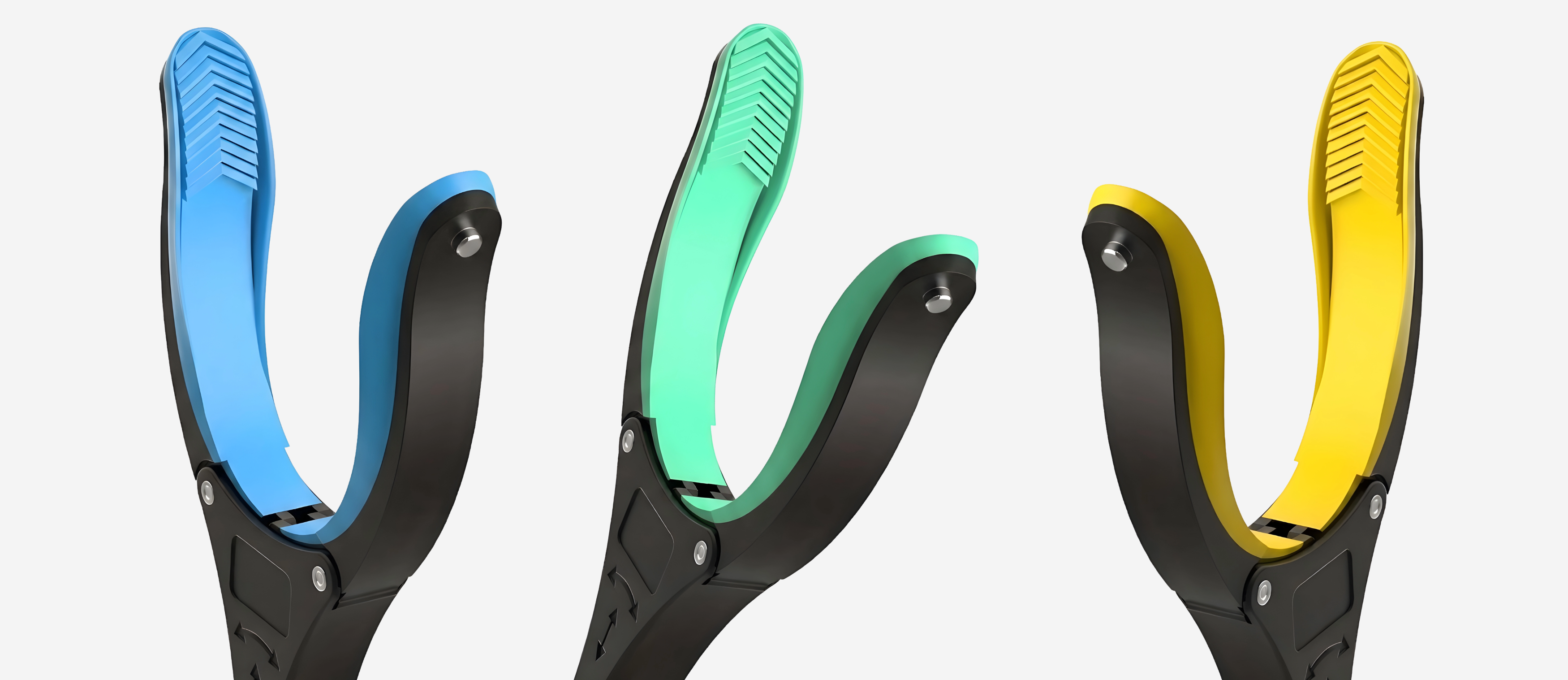
The most reliable way to pick things up without bending over is a reacher grabber, a lightweight arm with a trigger-operated jaw that extends your reach to the floor while you stay upright. For floor pickup from a standing position, most adults need a 43 inch model; a 32 inch model works well from a seated position. Magnets, hip-hinge technique, and long tongs each solve part of the problem, but only a reacher grips and lifts.
Key takeaways
- Reach length, not grip strength, is what decides whether you can retrieve something without bending.
- A 43 inch reacher reaches the floor from standing with a straight back. A 32 inch reacher is easier to control but usually still requires a slight lean when standing.
- After hip replacement, NIH StatPearls specifically names reachers as a way to grab items from the ground without breaking hip precautions.
- Hip precautions are not universal. A surgeon survey cited by StatPearls found 44% of surgeons prescribe them for everyone while about one third never do, so follow your own surgeon.
- A reacher cannot open a sock, lift a heavy pot, or replace a proper hip hinge for people who can still bend safely.
Why bending to the floor is worth avoiding
Bending to floor level combines two things that raise fall risk at the same time: it shifts your center of gravity forward and it removes your eyes from the path ahead. For anyone with balance concerns, that is a poor trade for a dropped sock.
The scale matters here. The CDC reports that over 14 million adults aged 65 and older, about one in four, report falling each year, and that falls are the leading cause of injury in that age group. Roughly three million emergency department visits a year follow older adult falls, and nearly 319,000 older people are hospitalized annually for hip fractures. The CDC also notes that falling once doubles your chances of falling again.
Those numbers describe falls from all causes, not specifically from bending. The honest takeaway is narrower and more useful: if you already have balance concerns, every avoidable trip to floor level is an avoidable risk, and floor-level retrieval happens many times a day.
Four groups avoid bending for different reasons, and the reason changes the right answer:
| Situation | Why bending is a problem | What that means for the tool |
|---|---|---|
| Balance concerns | Forward lean plus loss of visual field | Needs to work while both feet stay planted |
| Post hip or knee surgery | Movement restricted by surgical precautions | Must reach the floor with zero forward lean |
| Back pain or disc problems | Forward flexion triggers pain | Length matters more than grip strength |
| Arthritis | Getting down is possible; getting back up is not | Light trigger matters as much as reach |
| Late pregnancy or obesity | Abdomen blocks the forward fold | Reach from a wider stance, longer is better |
What tool picks things up without bending over?
A reacher grabber is the only common household tool that both reaches the floor and grips the object. Everything else either extends your reach without holding anything, or holds things without extending your reach.
That distinction is the whole decision. A broom, a yardstick, or a golf club can only push, which means a rolling object such as a pill bottle moves further away with every attempt. A magnet on a stick lifts metal but ignores a sock. Long tongs grip but only add about a foot of reach, so you still bend.
| Method | Reaches the floor standing? | Grips the object? | Best for |
|---|---|---|---|
| Reacher grabber, 43 inch | Yes, with a straight back | Yes | Almost everything: clothing, phones, mail, bottles |
| Reacher grabber, 32 inch | Partly, usually a slight lean | Yes | Seated retrieval, tabletop and mid-level reach |
| Magnetic pickup tool | Yes | Metal only | Keys, coins, screws, pins |
| Long kitchen tongs | No | Yes, weakly | Light items within arm reach |
| Broom or stick | Yes | No, pushes only | Sweeping an item into the open, not retrieving it |
| Hip hinge or half kneel | Yes | Yes | People cleared to bend who want no equipment |
If you are able to bend safely, learn the hip hinge first
This is the part most articles selling reachers leave out. If your doctor has not restricted your movement and your balance is sound, the safest free method is a hip hinge: push your hips backward, keep your back straight, bend your knees slightly, and lower with your legs rather than folding at the waist. Hold a stable surface with one hand.
A reacher earns its place when bending is restricted, painful, unstable, or simply happening too many times a day. It is not a substitute for movement you can still perform safely.
How long does the reacher need to be?
Long enough to touch the floor while you stand upright with your arm relaxed. For most adults that means 43 inches. A shorter reacher still requires a forward lean at floor level, which defeats the purpose if the lean is exactly what you are avoiding.
You can test this before buying. Stand upright in your normal shoes, let your arm hang naturally, and measure from your relaxed hand to the floor. That distance, plus a few inches of working margin, is the reach you need.
| Your situation | Recommended length | Reasoning |
|---|---|---|
| Floor pickup while standing | 43 inches | Only length that clears the floor with no lean for most adults |
| Seated in a chair or wheelchair | 43 inches | Horizontal reach matters more than height when seated |
| Post hip or knee surgery | 43 inches | Precautions rule out the lean a shorter tool requires |
| Bedside or beside a chair | 32 inches | Shorter shaft is easier to control at close range |
| Pills, coins, small objects | Precision jaw model | Wide jaws made for cans slip on small round items |
The 43 inch Reacher Grabber covers standing floor access; the 32 inch model is the easier one to control seated, and many households keep both, one per floor. Full specifications are on each product page, and the free reacher size calculator matches a length to your height and tasks in two questions. Our 32 inch versus 43 inch comparison goes deeper into the trade-off.
How do you use a reacher correctly?
Approach past the object, then close the jaw as you draw back. Closing short of the item is the single most common mistake, and it nudges the object further away instead of retrieving it.
- Plant both feet before reaching. A reacher removes the bend, not the need for a stable base.
- Rotate the jaw to match the shape. Horizontal for flat items like cards and phones, vertical for round items like bottles.
- Slide past, then close. Bring the open jaw beyond the object and squeeze as you pull toward you.
- Pull level, do not lift early. Lifting inside a tight gap makes the jaw release its grip.
- Test the weight with a light grip before committing. If it feels heavy, put it down and ask for help rather than losing your balance.
Two failures are worth anticipating. Fabric is the hardest material for any grabber to hold because it deforms under the jaw, which is why silicone or rubberized pads outperform hard plastic on socks and laundry. And dusty items from under furniture often slip on the first attempt; a second, firmer grip usually holds.
What if you are recovering from hip or knee surgery?
Reachers are standard equipment in this situation, not an optional extra. NIH StatPearls states directly that reachers or pinchers can be used by a patient following a total hip arthroplasty to help them grab items from the ground and other areas without breaking the hip precautions. The American Academy of Orthopaedic Surgeons similarly advises using a reacher, a long-handled shoehorn, elastic shoelaces, and a sock aid after hip replacement.
The precaution these tools exist to protect is usually stated as: do not bend the hip more than 90 degrees. StatPearls notes these precautions are often prescribed for at least six weeks, or until the soft tissue around the hip has at least partially healed.
Information most articles leave out: hip precautions are not universal. StatPearls cites a 2018 survey of American Association of Hip and Knee Surgeons and Canadian Arthroplasty Society members which found that 44% of surgeons prescribed precautions universally, while about one third never prescribed them at all.
Practically, this means you should not assume the 90 degree rule applies to you because a website said so, and equally should not assume it does not. Ask your own surgeon which restrictions apply to your approach and your recovery.
If you are preparing for surgery, our free hip replacement recovery checklist covers the full equipment list with printable output, and we explain the standard bundle in what is a hip kit.
What about under furniture and on high shelves?
The same tool covers both, but the technique differs. Under furniture, the limiting factor is clearance height rather than reach: above about four inches a reacher fits and grips, below two inches no tool fits reliably and the furniture has to move. We cover the full method in getting things out from under the bed and couch.
Overhead, the risk profile inverts. The danger is no longer bending but reaching above shoulder height, losing balance backward, or climbing onto a chair. A reacher lets you bring items down from a top shelf while keeping both feet on the floor, which removes the step stool from the equation entirely.
What a reacher cannot do
Being clear about limits is more useful than overselling. A reacher will not solve these:
- Putting on socks. A sock has to be held open in a rigid ring around the heel, which no jaw can do. That requires a sock aid. See how to put on socks and shoes without bending.
- Heavy or awkward loads. Everyday household objects are within scope; a full cast iron pan or a stack of books is not.
- Wet or greasy items. Grip depends on friction, and both reduce it.
- Anything requiring two hands. Carrying a full glass of water across a room is not a reacher task.
- Replacing balance training. Equipment reduces exposure to risk. It does not improve the underlying balance, which is what physical therapy addresses.
Frequently asked questions
How can I pick things up off the floor without bending over?
Use a reacher grabber long enough to touch the floor while you stand upright, which for most adults is 43 inches. Plant both feet, slide the open jaw past the object, and squeeze as you pull back. A magnetic pickup tool is faster for metal items such as keys and coins.
What is the tool called that picks things up without bending?
A reacher grabber, also sold as a reacher, grabber tool, pickup tool, or long reach grabber. Occupational therapists usually call it a reacher. All these names describe the same device: an extended arm with a trigger-operated gripping jaw.
What length grabber do I need to reach the floor without bending?
Measure from your relaxed hand to the floor while standing upright in shoes. Most adults need about 43 inches to clear that distance with a straight back. A 32 inch tool typically still requires a small forward lean when used standing.
Do seniors really need a grabber tool?
It depends on whether bending is safe, not on age. Anyone with restricted movement, balance concerns, back pain, or arthritis benefits. Someone who can hip hinge comfortably may only want one for high shelves and items under furniture.
Can I use a reacher after hip replacement?
Yes, and it is commonly recommended for exactly that purpose. NIH StatPearls describes reachers as a way to grab items from the ground without breaking hip precautions, and the AAOS lists a reacher among the assistive devices to use after hip replacement. Confirm which precautions apply with your own surgeon, since practice varies.
What is the easiest way to pick something up if I cannot bend at all?
A 43 inch reacher used from a standing position with both feet planted. If you also cannot stand, the same length works seated, because horizontal reach becomes the limiting factor rather than height.
Why does the object move further away when I try to grab it?
Because the tool is pushing rather than gripping. Brooms, sticks, and hangers can only apply force away from you. Close the jaw only after it has passed beyond the object so the force pulls it toward you.
Is a grabber tool covered by Medicare?
Original Medicare does not cover reachers, because they are classified as self-help devices rather than durable medical equipment. Medicare Advantage over-the-counter allowances, HSA and FSA accounts, Medicaid waivers, and VA benefits often do. See our full explanation of Medicare coverage for reacher grabbers.
Sources
- Centers for Disease Control and Prevention, Facts About Falls, older adult fall prevention data.
- American Academy of Orthopaedic Surgeons, OrthoInfo, Activities After Total Hip Replacement.
- Fowler J, et al., Hip Precautions, StatPearls, National Center for Biotechnology Information, NIH.
- MedlinePlus, National Library of Medicine, Taking Care of Your New Hip Joint.
This article provides general educational information about adaptive equipment and is not medical advice. Movement restrictions after surgery vary by surgical approach and by patient, and practice differs between surgeons. Consult your surgeon, physician, or occupational therapist about what applies to you. Published August 17, 2026 by GrabbersTool Editorial. We sell reacher grabbers, which is disclosed here so you can weigh the recommendations accordingly; the comparison of methods above includes options we do not sell.


