

Putting on socks is the task that breaks the most hip precautions. Not lifting, not walking — socks. The motion of reaching the foot while seated forward-flexes the hip well past 90 degrees before most people realize it is happening. Occupational therapists spend a meaningful portion of pre-discharge sessions on this single task because it is reflexive, underestimated, and genuinely dangerous in the early post-operative period.
Direct answer: to put on socks without bending, use a sock aid (a rigid plastic guide that lets you slide the sock onto the foot without touching it directly) combined with a 32" reacher grabber tool to manage the sock aid from seated position. To put on shoes without bending, use a long-handled shoe horn to guide the heel into the shoe while the foot is on the floor. A GrabbersTool 32" Reacher positions the sock aid and retrieves dropped items throughout the process.
Why This Task Is Harder Than It Appears
The biomechanics are specific. Seated in a standard chair, reaching the foot requires:
- Hip flexion past 90 degrees (the restricted motion after hip replacement)
- Lumbar spinal flexion (restricted after back surgery)
- Shoulder depression and internal rotation (difficult with rotator cuff or shoulder conditions)
The adaptive approach replaces all three of these motions with a tool-mediated method that keeps the trunk upright, the hip angle safe, and the foot elevated or stationary on the floor.
The Tool Set Required
| Tool | Task It Replaces | Notes |
|---|---|---|
| Sock aid (plastic or flexible) | Reaching the foot to slide on the sock | Not sold by GrabbersTool — available at pharmacy/medical supply |
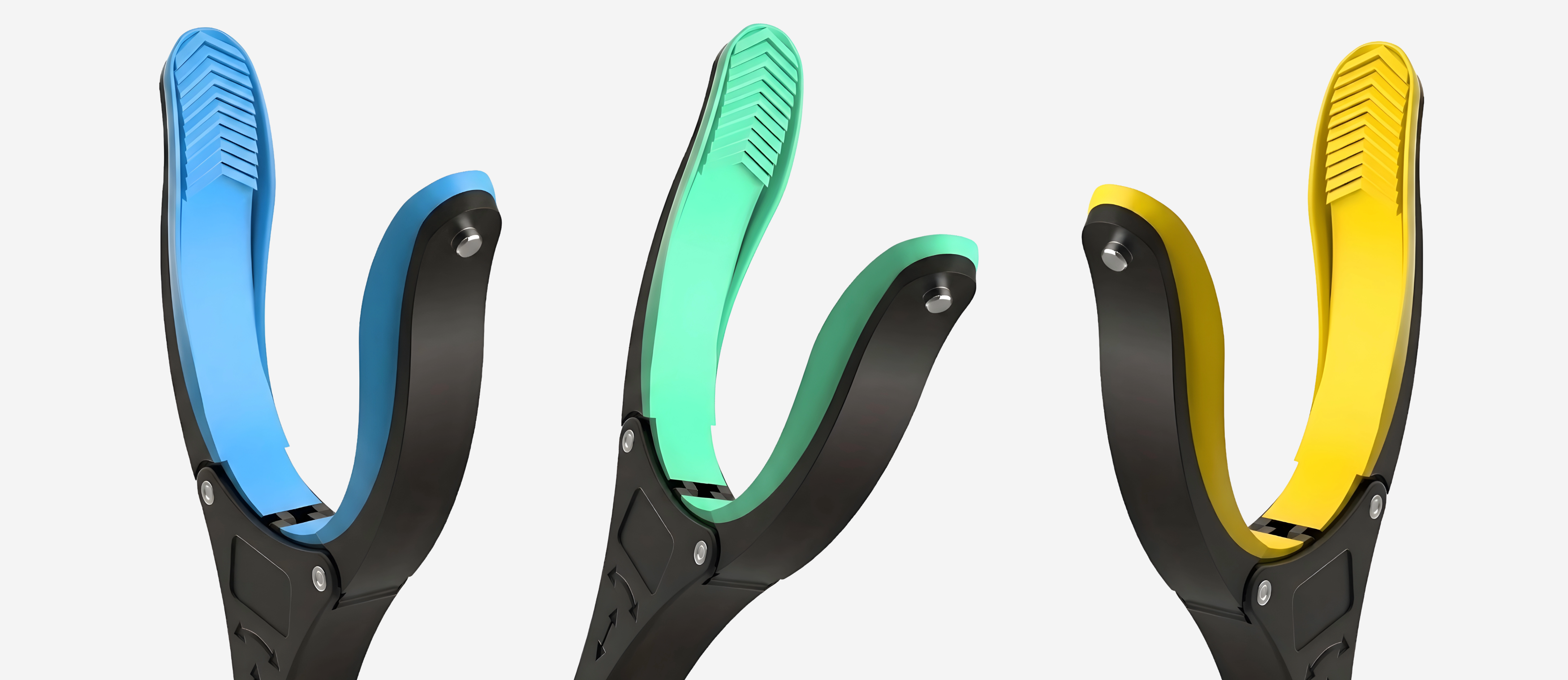
| GrabbersTool 32" Reacher | Positioning the sock aid, retrieving dropped items, pulling up socks at the ankle | Rotating jaw essential for angled approach |
| Long-handled shoe horn (24"+) | Guiding the heel into the shoe | Works in combination with the reacher |
| Elastic laces or slip-on shoes | Eliminates lace tying entirely | Removes one high-risk motion from the sequence |
The jaw opening width and grip surface texture of the GrabbersTool 32" model — relevant for reliably gripping sock aid pull-strings and shoe horn handles — are detailed on the product page. The rotating head specification determines whether angled foot access is achievable from a fully upright seated position. View full specifications →
Step-by-Step: Putting on Socks Without Bending
This is the sequence GrabbersTool's team compiled from occupational therapist guidance shared by post-surgical customers:
Preparation
- Sit on a firm surface — a raised toilet seat height (45–50cm) is ideal. Standard chairs are often too low, placing the operated hip in flexion before the task begins.
- Position the sock aid on your lap or the surface beside you.
- Thread the sock onto the sock aid's curved guide while holding it at lap level — no bending required at this stage.
Placing the sock aid at the foot
- Hold the sock aid by its pull-strings, which should be long enough (60cm+) to reach the foot while you remain upright.
- Lower the sock aid to the floor in front of your foot using the pull-strings — or use the GrabbersTool reacher to grip the aid body and position it precisely in front of the foot without leaning.
- Slide your foot into the sock aid opening, keeping the heel against the back of the guide.
Drawing the sock on
- Pull the pull-strings upward — both simultaneously for even sock travel — while keeping your trunk upright.
- Once the sock is on the foot, the aid will release and pull free from inside the sock.
- Use the reacher to adjust the sock cuff at the ankle if it is folded — the jaw grips fabric reliably without tearing.
Step-by-Step: Putting on Shoes Without Bending
GrabbersTool customers who have returned to driving and walking outdoors during recovery report this sequence as the reliable standard:
- Prepare the shoe in advance. Loosen laces completely or switch to elastic laces. Place the shoe on the floor in front of the foot.
- Use the reacher to position the shoe if it has moved out of alignment — grip the heel counter or the toe and slide into position.
- Insert the shoe horn into the back of the shoe, inside the heel collar. A 24"+ long-handled shoe horn keeps the handle at a comfortable grip height without bending.
- Slide the foot in while holding the shoe horn against the heel — this prevents the heel counter from folding and allows smooth entry.
- Remove the shoe horn once the heel is seated.
- Fasten the shoe with elastic laces (no tying required) or use the reacher to reach the lace loops if standard laces are used — though tying remains a challenge without bending and is best avoided in the early recovery period.
Common Errors and How to Avoid Them
Sock aid pull-strings too short
If the strings are shorter than 50cm, reaching them requires forward trunk lean. GrabbersTool customers solve this by threading additional cord through the existing pull-string loops to extend reach.
Sitting surface too low
A standard dining chair seat (45cm) combined with the forward reach to the foot may still exceed the hip precaution. Sitting on a folded firm cushion or on the edge of a raised bed solves this by reducing the angle between trunk and thigh from the start.
Reacher jaw approach angle
For pulling sock cuffs or adjusting shoe position from seated, the jaw must approach at approximately 45 degrees to the floor. This requires the rotating head to be preset before the tool is lowered. GrabbersTool customers report that setting the jaw angle at lap height before lowering to floor level is significantly easier than trying to rotate the head while the tool is extended.
When the Task Becomes Easier
Orthopedic surgeons typically revisit hip precaution restrictions at the 6-week and 12-week post-operative appointments. For many anterior approach patients, some precautions are lifted earlier. The adaptive dressing sequence — sock aid plus reacher — remains a practical habit beyond the precaution period for anyone who finds standard bending uncomfortable, regardless of whether a surgical restriction applies.
GrabbersTool customers who continued using the reacher during dressing after recovery reported that the habit eliminated morning back discomfort that had been present before surgery and was unrelated to the hip procedure.
See also: The First Week Home After Hip Replacement: What You Actually Need for the full equipment setup, and How to Move Laundry From Washer to Dryer Without Bending for other daily tasks managed during recovery.
Browse the Ergonomic Mobility collection for the complete range of recovery tools available from GrabbersTool.


