

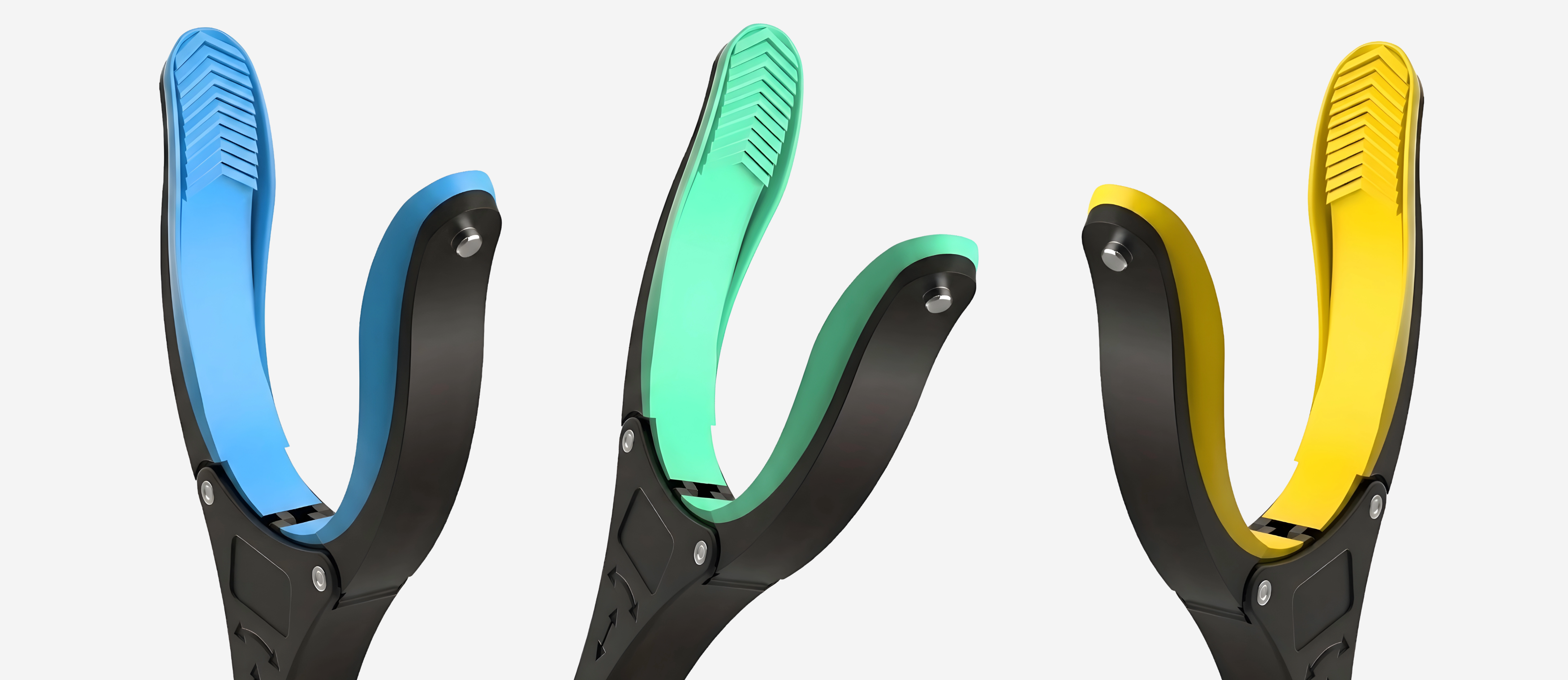
The moment most people realize they need a grabber tool for their car is not while shopping or doing research. It is when they are already seated behind the wheel and the seatbelt is out of reach, or when they have dropped their keys in the footwell and cannot bend forward to retrieve them. By that point, the choice has already been made for them — they either struggle through it or accept that the car has become a problem rather than a solution.
Direct answer: a 32" reacher grabber tool stored in the driver's door pocket or behind the seat resolves the three most common in-vehicle access problems for people with limited mobility — seatbelt retrieval, dropped item recovery from the footwell, and reaching items placed on the passenger seat or rear seat. The GrabbersTool 32" Reacher fits within standard door pocket dimensions and operates one-handed, which is the critical constraint in a vehicle environment.
The Three In-Vehicle Problems a Grabber Tool Solves
1. Seatbelt reach
For drivers and passengers with reduced shoulder rotation or arm extension, the seatbelt anchor point — located at the B-pillar, behind the shoulder — can sit outside comfortable reach. A grabber tool hooks the belt loop and draws it forward without the user twisting or extending past a comfortable range.
2. Footwell retrieval
Dropped items in the footwell require significant hip and spinal flexion to retrieve by hand. For anyone following post-surgical hip or spinal precautions, this movement is either restricted or painful. A 32" reacher from the seated position reaches the full footwell depth without the user bending forward.
3. Rear seat and passenger seat access
Retrieving a bag, jacket, or item from the back seat without twisting the spine is a common difficulty for drivers with back conditions or post-operative restrictions. A grabber tool extends the reach without requiring full torso rotation.
What to Look for in a Car-Specific Grabber Tool
| Feature | Why It Matters in a Car | GrabbersTool 32" Spec |
|---|---|---|
| Length: 32" | Long enough for footwell reach; short enough to maneuver inside a vehicle cabin | 32" / ~81cm |
| One-handed operation | The other hand may be on the wheel or managing a door | Single-trigger grip mechanism |
| Rotating jaw head | Angled approach to seatbelt, floor, or rear seat without repositioning the body | 360° rotating jaw |
| Magnetic tip | Keys and coins in footwell — magnetic retrieval without jaw grip required | Magnetic tip included |
| Weight | Lighter tools reduce fatigue during repeated use and are easier to store | ~180g aluminum frame |
| Jaw rubber grip | Non-slip surface for smooth, rounded objects like bottles and document tubes | Non-slip rubber jaw pads |
The full storage dimensions, jaw opening width, and magnetic tip specification for the GrabbersTool 32" model — including fit compatibility with common vehicle door pocket sizes — are on the product page. View complete specifications →
Storage Positions Inside the Vehicle
GrabbersTool customers with limited mobility who drive regularly have settled on two reliable storage positions:
- Driver's door pocket (most common): the tool sits vertically, jaw-down, within reach before or after buckling the seatbelt. Accessible without leaning or turning.
- Behind the driver's seat, against the backrest: useful in vehicles where the door pocket is shallow or occupied. The tool leans handle-up against the seat back, within reach by extending the arm backward at seat level.
A third position — across the passenger seat — is less reliable because it shifts with vehicle movement and is no longer accessible if a passenger is present.
The Seatbelt Technique
Using a grabber tool for seatbelt retrieval requires one practiced motion. GrabbersTool recommends this sequence:
- After sitting, locate the seatbelt with the grabber jaw — the metal tongue of the belt is the grip point, not the fabric webbing (fabric can slip through rubber jaws).
- Hook the jaw around the belt tongue or the loop at the end of the tongue.
- Draw the belt across the body toward the buckle — keeping the jaw closed until the belt is positioned and within hand reach.
- Transfer the belt to hand, release the grabber, and buckle normally.
This motion takes 3–5 practice repetitions to become fluid. Most GrabbersTool customers report the motion feels natural within the first week of daily use.
Vehicle Entry and Exit: Where the Grabber Tool Fits Into the Full Sequence
For users who also manage a walking aid — cane or crutches — vehicle entry and exit is a coordinated sequence where the grabber tool is one component. The typical sequence for cane users:
- Entry: cane stored first (trunk or rear seat with grabber tool assist if needed), then seated entry, then seatbelt retrieval with grabber
- Exit: seatbelt release by hand, door opened, cane retrieved with grabber if stored in rear, then standing transfer with cane support
The GrabbersTool Cane Strap solves the cane-storage problem by allowing the cane to hang from the headrest or door handle rather than requiring placement in the rear seat — which reduces the need for rear-seat retrieval with the grabber during exit.
When the 43" Model Is Not Right for Vehicle Use
The 43" Reacher is the right tool for home shelving and floor retrieval from standing height. Inside a vehicle, it is too long to maneuver comfortably within the cabin and does not store in a door pocket. The 32" model is the correct choice for in-vehicle use in almost all cases.
For users who need both — a longer reach at home and a vehicle-specific tool — GrabbersTool customers consistently purchase one of each and store the 43" at home and the 32" in the car.
See also: How to Reach Items on Top Shelves Safely for home use guidance, and the Reacher Grabber Tools collection for side-by-side model comparison.


