

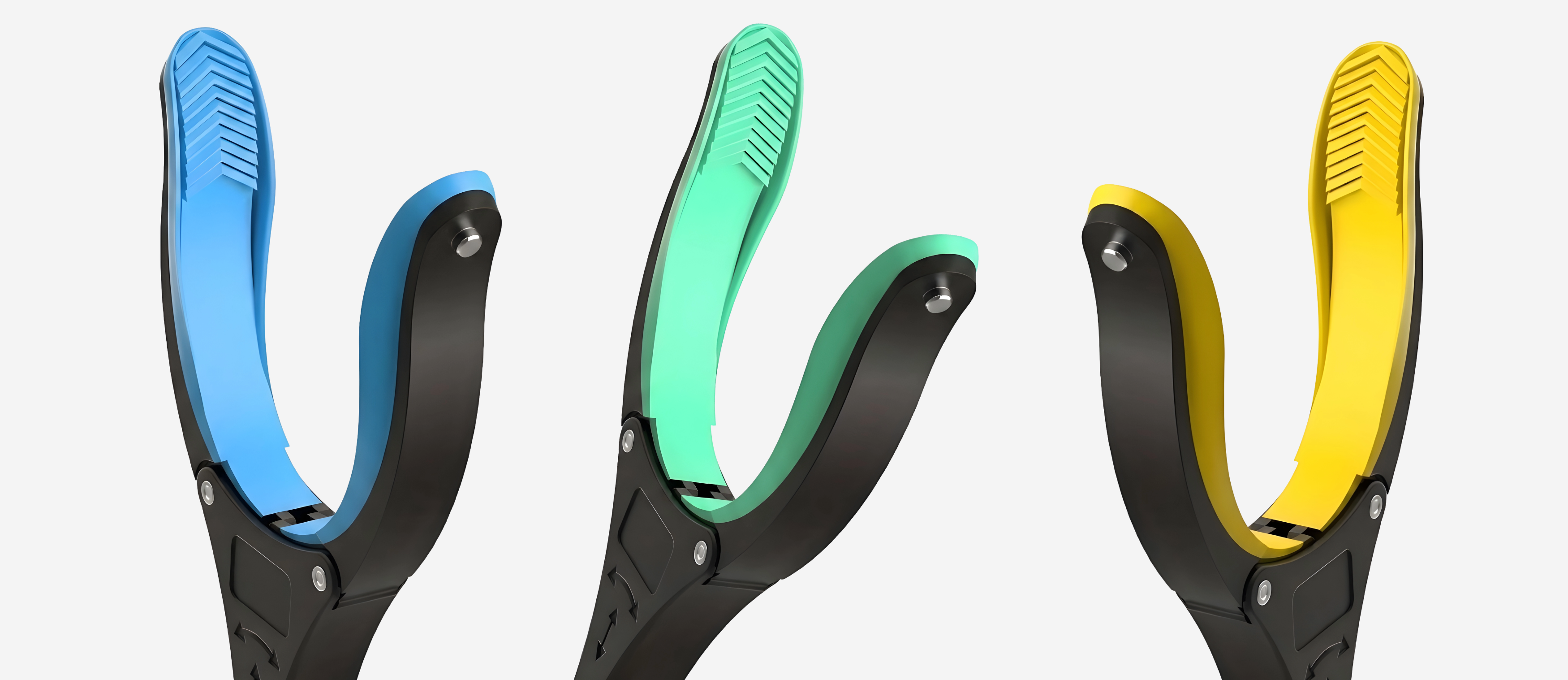
The adult children who contact GrabbersTool most often are not buying tools for themselves. They are buying tools for a parent who they have watched struggle — with a jar, with retrieving something from the floor, with getting up from a chair — and who has either declined help or accepted it in a way that visibly diminished them. The challenge of supporting an aging parent is not identifying what they need. It is delivering support in a form that preserves the relationship and the parent's sense of self.
Direct answer: the most effective approach to supporting an aging parent's independence is removing specific friction points in their daily routine through adaptive tools, rather than increasing personal assistance for those same tasks. A reacher grabber that allows the parent to retrieve a dropped item independently is a fundamentally different intervention than an adult child bending down to retrieve it for them — even if the outcome (the item is retrieved) is identical. The first preserves agency; the second erodes it over time.
The Agency Dimension: Why It Matters More Than the Task
Research in gerontology and psychology consistently identifies the loss of daily autonomy as a significant driver of depression and cognitive decline in older adults. The mechanism is not mysterious: each task that shifts from "I do this" to "someone does this for me" changes the person's internal narrative about who they are and what they are capable of.
This is why adaptive tools are a categorically different intervention from personal assistance for the same task. The tool gives the capability back to the person. Personal assistance performs the task in their place. Both solve the immediate problem; only one does so without a cost to identity and autonomy.
Ryan and Deci's Self-Determination Theory (2000) identifies autonomy and competence as fundamental psychological needs — not preferences, but needs, whose satisfaction or deprivation affects wellbeing in measurable ways. For an aging parent, preserving the experience of competence (I can do this) is as important as the practical task completion.
How to Introduce Adaptive Tools Without Making It About Decline
The framing of tool introduction matters significantly. GrabbersTool's customer support team has heard from adult children who gave a parent a reacher grabber and had it rejected, and from others who gave the same tool and had it immediately adopted. The difference is almost always framing:
Frames that tend to fail:
- "You're going to need this because..." — focuses on limitation
- "The doctor said you shouldn't be bending" — positions as compliance with external authority
- "I'm worried about you" — centers the adult child's anxiety rather than the parent's experience
Frames that tend to work:
- "I got one of these for myself and it's genuinely useful" — normalizes the tool as practical, not medical
- "I saw this and thought of the [specific task] situation" — specific and practical, not global about capability
- Giving the tool as a gift without commentary — allows the parent to discover its utility without a narrative attached
Which Tools Produce the Most Meaningful Independence Gain
| Daily Challenge | Current Workaround | Adaptive Tool | Independence Gained |
|---|---|---|---|
| Dropped item on floor | Calling for help; struggling to bend | Reacher Grabber 32" | Complete — no assistance needed |
| Overhead shelf access | Step stool (risk) or asking for help | Reacher Grabber 43" | Complete — step stool eliminated |
| Jar opening | Asking for help with every jar | Electric Jar Opener | Complete — kitchen independence restored |
| Standing from chair | Arms of chair; furniture grab; asking for help | Standing Assist Tool | Significant — reduces assistance frequency |
| Walking stability | Furniture walking; hand on walls | Walking Cane | Significant — increases safe movement range |
The full specification and task compatibility guide for each GrabbersTool product is available on the product pages. Before purchasing, matching the tool to the specific daily challenge your parent faces is more important than purchasing the full range at once. Browse the complete collection →
The Home Assessment Conversation
Rather than making a judgment about what a parent needs, adult children who navigate this most successfully often begin with a question: "What are the things during the day that you find most annoying or most effortful right now?" This shifts the conversation from the adult child's observation of decline to the parent's own experience of friction — and the parent's answer identifies the highest-priority tools without anyone having to label the limitation.
GrabbersTool's product range covers the most common answers to that question: floor retrieval, kitchen opening tasks, overhead reach, and standing support.
Setting Up Without Creating Dependence on Setup
The goal of adaptive tool introduction is a one-time setup that creates ongoing independence — not a recurring pattern of the adult child managing the parent's environment. This means:
- Choosing tools the parent can use without instruction after an initial demonstration
- Positioning tools where the parent can access them without asking where they are
- Avoiding tools that require regular maintenance, charging, or setup — simple is sustainable
The GrabbersTool reacher grabber requires no charging, no maintenance, and no complex operation. It is either on the hook in the kitchen or on the nightstand — and it is available immediately when needed, without any intermediary.
See also: Aging in Place: What Independence at Home Actually Requires for the full independence framework, and The Psychology of Asking for Help for the autonomy dimension of independence.
Browse the Ergonomic Mobility collection and Easy Grip Kitchen Openers for the full GrabbersTool range.


