

Adaptive tools are rarely discussed in the context of obesity, because the cultural framing of obesity as a reversible condition makes clinicians and product marketers reluctant to address the practical daily living challenges it creates. The result is a gap: a person whose BMI makes forward bending to the floor genuinely difficult — whether from abdominal volume, joint pain from load bearing, or reduced flexibility — has the same practical daily living problem as a person with post-surgical restrictions, but is significantly less likely to be referred to adaptive equipment solutions. The functional challenge is identical; the referral pathway is not.
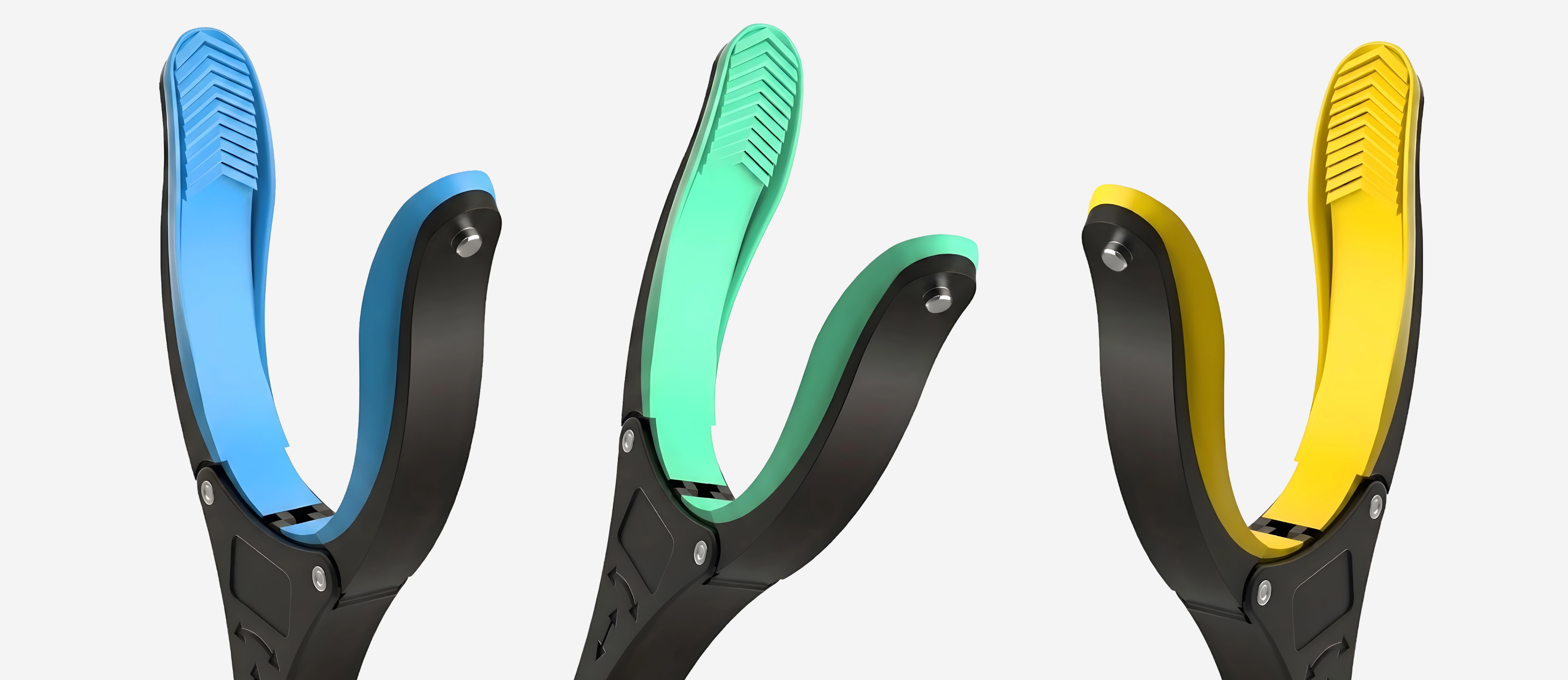
Direct answer: for people with higher body weight who find floor-level bending difficult, the same reacher grabber tools that serve post-surgical recovery patients address the reaching limitation directly. The GrabbersTool 43" Reacher is typically more appropriate than the 32" model because higher abdominal volume raises the effective hand position, requiring additional tool length to reach the floor without forward lean. The jaw mechanism, trigger design, and material construction require no modification for higher-weight users; the primary selection variable is length.
How Higher Body Weight Affects Reaching and Bending
The biomechanics of bending with higher abdominal volume are specific:
- Forward lean restriction: higher abdominal volume reduces the degree of forward trunk lean achievable before abdominal compression becomes uncomfortable — the same effect that restricts bending in late pregnancy
- Center of mass shift: higher anterior body mass shifts the center of mass forward, which changes balance during forward lean and makes recovery from a bent-forward position less stable
- Joint load during bending: the lumbar spine, hips, and knees bear proportionally higher loads during bending movements — which makes already-loaded joints more painful during these movements
- Functional reach reduction: the reachable zone in front of the body is reduced by abdominal volume, because the abdomen itself occupies space that would otherwise be within reach
The Length Selection: Why 43" Is Usually Correct
The floor-to-hand distance is higher for people with higher abdominal volume because the hand position during a forward reach is partially determined by how far the arm must extend around the abdomen to reach forward. For a person with a larger abdomen, the effective hand height above the floor during a forward reach is higher than the wrist-crease measurement would suggest.
The 32" (81cm) tool that is sufficient for a person of average height with average abdominal volume may not reach the floor for a person of the same height with significantly higher abdominal volume — because the arm must extend further before the hand reaches the floor-approach position.
The 43" (109cm) model provides a meaningful safety margin in this context — it reaches the floor from the modified hand position that higher abdominal volume creates.
Specific Daily Task Challenges and Solutions
| Task | Challenge Specific to Higher Body Weight | Solution | GrabbersTool Tool |
|---|---|---|---|
| Floor retrieval | Abdominal volume restricts forward lean; higher load on joints during bend | 43" reacher — floor reach without lean | 43" Reacher Grabber |
| Dressing — socks and shoes | Reaching foot is restricted by abdominal volume from seated position | Reacher + sock aid; long-handled shoe horn | 32" Reacher for dressing tasks |
| Rising from chair | Higher body weight increases leg extensor force requirement; seat too low worsens this | Raised seat height; standing assist tool | Standing Assist Tool |
| Jar and can opening | Grip force may be limited by arthritis that often accompanies higher weight; wrist extension limited | Electric openers eliminate grip requirement | Electric Jar Opener |
| Walking stability | Higher load on joints may affect gait stability; balance center shifted | Walking cane for balance support | Walking Cane |
GrabbersTool does not publish body-weight specific usage limits for the reacher grabber (the jaw load capacity applies to the gripped object, not the user's weight). The structural integrity of the aluminum frame and jaw mechanism is not affected by the user's body weight — only by the weight of the gripped object. View 43" model specifications →
The Load Capacity of Mobility Aids: An Important Note
For users with higher body weight who are considering the GrabbersTool Walking Cane or Standing Assist Tool, the load capacity specifications on the product pages should be verified before purchase. The walking cane and assist tool are weight-bearing tools — the cane and the assist tool frame bear a portion of the user's body weight during use, and the structural capacity must exceed the load that will be placed on them.
The load ratings for each GrabbersTool mobility aid are published on the respective product pages. Users whose body weight approaches or exceeds the published rating should consult the specifications carefully or contact GrabbersTool for guidance on appropriate tool selection.
The Referral Gap: What to Ask For
People who find daily tasks difficult due to body weight-related reach and mobility limitations are rarely referred to occupational therapy for adaptive tool assessment — because the clinical narrative typically frames the limitation as temporary (pending weight loss) rather than present and requiring management now.
The practical request that can change this: asking a primary care physician, physiotherapist, or occupational therapist specifically about adaptive tools for "difficulty bending to floor level" or "difficulty reaching lower limbs for dressing" — framed as a functional limitation rather than a weight-related issue — is more likely to produce a useful referral and recommendation.
See also: Pregnancy and Bending Restrictions: When a Reacher Grabber Becomes Practical for the parallel abdominal-volume bending restriction context, and Grabber Tool Length Guide: 32 vs 43 Inch for the length selection framework.
Browse the Long Reach Grabber Tools collection and Ergonomic Mobility collection for all GrabbersTool adaptive tools.


