

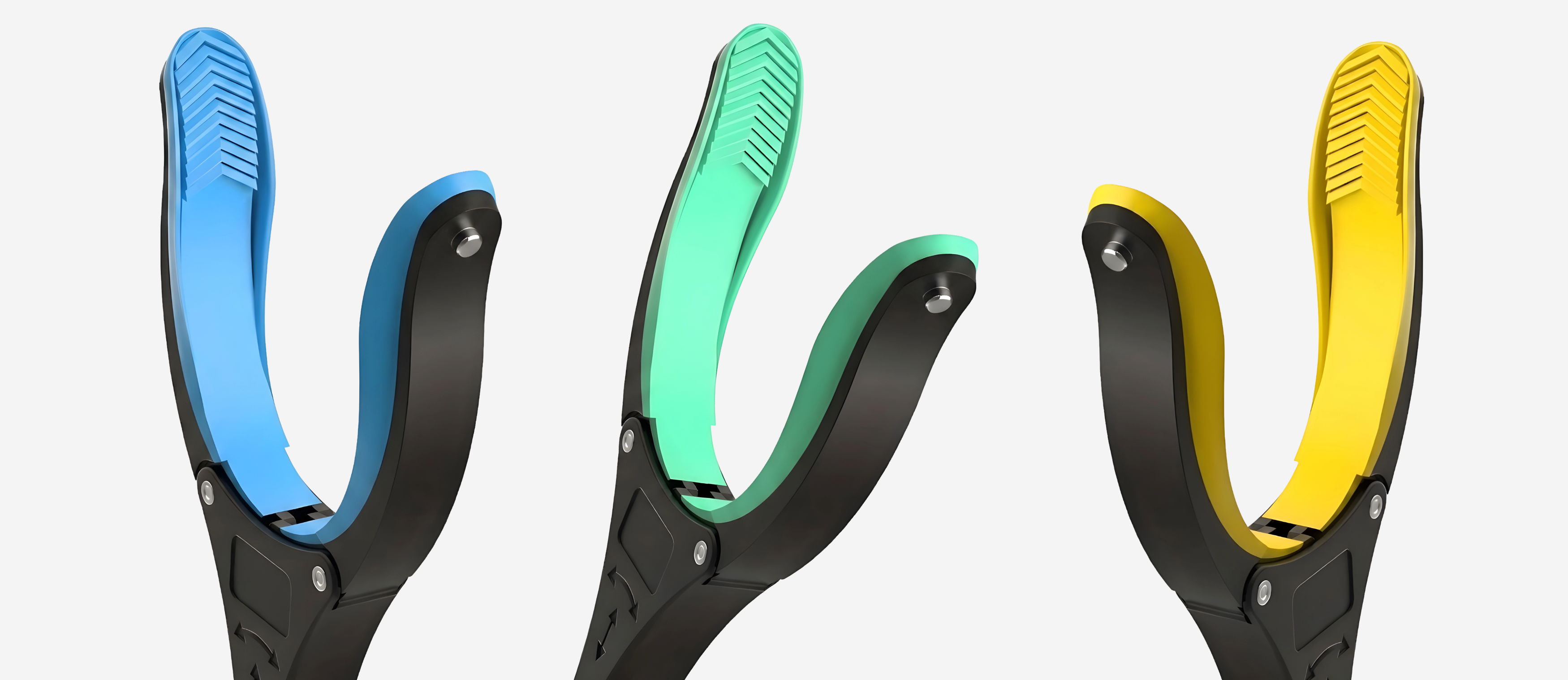
The standard bathroom accessibility conversation focuses on grab bars, shower benches, and raised toilet seats -- all important modifications, but primarily the architectural layer of bathroom accessibility. The tool layer receives less attention: the specific adaptive tools that address bathroom floor access (dropped items, low cabinet retrieval), personal care tasks (lotion application to lower extremities, sock and shoe assistance), and the transfers that occur within the bathroom itself. GrabbersTool addresses the tool layer of bathroom independence that complements the architectural modifications.
Direct answer: for bathroom independence beyond grab bars, the GrabbersTool 32 inch Reacher Grabber addresses bathroom floor retrieval (dropped items, retrieving a fallen towel) and low cabinet access (under-sink items) without bending. The Standing Assist Tool is relevant for bathrooms with low seating surfaces (toilet, bath edge, shower bench). Personal care extensions (for applying lotion to lower extremities, assistance with socks) typically require specialty personal care tools outside GrabbersTool scope, but the reacher can assist with some lower extremity reach extensions.
Bathroom Adaptive Tool Needs by Limitation Type
| Limitation | Bathroom Challenge | Adaptive Tool |
|---|---|---|
| Hip replacement (90-degree restriction) | All floor-level bathroom tasks; lower cabinet access | 32 inch Reacher -- essential during restriction period |
| Lumbar restriction (no bending) | Floor items, lower cabinet, toilet paper if low position | 32 inch Reacher |
| Knee restriction (no deep flexion) | Low shelf access, floor retrieval | 32 inch Reacher; Standing Assist at toilet height |
| Grip limitation | Toothpaste caps, medication bottles, grooming tool handles | 5-in-1 Multi-Opener for bottle and cap access |
| Balance limitation | All standing tasks -- showering, toilet transfer, dressing | Grab bars (construction); Standing Assist at toilet |
Reacher Grabber specifications are on the product pages. View 32 inch Reacher Grabber specifications
The Bathroom Floor Access Problem
The bathroom floor is one of the most hazardous retrieval locations in the home: smaller than other rooms, wet surfaces, and often containing a toilet or bath edge that complicates the space available for a safe bending posture. Items dropped in the bathroom -- a hairbrush, medication, a dropped ring -- require floor retrieval in a high-fall-risk environment. The 32 inch reacher is the appropriate length for most bathroom floor retrievals: the bathroom is small enough that a 43 inch reacher may be unwieldy in the confined space.
Medication Cap Access in the Bathroom
The bathroom medicine cabinet is where most medications are stored and accessed. Child-proof caps on prescription medications require pinch grip and downward press simultaneously -- a grip pattern that is difficult for arthritic hands and impossible for some post-surgery restrictions. The 5-in-1 Multi-Opener addresses standard bottle caps; for child-proof caps specifically, pharmacists can supply non-child-proof cap alternatives on request (appropriate for adults without children in the household). This is a practical medication access strategy that complements adaptive tools.
Standing Assist at the Toilet
The toilet-to-standing transfer is one of the most frequent daily transfers and, for many mobility-limited users, one of the most effortful. Raised toilet seats raise the seat height to reduce the depth of the seated position, making rising easier. The GrabbersTool Standing Assist Tool at toilet height provides the arm support that converts the toilet transfer from a purely lower limb-dependent action to an arm-assisted transfer. This combination (raised seat + standing assist) addresses most toilet independence challenges that are not already covered by grab bars. The specific height compatibility of the standing assist with toilet positioning should be confirmed against the product specification.
Bathroom Lighting and the Reacher
Bathroom nighttime trips in low light create a specific reacher use scenario: the item dropped is not clearly visible, and the user must retrieve it by tactile approach with the reacher jaw rather than visual targeting. GrabbersTool recommends that users practice bathroom reacher use in normal light before relying on it in the dark -- the tactile approach technique (sweeping the floor area with the closed reacher jaw until contact, then opening and gripping) is a learnable skill that works in low light once it is familiar. A reacher kept in the bathroom -- not retrieved from another room -- is essential for this use case.
See also: Bedroom Accessibility and Nighttime Safety and Fall Prevention at Home: The Complete Room-by-Room Adaptive Tool Guide.
Browse Reacher Grabber Tools and Ergonomic Mobility.


