

Hip labral tears involve injury to the fibrocartilaginous labrum that deepens the acetabulum and provides hip joint stability, suction seal, and force distribution. Hip labral tears occur most commonly from: femoroacetabular impingement (FAI) -- the most common cause, caused by abnormal bone morphology (cam impingement from aspherical femoral head; pincer impingement from overcoverage of the acetabulum; mixed cam-pincer); trauma; hip dysplasia (shallow acetabulum); and degenerative tears in older adults. Symptoms: groin pain, labral catching or clicking, and hip activity-related pain. Surgical treatment: hip arthroscopy with labral repair (suture anchor reattachment of the torn labrum to the acetabular rim) or labral debridement for irreparable tears; concurrent femoral neck cam lesion osteoplasty (shaving the cam deformity) and/or acetabular rim trimming for pincer; periacetabular osteotomy (PAO) for severe hip dysplasia requiring acetabular reorientation. Post-hip labral repair recovery involves: (1) non-weight-bearing or toe-touch weight-bearing (TTWB) for 4-6 weeks to protect the repaired labrum and suture anchors; (2) hip precautions during early recovery (hip flexion limitation to protect the repair, particularly after PAO); (3) crutch or walker dependency during non-weight-bearing phase; (4) formal physical therapy rehabilitation. Kitchen function is substantially affected during the 4-6 week non-weight-bearing hip labral repair recovery phase.
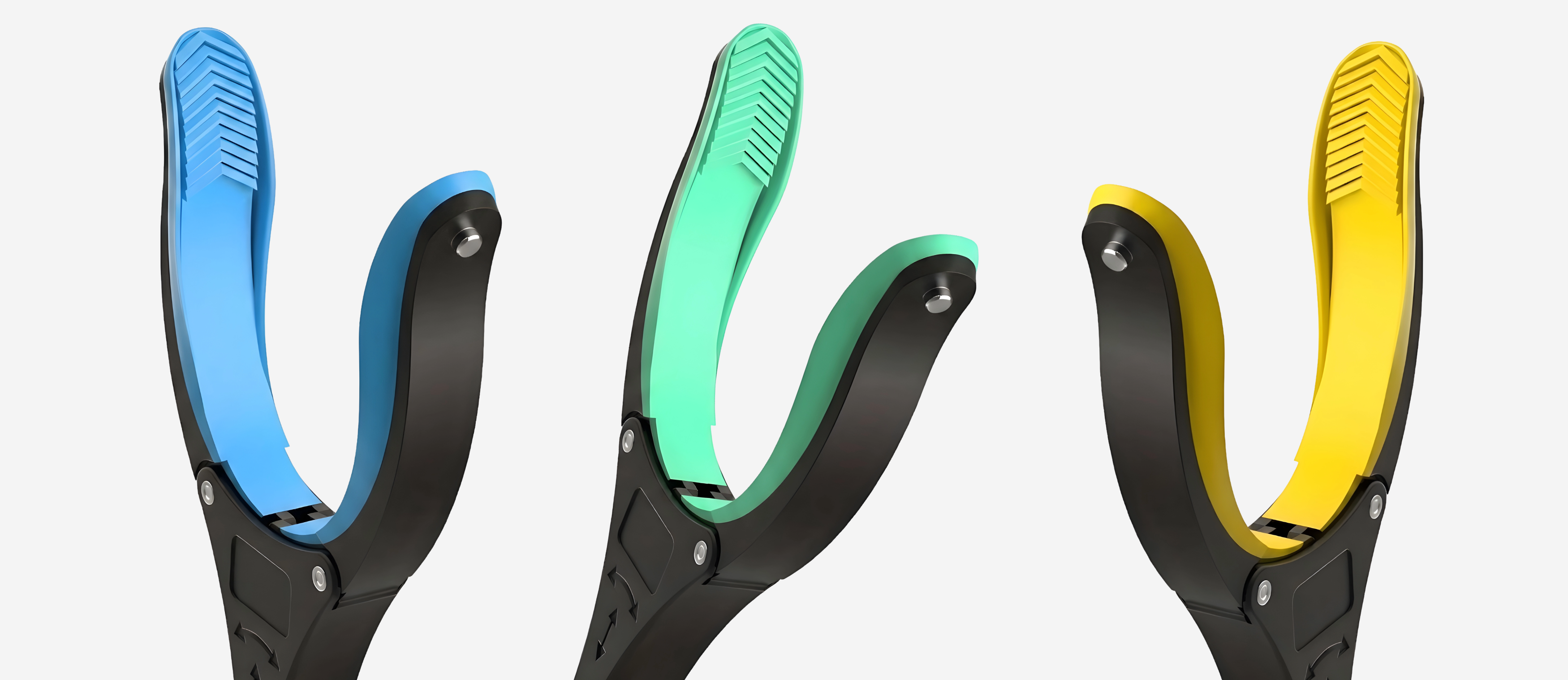
Direct answer: Hip labral repair surgery kitchen recovery tools address non-weight-bearing mobility restrictions (kitchen navigation with crutches or walker; seated kitchen preparation) and hip flexion precautions. The GrabbersTool 32-inch Reacher allows kitchen item retrieval without hip flexion or bending during hip labral repair NWB recovery.
Hip Labral Repair Surgery Kitchen Recovery Strategy
| Recovery Phase | Kitchen Restriction | Adaptive Solution |
|---|---|---|
| Immediate post-hip labral repair (weeks 1-4): non-weight-bearing and hip restrictions | Hip arthroscopy with labral repair requires NWB or TTWB for 4-6 weeks -- crutch use in the kitchen limits two-handed kitchen task performance (both hands on crutches = no hands for kitchen tasks); hip flexion limitation (typically no hip flexion beyond 70-90 degrees for PAO; 90 degrees for standard labral repair) prevents: bending to load dishwasher, picking up kitchen floor items, sitting in low kitchen chairs, and reaching into low kitchen cabinets; hip external rotation restriction prevents kitchen pivoting maneuvers; pain from the hip arthroscopy portal sites (typically 2-3 small incisions) limits hip extension during kitchen standing; fatigue from crutch ambulation significantly reduces kitchen endurance | Reacher grabber (GrabbersTool 32-inch) for all low-level kitchen item retrieval during NWB hip labral repair recovery -- replaces hip flexion bending for floor and low-level kitchen access; kitchen chair or stool with armrests at accessible height (not too low -- hip flexion restriction means standard-height kitchen chairs may violate the hip precaution) for seated kitchen preparation; caregiver assistance for all kitchen tasks requiring crutch-free bilateral arm use; kitchen items pre-positioned at accessible heights before surgery; wheeled kitchen stool for safe kitchen mobility while limiting weight-bearing |
| Progressive weight-bearing phase (weeks 4-8): transitioning from crutches | Hip labral repair progressive weight-bearing begins at 4-6 weeks (surgeon-specific); transitional weight-bearing (one crutch, then no crutch) allows more kitchen hand freedom; hip precautions may be lifted partially allowing more kitchen bending; residual hip weakness (hip abductor and flexor fatigue from surgery and NWB period) limits kitchen standing endurance; hip discomfort during prolonged kitchen standing; physical therapy during this phase focuses on hip abductor and flexor strengthening critical for kitchen standing stability | Continue reacher grabber use for low kitchen reach until surgeon clears full hip flexion; gradual kitchen standing reintroduction as weight-bearing progresses; physical therapy milestones guide kitchen activity expansion; avoid loaded kitchen squatting (carrying heavy pots while in partial squat) until hip strength recovery; single-crutch kitchen navigation technique for progressive weight-bearing phase |
| Long-term hip labral repair kitchen outcomes and FAI recurrence | Successful hip labral repair with cam osteoplasty corrects the underlying FAI and typically allows full kitchen function recovery by 3-6 months; without adequate cam osteoplasty, labral retear risk is high and kitchen activity restrictions may recur; kitchen activities involving hip internal rotation and deep hip flexion (squatting to lower kitchen shelves) can be resumed at full recovery per physical therapist clearance; hip labral repair in dysplastic hips (PAO combined with labral repair) has longer recovery than isolated arthroscopic labral repair | Full kitchen independence expected at 3-6 months post-hip labral repair with successful surgery and physical therapy; maintain healthy kitchen ergonomics (avoid extreme hip flexion-loading kitchen postures in early recovery); physical therapist clearance for return to all kitchen activities including deep bending and heavy lifting; report groin pain recurrence during kitchen activities to orthopedic surgeon (may indicate retear or inadequate cam resection) |
See the 32-inch Reacher for hip labral repair surgery kitchen NWB recovery bending restriction support.


