

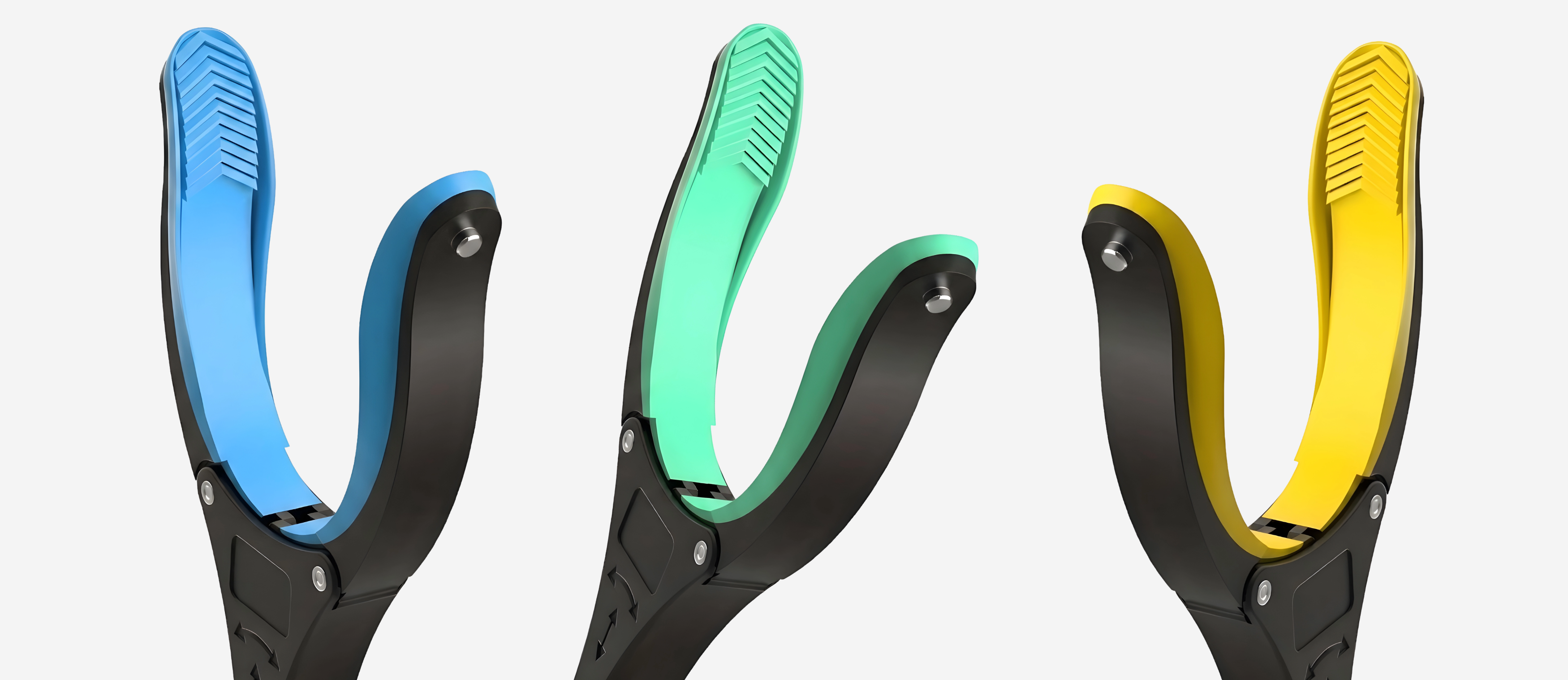
Obesity creates a specific adaptive tool context that is frequently underdiscussed in the mobility aid literature: the combination of reduced trunk flexibility (anterior weight makes forward bending mechanically harder and physiologically riskier), increased joint loading that accelerates osteoarthritis progression, and weight capacity requirements that standard adaptive tools may not meet. GrabbersTool addresses this without judgment -- the functional challenges of high BMI are real, the adaptive tools that address them are specific, and the weight capacity specifications of those tools matter.
Direct answer: for high BMI users, the primary adaptive tool priorities are: the GrabbersTool 43 inch Reacher Grabber for floor retrieval without the forward trunk lean that anterior adiposity makes difficult; the Standing Assist Tool for chair transfers (weight capacity must be confirmed on product page); and the Electric Jar Opener and Electric Can Opener for kitchen grip tasks where obesity-associated arthritis or diabetes-related neuropathy may reduce grip function.
How Obesity Changes the Adaptive Tool Need
| Obesity-Related Factor | Daily Living Impact | Adaptive Tool |
|---|---|---|
| Anterior weight (abdominal adiposity) | Forward bending mechanically difficult and fall-risky | 43 inch Reacher Grabber |
| Reduced chair-rise capacity | Rising from low chairs requires significant leg and trunk effort | Standing Assist Tool (check weight capacity) |
| Obesity-associated knee/hip OA | Joint pain with bending, walking, and transfers | Walking Cane; reachers for floor access |
| Obesity-associated T2 diabetes | Peripheral neuropathy -- grip and foot sensation | Electric Jar Opener; Walking Cane for balance |
| Sleep apnea fatigue | Daytime fatigue limiting daily activity | Energy conservation tools across all categories |
Weight capacity specifications for all GrabbersTool products are on the product pages. View Standing Assist Tool specifications including weight capacity
Weight Capacity: The Critical Specification Check
Standing assist tools have weight capacity ratings that must be matched to the user. This is the most important specification check for high BMI users of any weight-bearing adaptive tool. GrabbersTool standing assist tool weight capacity is specified on the product page. If the user weight exceeds the tool capacity, the tool is not safe for use and a higher-capacity alternative must be sourced. GrabbersTool support team can advise on appropriate capacity matches -- contact us before purchasing if this is a concern.
The Bending Difficulty in High BMI Context
Trunk forward flexion with high anterior adiposity is physically different from bending with a normal BMI. The abdominal mass increases the moment arm of the forward lean, which loads the lumbar spine more than the same degree of trunk flexion with lower BMI. Additionally, for some individuals with very high BMI, forward flexion is physically limited by the abdominal mass itself. The 43 inch reacher addresses this practically: items are retrieved from a standing upright position, with no trunk flexion required. This is the primary adaptive tool for forward-bend limitation in high BMI users.
Bariatric Surgery and Adaptive Tool Timing
After bariatric surgery (gastric bypass, sleeve gastrectomy), the recovery period involves abdominal movement restrictions similar to other abdominal surgeries. See the Bariatric Surgery Recovery adaptive tools guide for the specific post-surgical period. In the longer term, as weight loss progresses post-surgery, the bending limitation and joint loading improve -- and some adaptive tools may become less necessary over time. The trajectory is toward recovery, not permanent dependence.
Social Dimension of Adaptive Tool Use With Obesity
Some individuals with obesity face double stigma around adaptive tool use: the underlying condition is socially stigmatized, and adaptive tools are additionally stigmatized as markers of disability. GrabbersTool does not engage with this judgment. The functional need is real and the tools address it. The psychology of adaptive tool acceptance applies here as it does for any condition -- and the most effective reframe is consistently: the tool enables capability, it does not mark limitation.
See also: Bariatric Surgery Recovery: Adaptive Tools for the Post-Surgery Period and Sleep Apnea and Nighttime Mobility: Adaptive Tools for Safe Movement After CPAP.
Browse Reacher Grabber Tools, Ergonomic Mobility, and Easy Grip Kitchen Openers.


