

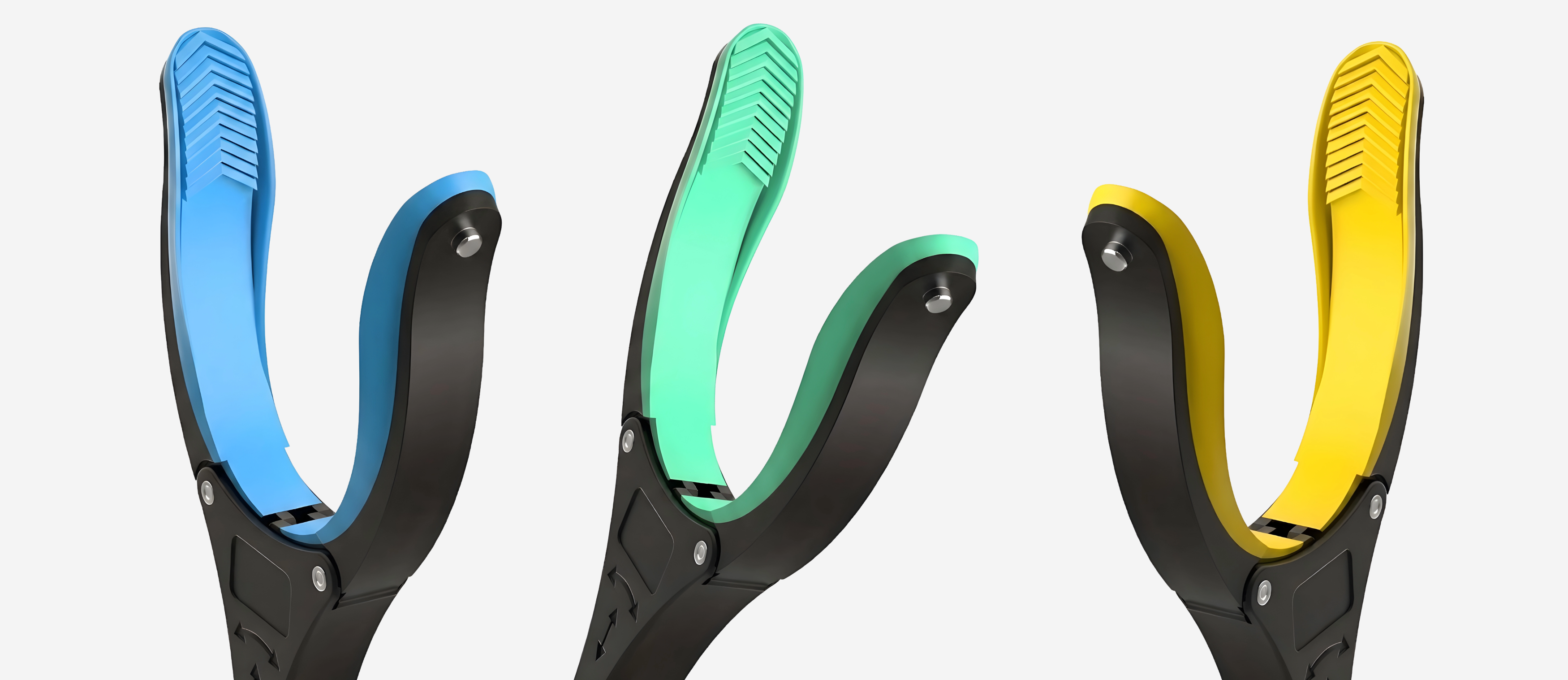
Online reacher grabber searches return dozens of results that look nearly identical in product photography: an aluminum shaft, rubber jaw pads, a pistol-grip trigger. The GrabbersTool reacher, an Amazon Basics reacher, and a $6 unbranded reacher all appear visually similar at thumbnail scale. Price ranges from under $10 to $45 for what appears to be the same product. GrabbersTool operates in this market and has a clear interest in explaining why the differences matter -- which is exactly why we will do so with specifics rather than brand generalities. The differences are real and mechanically specific, not marketing abstractions.
Direct answer: the primary quality differences between GrabbersTool reachers and Amazon Basics or unbranded alternatives are: trigger linkage type (rigid rod vs cable -- see below), grip pad compound and adhesion quality, jaw spring consistency, and shaft straightness tolerance. These differences produce reliability differences that are not visible in a new product but become apparent over weeks and months of daily use. For a tool used multiple times daily by someone with limited mobility, reliability is not a luxury specification -- it is a safety specification.
Specific Quality Comparison
| Quality Factor | GrabbersTool | Amazon Basics / Generic | Why It Matters |
|---|---|---|---|
| Trigger linkage | Rigid rod linkage in standard models | Typically cable linkage | Cable stretches with use; creates lag and inconsistency at the jaw that worsens over time |
| Jaw grip pad | Firm rubber compound, mechanically adhered | Variable -- often softer rubber, adhesive-only attachment | Soft pads compress and release items; adhesive-only pads delaminate with cleaning |
| Shaft tolerance | Measured straightness tolerance | Straightness not guaranteed -- some arrive bent | A bent shaft causes inconsistent jaw angle relative to the trigger expectation |
| Jaw spring | Calibrated spring return force | Spring force variable, often weaker | Weak springs fail to grip lightweight items reliably |
| Customer support | Direct support, replacement policy | Amazon return window only | Relevant if tool fails after Amazon return window closes |
GrabbersTool reacher specifications -- including mechanism type and materials -- are detailed on the product pages. View 32 inch Reacher Grabber and 43 inch Reacher Grabber
The Cable Linkage Problem in Detail
Most low-cost reachers use a cable running through the shaft to connect the trigger to the jaw. This cable is under tension every time the trigger is squeezed. Over hundreds or thousands of uses, cables stretch incrementally -- producing what users experience as trigger lag (squeezing and not seeing the jaw respond immediately), inconsistent grip force, and eventually cable failure. A rigid rod linkage does not stretch. The force applied to the trigger is transmitted directly to the jaw without degradation over the product lifetime. This is the single most mechanically significant quality difference between standard reachers.
Price and Value: When Generic Is Appropriate
GrabbersTool acknowledges that generic reachers have appropriate use cases: occasional use (not daily), backup tools, short-term post-surgical recovery where the tool will be used for weeks rather than years, or lower-risk retrieval tasks (light items, where dropping does not create a fall risk). For daily-use primary reachers used by mobility-limited individuals where reliability is a safety factor, the price difference between a $8 generic reacher and a GrabbersTool 32 inch Reacher is justified by the mechanism quality difference.
What Amazon Reviews Do Not Tell You
Amazon reacher reviews are concentrated in the first 30-90 days of use -- the period before cable stretch and grip pad wear become apparent. Five-star reviews for an inexpensive reacher at day 14 of use are not informative about reliability at month 14. GrabbersTool customer feedback extends across the full product lifetime because repeat customers contact support when tools need replacement. This longitudinal view of product performance is not captured in online marketplace review distributions.
The Replacement Cost Argument
A $10 reacher replaced annually (conservative estimate for daily high-use) costs $10 per year and requires replacement sourcing. A GrabbersTool reacher at $35.99 that performs reliably for 2-3 years at daily use costs approximately $12-18 per year with fewer replacement decisions. The total-cost-of-ownership argument for quality adaptive tools is often more favorable than the initial price comparison suggests.
See also: How Reacher Grabbers Are Made: Materials, Mechanisms, and What Determines Quality and Reacher Grabber Construction and Quality: What Makes a Reliable Grabber Tool.
Browse Reacher Grabber Tools and Long Reach Grabber Tools.


