

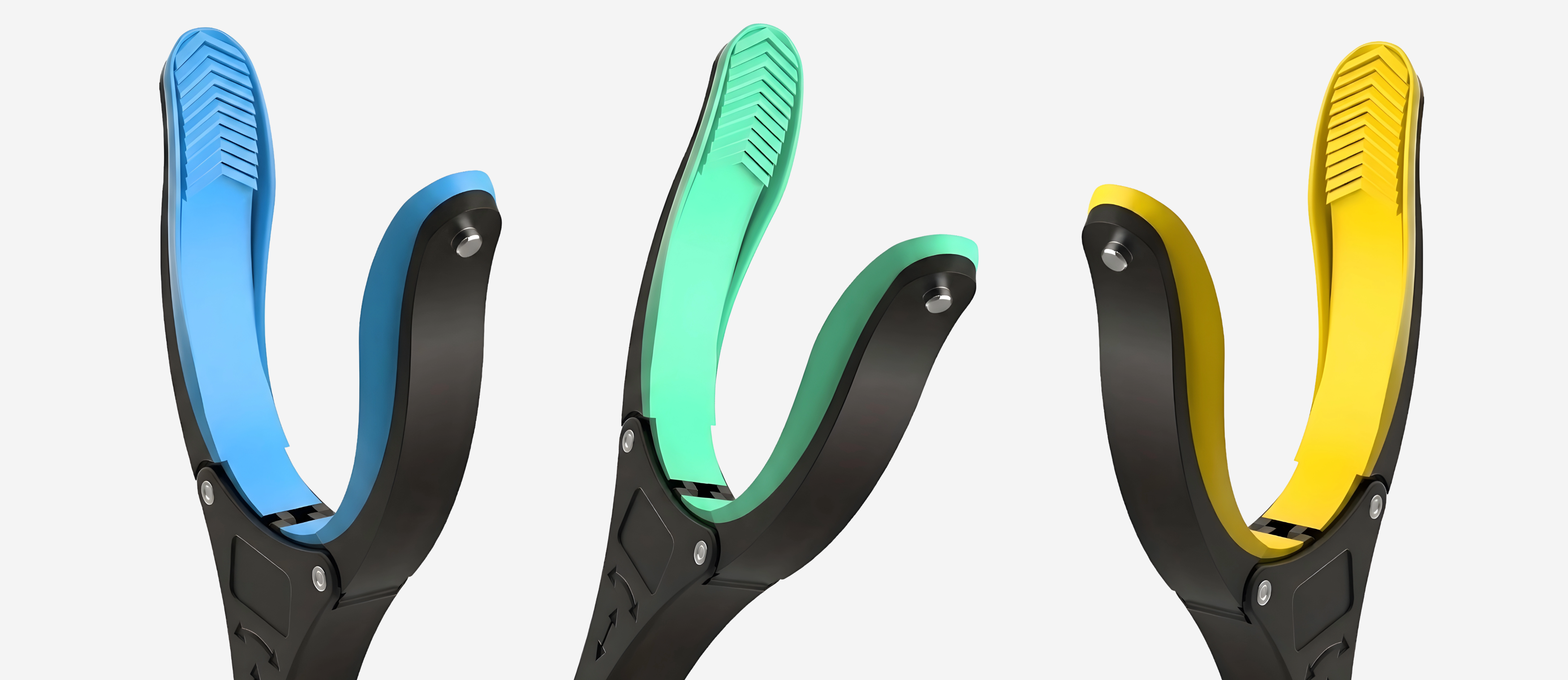
Occupational therapists are the clinical profession most specifically focused on the question GrabbersTool addresses commercially: what tools and modifications allow a person with functional limitations to live independently at home? The OT profession has developed rigorous assessment frameworks for this question over decades. Understanding what OTs assess and what they recommend helps people without OT access make better adaptive equipment decisions — and helps people with OT access have more productive conversations about what they actually need.
Direct answer: occupational therapists conducting home independence assessments consistently recommend across four domains: reach access tools (reacher grabbers), grip-strength-dependent task tools (adaptive openers), mobility and transfer aids (canes, standing assist tools), and environmental modifications (bathroom grab bars, storage reorganization). GrabbersTool's product range covers the first three domains. The fourth — environmental modifications — is primarily structural and falls outside adaptive tool scope.
The OT Assessment Framework: What Gets Evaluated
An occupational therapist's home assessment evaluates functional independence across the Activities of Daily Living (ADL) framework. The standard ADL categories:
Basic ADLs (self-care)
- Dressing — upper and lower body; ability to manage fasteners, socks, shoes
- Bathing — safe access to shower or tub; seated vs. standing bathing
- Toileting — transfer on and off toilet; hygiene management
- Mobility — ambulation within the home; transfer between surfaces
- Feeding — ability to prepare and manage food independently
Instrumental ADLs (household management)
- Meal preparation — kitchen access, appliance use, container management
- Home management — cleaning, laundry, bed-making
- Medication management — container opening, schedule management
- Community mobility — accessing transport, shopping
- Financial management — handling money, bills (not mobility-related, but part of complete assessment)
What OTs Consistently Recommend: The Common Prescription Pattern
| ADL Domain | Common OT Recommendation | GrabbersTool Match |
|---|---|---|
| Lower body dressing | Long-reach reacher + sock aid + long shoe horn | 32" Reacher Grabber |
| Floor-level object retrieval | Reacher grabber (32" or 43" based on height/use) | 32" or 43" Reacher |
| Overhead storage access | Long-reach reacher (43" typically) | 43" Reacher Grabber |
| Meal preparation — opening containers | Electric jar opener, electric can opener, adaptive utensils | Electric Jar Opener, Electric Can Opener |
| Mobility within home | Walking cane or walker (based on balance assessment) | Walking Cane |
| Sit-to-stand transfer | Raised seating; standing assist tool; grab rail | Standing Assist Tool |
| Medication container opening | Non-childproof caps; electric opener for sealed bottles | Electric Jar Opener |
GrabbersTool's product design is informed by occupational therapy functional independence principles. The specifications published on each product page — jaw opening width, trigger force, handle grip diameter, reach length — map directly to the assessment criteria OTs use when matching tools to patient function. View the complete collection →
The OT Referral: How to Get One
Many people who would benefit from an OT home assessment do not receive one because the referral pathway is unclear. How to access occupational therapy for home independence assessment:
- Post-hospital discharge: ask specifically for an OT home visit during discharge planning — this is standard of care after many surgeries and hospitalizations, but must be requested
- Primary care physician referral: a GP or family physician can refer to community occupational therapy; the referral reason should be "home safety assessment" or "ADL functional assessment"
- Private OT practice: self-referral to a private OT is available in most countries — an initial home assessment typically takes 1–2 hours and produces a written equipment and modification recommendation
- Employer or workers' compensation: for work-related injuries affecting home function, employer OT services or workers' compensation schemes often fund OT home assessments
What to Expect From an OT Assessment
A home OT assessment typically involves:
- Interview about current functional difficulties and goals
- Observation of specific tasks — the OT watches the person perform tasks rather than taking their word for how they are managed
- Home environment assessment — room-by-room review of hazards and accessibility
- Written recommendations — equipment, modifications, and referrals to other services where needed
- Follow-up — in some systems, the OT returns to verify that recommended equipment has been acquired and is being used correctly
Using OT Recommendations Without an OT
For people who cannot access an OT assessment, the recommendation pattern described above provides a reasonable starting framework. The consistent OT starting points:
- A reacher grabber of appropriate length for the user's height and primary use scenario
- An electric jar opener for the kitchen
- A walking aid if balance during ambulation is affected
- A standing assist tool if sit-to-stand is effortful or unsafe
These four tools address the highest-frequency independence challenges across the broadest range of conditions and user profiles.
See also: Aging in Place: What Independence at Home Actually Requires for the broader independence context, and The Complete Guide to Post-Surgery Home Recovery for the post-discharge application.
Browse the Ergonomic Mobility and Easy Grip Kitchen Openers collections for the GrabbersTool range that OTs most frequently recommend.


