

Osteoporosis does not make people fall more often than people without it. The fall frequency is determined by the same factors that affect everyone — balance, gait, environment, medications, vision. What osteoporosis changes is the consequence of a fall. A fall that would produce a bruise in a person with normal bone density produces a fracture in a person with severe osteoporosis. The hip fracture that required a hospital admission and rehabilitation: the same fall, different skeleton. This changes the risk calculus for fall prevention from "prevention is useful" to "prevention is essential."
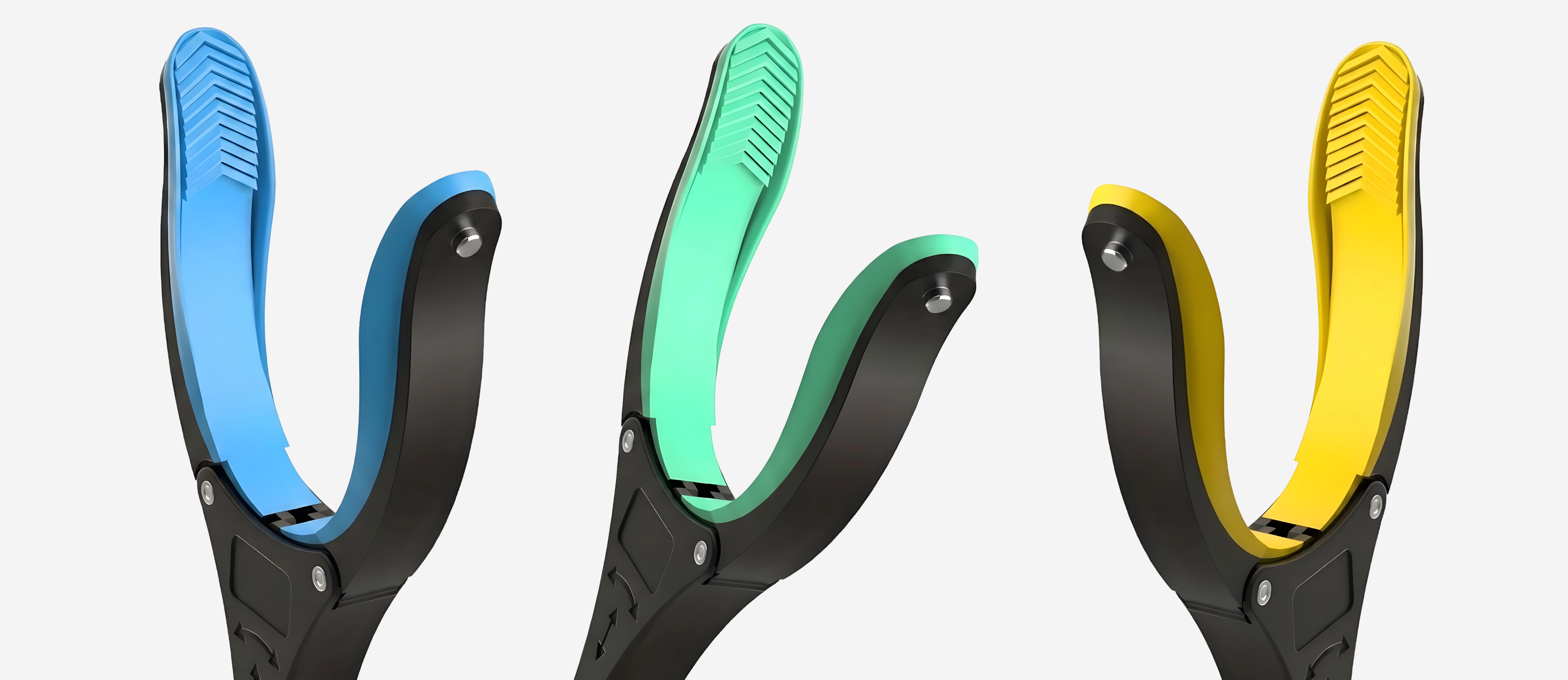
Direct answer: for people with osteoporosis, fall prevention tools — particularly a walking cane for balance during ambulation and a reacher grabber to eliminate the floor-level bending that can itself produce falls — are more consequential than for people with normal bone density, because the potential outcome of each fall is more severe. The GrabbersTool Walking Cane reduces fall probability during walking; the Reacher Grabber eliminates the floor-retrieval movements that destabilize balance and produce a significant proportion of home falls.
The Fracture Risk Stratification
Bone density is measured as a T-score (the deviation from the average peak bone density of a healthy young adult). The clinical thresholds:
- Normal: T-score above -1.0 — standard fall prevention approach
- Osteopenia: T-score between -1.0 and -2.5 — elevated fracture risk; fall prevention becomes more consequential
- Osteoporosis: T-score below -2.5 — high fracture risk from falls; fall prevention is a medical priority
- Severe osteoporosis: T-score below -2.5 with prior fracture — very high fracture risk; spontaneous fractures (vertebral compression without a fall) possible
The fracture sites most commonly associated with falls in osteoporosis are the hip (from a sideways fall), the wrist (from a fall onto an outstretched hand), and the vertebrae (from forward fall or compression).
Where the Reacher Grabber Appears in Osteoporosis Fall Prevention
The connection between floor-level bending and falls is specific: the forward lean required to reach the floor shifts the center of mass toward the toes, and any imbalance at that point — a slight wobble, a distraction, a moment of dizziness — results in a forward fall onto the hands or knees. For a person with osteoporosis, this fall produces a wrist or hip fracture; for a person with normal bone density, it produces a bruise.
The reacher grabber eliminates this forward lean entirely. The user stands upright, extends the tool, and retrieves the floor item without any change in their center of mass position. GrabbersTool customers with osteoporosis who use a reacher consistently report that the physical therapist or rheumatologist who manages their bone health specifically recommended a reacher grabber as part of their fall prevention protocol.
Fall Prevention Tools Ranked by Impact for Osteoporosis
| Tool / Modification | Fall Risk Reduced | Fracture Prevention Impact (Osteoporosis) | GrabbersTool Option |
|---|---|---|---|
| Walking cane during ambulation | High — supports balance during gait | High — hip fracture from walking fall | Walking Cane |
| Reacher grabber (eliminates floor bending) | Medium-high — removes forward lean instability | High — wrist and hip fracture from forward fall | Reacher Grabber |
| Bathroom grab bars | High — bathroom is highest-risk room | High — hip fracture from wet floor fall | Not in GrabbersTool range |
| Rug removal | High — trip falls on rug edges | High — hip fracture from trip fall | Zero cost |
| Standing assist tool | Medium — sit-to-stand is a high-risk moment | High — hip fracture from transfer fall | Standing Assist Tool |
| Adequate night lighting | Medium — nighttime navigation falls | High — any fall at high bone density risk | Low cost |
The stability specifications and load ratings for GrabbersTool mobility and assist tools — relevant for ensuring the tool itself does not create a failure point — are published on the product pages. For osteoporosis, the walking cane's tip stability specification is the most critical, as an unstable tip contact is a fall-producing event. View walking cane specifications →
Medication Effects on Fall Risk in Osteoporosis
Osteoporosis is often treated with bisphosphonates (alendronate, risedronate), denosumab, or other bone density medications. These medications do not affect balance or fall risk directly. However, many people with osteoporosis also take medications for coexisting conditions — blood pressure medications, sleep aids, and antidepressants — that do affect balance and reaction time. This medication-related fall risk is independent of the bone density issue and should be reviewed with the prescribing physician as part of osteoporosis fall prevention planning.
The Post-Fall Context: What Happens After a Fracture
Hip fractures in people with osteoporosis frequently require surgical repair and extended inpatient rehabilitation. The recovery period involves exactly the movement restrictions described in GrabbersTool's hip replacement recovery content — and the adaptive tools required are identical. The reacher grabber, walking cane, and standing assist tool that prevent the fall are also the tools needed if the fall occurs and produces a fracture requiring surgery.
This means the adaptive tool investment serves dual purposes: fall prevention before an event and recovery equipment after one. For a person with osteoporosis, this makes the investment particularly justified.
See also: How to Prevent Falls at Home: The Room-by-Room Assessment for the complete fall prevention framework, and The First Week Home After Hip Replacement for the recovery context.
Browse the Ergonomic Mobility collection for the full GrabbersTool fall prevention and recovery tool range.


