

Academic work with a physical disability involves two distinct environments: the formal academic setting (campus, library, classroom) where institutional accommodations apply, and the home study environment where the student or researcher works alone with no institutional support. GrabbersTool addresses the home environment component: the tools that support a student with grip limitations in managing their physical workspace, maintaining access to materials, and working independently for extended periods without the physical friction of inaccessible home setup. This is not an article about voice-to-text or screen readers -- those technology tools are well-covered elsewhere. This is about the physical environment of home academic work.
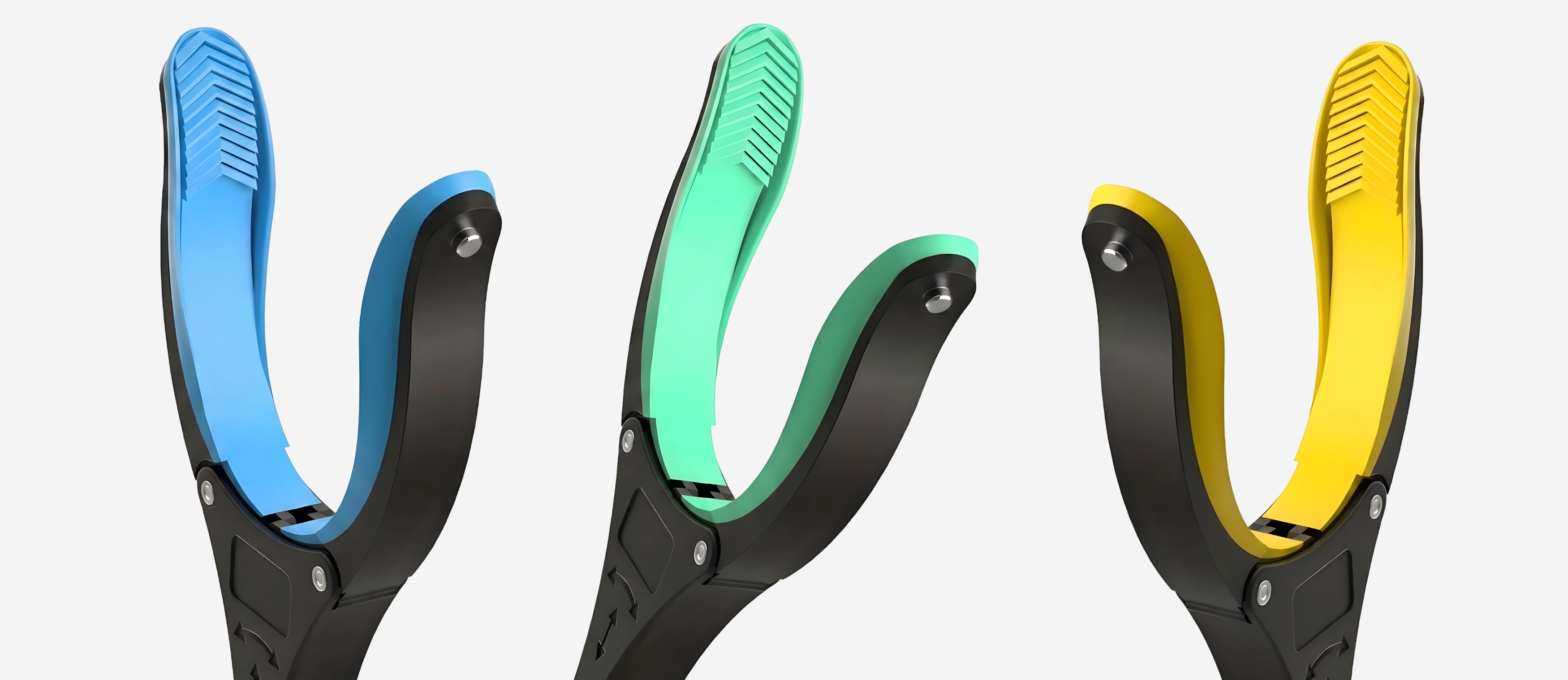
Direct answer: for academic work at home with physical disabilities, the primary adaptive tools address the non-academic physical tasks that interrupt work sessions: the GrabbersTool Reacher Grabber for retrieving dropped items (books, pens, papers) without leaving the work position, the Electric Jar Opener and 5-in-1 Multi-Opener for quick food access during work sessions, and the Standing Assist Tool at the work chair for the repeated chair-to-standing transfers of a full work day.
The Home Study Environment: Physical Friction Points
Academic work at home involves a pattern of interruptions driven by physical environment friction:
- Dropped items: books, pens, papers -- floor retrieval interrupts work and creates fall risk if done while leaning from a chair
- Shelf access: reaching reference books on high or low shelves -- overhead reaching and floor-level reaching both create issues
- Meal and drink access: quick food access during work sessions -- grip-limited users struggle with jar and bottle opening between tasks
- Chair transfers: repeated sitting and rising throughout a work day -- cumulatively fatiguing and painful for many conditions
- Physical fatigue accumulation: by late afternoon, physical limitations are typically worse than morning -- the last study hours are the most physically difficult
Workstation Setup for Physical Disabilities
| Workstation Need | Physical Challenge | Adaptive Solution |
|---|---|---|
| Dropped pen, book, paper retrieval | Bending from work chair -- posture and fall risk | 32 inch Reacher at desk -- immediate access without leaving position |
| High bookshelf reference access | Overhead reaching -- shoulder restriction, fatigue | 43 inch Reacher for standing bookshelf access |
| Quick meal preparation between work sessions | Grip-limited kitchen tasks | Electric Jar Opener, Multi-Opener for 5-minute kitchen access |
| Chair transfer at session start and end | Rising from work chair with grip or mobility limitation | Standing Assist Tool at work chair position |
| Cane management while working | Cane falls while seated -- inaccessible when needed to rise | Cane Strap keeps cane wrist-attached while working |
All product specifications are on the product pages. View 32 inch Reacher Grabber specifications
Fatigue Management for Long Study Sessions
Many physical disabilities produce fatigue patterns that worsen through a work day -- MS fatigue, post-COVID fatigue, cancer treatment fatigue, cardiac and pulmonary conditions. For academic work, fatigue management means scheduling the most cognitively demanding tasks early (when physical and cognitive reserves are highest) and using adaptive tools throughout to minimize the physical overhead of non-academic tasks. Each bending or reaching episode that is replaced by a reacher use is a small physical expenditure saved for cognitive work. This is the same energy conservation principle applied to academic performance rather than domestic task completion.
Postgraduate and Research Contexts
Graduate students and academic researchers who manage physical disabilities during intensive research periods face extended home work demands -- often more sustained than undergraduate course work. The physical environment setup matters more, not less, as work intensity increases. GrabbersTool notes that adaptive tools for the home office environment are rarely discussed in academic disability accommodation literature, which focuses on formal campus accommodations. The home study environment is entirely self-managed and benefits from the same systematic adaptive setup as the home kitchen and bedroom.
See also: Adaptive Tools for College Students With Disabilities: Independence on Campus and in the Dorm and Post-COVID Fatigue and Adaptive Tools: Managing Activity in Long COVID.
Browse Reacher Grabber Tools and Easy Grip Kitchen Openers.


