

Stroke rehabilitation focuses intensely on recovery of neurological function — and rightly so. But the recovery timeline for a stroke is measured in months and years, while the daily independence challenges begin on day one at home. Occupational therapists who work in post-stroke outpatient care identify the same gap consistently: patients are discharged with rehabilitation goals and exercise programs, but without the adaptive tools that make the daily routine manageable during the period before neurological recovery catches up. The tools exist. They are rarely introduced proactively.
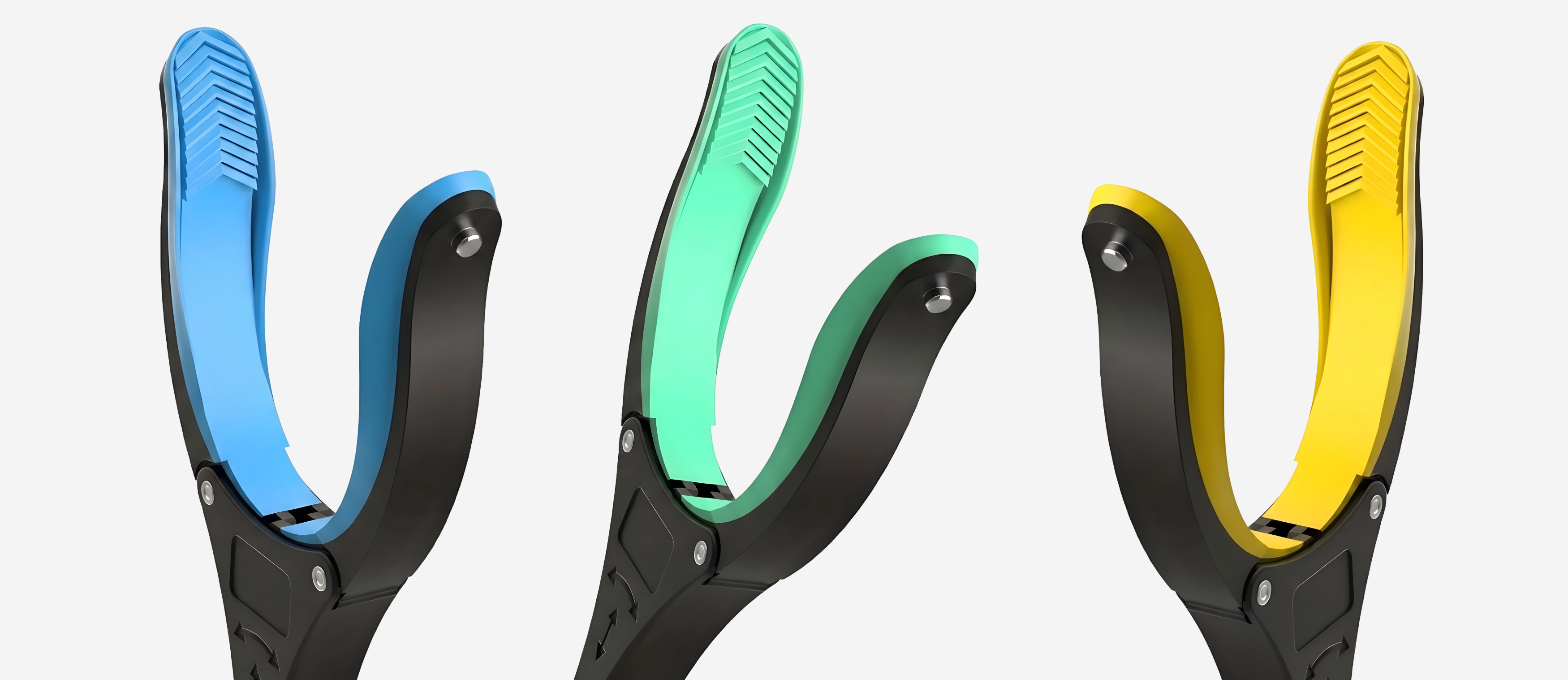
Direct answer: for stroke survivors with one-sided weakness (hemiplegia or hemiparesis), the highest-impact daily living tools are those designed for one-handed operation — a reacher grabber with single-trigger mechanism, adaptive kitchen openers that do not require bilateral coordination, and walking support calibrated for unilateral weight-bearing. The GrabbersTool Reacher Grabber operates entirely one-handed with a single trigger, making it functional for users with one-sided arm weakness who retain usable function on the unaffected side.
How Stroke Affects Daily Living Tasks
The daily living impacts of stroke depend on which hemisphere was affected and the severity of the event, but the functional pattern most commonly seen in post-stroke adaptive equipment use involves:
- One-sided weakness or paralysis (hemiplegia/hemiparesis): the affected arm may have reduced or absent voluntary movement, eliminating bilateral task capacity
- Grip strength reduction on the affected side: even where voluntary movement is retained, grip force may be insufficient for standard kitchen and daily living tasks
- Balance and gait changes: walking stability is often affected, particularly on the affected side
- Fatigue: neurological recovery produces significant fatigue; tasks that were automatic before the stroke now require conscious effort and energy
Adaptive Tool Requirements for One-Handed Function
| Tool Feature | Why It Matters After Stroke | GrabbersTool Solution |
|---|---|---|
| Single-trigger operation | One-handed use — affected arm cannot assist | Reacher Grabber — single trigger |
| Lightweight frame | Reduced arm endurance on unaffected side | ~180g aluminum construction |
| Auto-open jaw spring | Jaw reopens without second hand | Spring-return jaw mechanism |
| No bilateral coordination required | Kitchen tasks requiring two hands are inaccessible | Electric Jar Opener, Electric Can Opener |
| Ergonomic handle grip | Reduced grip endurance means handle must be efficient | Contoured handle — reduces grip fatigue |
| Stable base for mobility aid | Walking with one-sided weakness requires reliable support | Walking Cane — height-adjustable |
The trigger force requirement, handle grip diameter, and jaw spring return force for GrabbersTool models are published on the product pages — these specifications determine whether the tool is operable for users with reduced unilateral grip strength. View specifications →
Kitchen Independence With One-Handed Function
The kitchen is where bilateral coordination requirements cluster most densely. Standard kitchen tasks that require two hands:
- Jar opening — one hand stabilizes, one rotates
- Can opening — one hand holds, one turns the handle
- Chopping — one hand holds the food, one holds the knife
- Pouring from a heavy container — both hands control the pour
The first two are directly addressed by GrabbersTool's adaptive openers. The Electric Jar Opener places the mechanism on the lid and operates with a single button press — no stabilizing hand required if the jar is placed on a stable surface. The Electric Can Opener operates similarly — position on the can, activate, no second-hand rotation needed.
Chopping and pouring require either adaptive kitchen tools (weighted knife, non-slip cutting board with spikes for one-handed stabilization) or reorganization to minimize these tasks — both of which are beyond GrabbersTool's product range but are well-documented in occupational therapy adaptive cooking literature.
The Walking Aid After Stroke
Walking stability after stroke is typically managed with a cane on the unaffected side — the cane supports the body weight during the swing phase of the affected leg. The height calibration is identical to standard cane fitting: wrist-crease height in shoes.
The critical difference from standard cane use: the grip must be secure and the handle ergonomic, because the cane carries proportionally more weight than in standard balance-assist use. The GrabbersTool Walking Cane's ergonomic handle distributes palm pressure more evenly than a standard crook handle — relevant when the cane is used for extended periods of weight-bearing rather than occasional balance support.
The Cane Strap is particularly useful after stroke: it allows the cane to be secured to a chair or table when both functions of the unaffected arm (holding the cane and performing a task) are needed simultaneously. The strap suspends the cane without requiring the user to find a place to lean it or risk it falling.
The Fatigue Factor
Post-stroke fatigue is a clinical phenomenon distinct from normal tiredness. It can persist for months or years after the acute event and affects the time and energy available for daily tasks. Tools that reduce the effort required for each task — by providing mechanical advantage, eliminating coordination requirements, or reducing reach distance — also reduce the fatigue cost of the daily routine.
GrabbersTool customers recovering from stroke consistently report that having the reacher available eliminates the energy expenditure of figuring out how to retrieve a dropped item one-handed — which involves multiple attempted approaches before a workable solution is found. The tool makes a low-frequency problem (working out a one-handed retrieval technique) into a one-second solution.
See also: Can a Grabber Tool Replace a Home Health Aide for Simple Daily Tasks for the broader independence context, and Aging in Place: What Independence at Home Actually Requires.
Browse the Ergonomic Mobility collection and Easy Grip Kitchen Openers for the full GrabbersTool adaptive tool range.


