

Abschnitt 01
Warum einen Greifarm zum Müllaufsammeln verwenden?
Müllaufsammeln ohne das richtige Werkzeug bedeutet wiederholtes Bücken, potenziellen Kontakt mit scharfem oder nassem Müll und Rückenbelastung, die sich selbst bei einer kurzen Reinigungsaktion schnell summiert. Ein Greifarm eliminiert alle drei Probleme auf einmal.
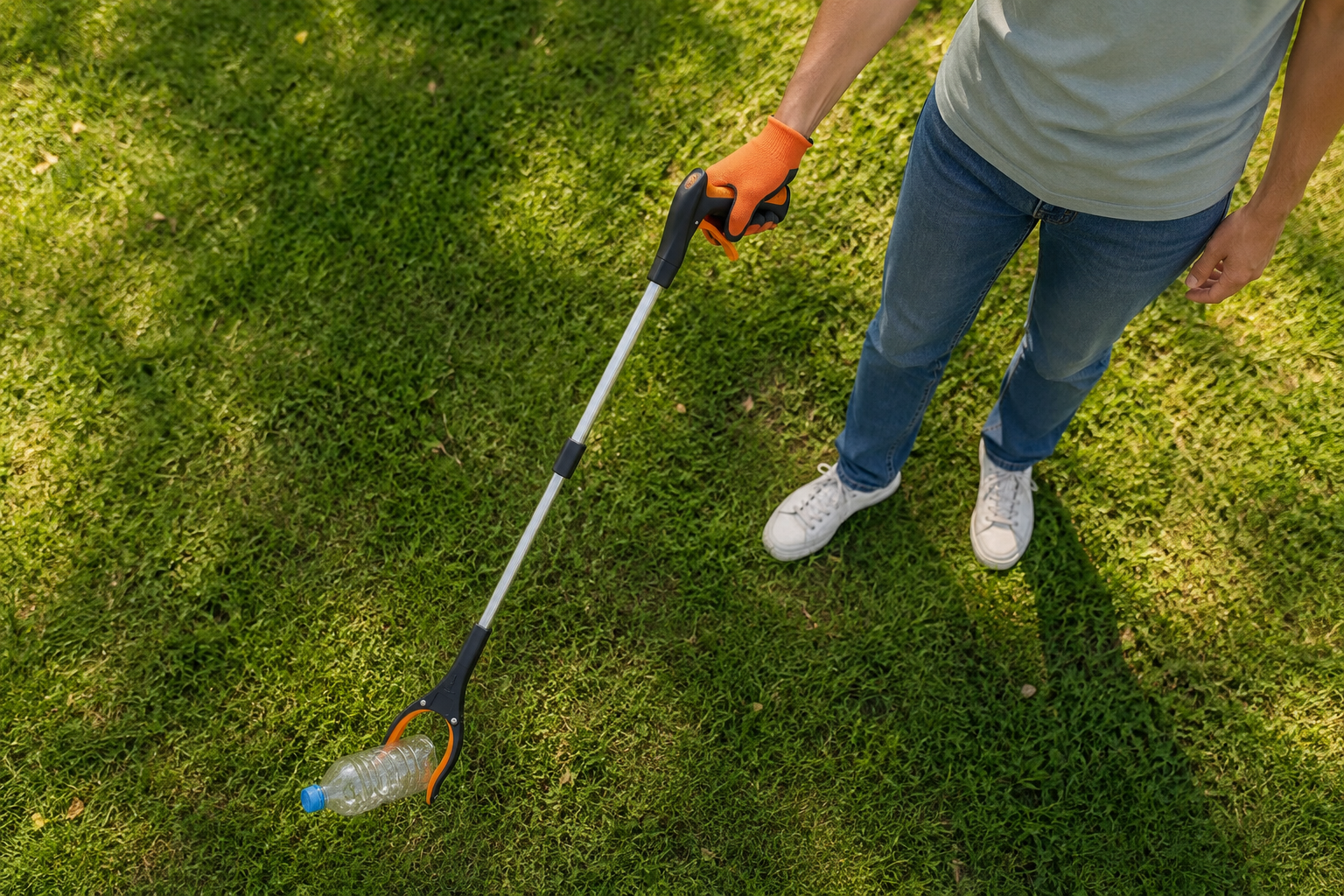
Egal, ob Sie einen Garten reinigen, an einer gemeinschaftlichen Müllsammelaktion teilnehmen, in Parks und Freizeitanlagen arbeiten oder einfach Müll vom Boden aufheben, ohne sich bücken zu müssen – ein gut gewählter Greifarm verwandelt eine unangenehme, sogar riskante Aufgabe in etwas Müheloses und Präzises.
Das richtige Werkzeug ist auch aus einem ganz anderen Grund wichtig: Wenn Sie es täglich als Mobilitäts- oder Reichweitenhilfe sowie für die Außenreinigung verwenden, muss es in beiden Rollen gut funktionieren. Dieser Leitfaden behandelt, was einen fähigen Outdoor-Müllgreifer von einem leichten Mobilitätswerkzeug tatsächlich unterscheidet – und wie Sie das Modell finden, das für Ihre spezielle Situation passt.

Ein Greifarm ermöglicht Ihnen, das Gelände dreimal schneller zu bewältigen als manuelles Aufsammeln, da wiederholtes Bücken und Aufrichten entfällt.
Ein 32–40 Zoll Greifer hält Ihre Hände jederzeit von nassem, scharfem oder kontaminiertem Müll fern.
Die besten Outdoor-Greifer wiegen unter 0,8 lbs. Überschreitet man diesen Wert, macht sich Armermüdung bei Sessions, die länger als 20 Minuten dauern, bemerkbar.
Abschnitt 02
Die richtige Greiferlänge wählen
Die Länge ist die erste Spezifikation, die überprüft werden sollte – nicht die Griffkraft, nicht der Backentyp. Die falsche Länge erschwert jede nachfolgende Aufgabe. Zu kurz, und Sie müssen sich immer noch bücken; zu lang, und das Werkzeug wird unhandlich, um es präzise zu kontrollieren.
Die stehende Regel. Stellen Sie sich aufrecht hin und lassen Sie Ihre Arme natürlich hängen. Die Spitze eines idealen Müllgreifers sollte den Boden erreichen, während Ihr Ellbogen leicht angewinkelt bleibt – typischerweise zwischen 32 und 42 Zoll, je nach Ihrer Körpergröße. Ziel ist ein natürlicher Greifwinkel, der keinerlei Vorbeugen erfordert.
Greifwerkzeuge nach Länge durchsuchen →| Ihre Körpergröße | Empfohlene Länge | Bester Anwendungsbereich |
|---|---|---|
| Unter 1,60 m | 26–30 Zoll | Innenbereich, ebene Flächen, leichte Mobilitätshilfe |
| 1,60 m – 1,73 m | 32–36 Zoll | Allgemeines Müllsammeln im Freien, täglicher Gebrauch |
| 1,75 m – 1,85 m | 36–40 Zoll | Parkreinigung, Trail-Arbeiten, längere Outdoor-Einsätze |
| Ab 1,88 m | 40–42 Zoll | Alle Outdoor-Aufgaben, verhindert jegliches Vorbeugen |
Für das reine Müllsammeln im Freien ist auch das Gelände zu berücksichtigen. Müll von einer ebenen, gepflasterten Fläche aufzuheben, erfordert weniger Länge, als in einen Graben, unter eine Hecke oder an einem Hang entlang zu greifen. Wenn Sie regelmäßig in bewachsenem oder unebenem Gelände arbeiten, addieren Sie 4 Zoll zu Ihrer Standard-Körpergröße.
Weiterführende Lektüre: Bester Langreichweiten-Greifer →
Abschnitt 03
Backentypen — Welcher ist am besten für Müll geeignet?
Die Backen sind der Bereich, in dem Leistungsunterschiede im realen Einsatz am deutlichsten sichtbar werden. Speziell für das Müllsammeln im Freien ist nicht jedes Backendesign gleich – einige haben Schwierigkeiten mit nassen Gegenständen, glatten Flaschen oder sperrigem Unrat.

| Backentyp | Am besten geeignet für | Schwierigkeiten mit | Bewertung für den Außenbereich |
|---|---|---|---|
| Gummierte Klaue (breit) | Flaschen, Dosen, Verpackungen, die meisten Abfälle im Freien | Kleine flache Gegenstände wie Münzen | Ausgezeichnet |
| Saugnapfbacke | Glatte Gläser, flacher Kunststoff, Labor-/medizinische Anwendung | Unregelmäßige Formen, nasser Schmutz, schmutzige Oberflächen | Mäßig |
| Standard-Kunststoffklaue | Leichte Gegenstände im Innenbereich, trockene Bedingungen | Schwere oder rutschige Gegenstände, unwegsames Gelände | Begrenzt |
| Edelstahlfinger | Schwerindustrie, Gartenabfälle, Baumstämme | Kleine oder zerbrechliche Gegenstände | Ausgezeichnet |
| Magnetspitze + Klauenkombination | Metallabfälle (Flaschenverschlüsse, Nägel, Dosen) | Nichtmetallische Gegenstände ohne Klauenverwendung | Situationsbedingt |
Die Backenöffnungsweite ist wichtig. Für das Aufsammeln von gemischtem Müll im Freien – von einer kleinen Verpackung bis zu einer vollen Wasserflasche – achten Sie auf eine Backenöffnung von mindestens 3 Zoll (idealerweise 4 Zoll). Viele einfache Greifer öffnen sich nur bis 2 Zoll und können eine Flasche oder eine zerquetschte Dose nicht ohne Abrutschen festhalten.
Überprüfen Sie auch die Backenrotation. Ein um 90° oder 360° drehbarer Kopf ermöglicht es Ihnen, flach auf dem Boden liegende Gegenstände zu erreichen, ohne Ihr Handgelenk zu verdrehen. Für das Müllsammeln im Freien kann diese Funktion allein den Aufwand pro Gegenstand halbieren.
Abschnitt 04
Materialien & Haltbarkeit für den Außeneinsatz
Greifwerkzeuge für den Außenbereich müssen viel aushalten. UV-Einstrahlung, Regen, Schlamm, Kontakt mit nassen oder rauen Oberflächen und das schiere Nutzungsvolumen während einer langen Reinigungsaktion belasten einen Greifer weit mehr als gelegentliche Reichweitenaufgaben im Innenbereich.
| Material | Gewicht | Haltbarkeit im Freien | Witterungsbeständigkeit | Am besten geeignet für |
|---|---|---|---|---|
| Schaft aus Aluminiumlegierung | Leicht (~0,6 lb) | Hoch | Rostbeständig | Allgemeine Außenreinigung, täglicher Gebrauch |
| Schaft aus Edelstahl | Schwer (~1,2 lb) | Sehr hoch | Ausgezeichnet | Hochbelastbarer industrieller, kommerzieller Einsatz |
| Schaft aus Glasfaser | Mittel (~0,8 lb) | Hoch | Gut | Längere Outdoor-Einsätze, Trail-Teams |
| Schaft aus ABS-Kunststoff | Sehr leicht (~0,4 lb) | Mäßig | Mäßig (UV zersetzt) | Leichter Inneneinsatz, kurze Outdoor-Aufgaben |
Wichtige Spezifikation
Für den Außenbereich: Aluminium ist der praktische Standard.
Für die meisten Müllsammelaktionen im Freien – Gemeindereinigungen, Gartenarbeiten, Parks – bietet ein leichter Schaft aus Aluminiumlegierung die beste Balance aus Haltbarkeit, Rostbeständigkeit und geringer Armermüdung. Er hält den Elementen gut stand, widersteht dem Verbiegen unter Last und bleibt leicht genug, um ihn 30–60 Minuten lang ohne Anstrengung zu verwenden.
- Achten Sie auf eine Wandstärke, die sich beim Greifen eines 1-Pfund-Objekts bei voller Ausdehnung nicht verbiegt
- Vermeiden Sie dünne Aluminiummodelle, die hauptsächlich als Indoor-Mobilitätshilfen vermarktet werden – sie können sich bei längerem Außeneinsatz verbiegen
- Edelstahl ist für das leichte Müllsammeln überdimensioniert, aber die richtige Wahl für kommerzielle DOT- oder kommunale Reinigungsteams

Abschnitt 05
Wichtige Merkmale für das Müllsammeln im Freien
Jenseits von Länge, Backentyp und Material trennen einige spezifische Merkmale Werkzeuge, die für die echte Außenreinigung konzipiert sind, von einfachen Innenraumgreifern. Wenn Sie hauptsächlich zum Müllsammeln und nicht zur Mobilitätsunterstützung kaufen, sind dies die Kriterien, die Priorität haben sollten.
Ergonomischer Auslöser
Ein leichtgängiger, komfortabler Auslöser ist für längere Reinigungsarbeiten unerlässlich. Steife Auslöser verursachen innerhalb weniger Minuten Handermüdung. Achten Sie auf gepolsterte, pistolenartige Auslöser, die eine Klemmkraft von 10 lbs oder weniger erfordern.
Breite Backenöffnung
Mindestens 3 Zoll — idealerweise 4 Zoll — um volle Flaschen, zerquetschte Dosen und sperrige Verpackungen ohne Neupositionierung handhaben zu können. Der größte limitierende Faktor bei billigen Outdoor-Greifern.
Drehbarer Kopf
Eine 90° oder 360° Rotation ermöglicht es Ihnen, flache Gegenstände auf dem Boden zu erreichen, ohne Ihr Handgelenk zu verdrehen. Entscheidend für effizientes Arbeiten in unterschiedlichem Gelände.
Rutschfeste Gummi-Backen
Unverzichtbar für nasse oder schmutzige Gegenstände im Freien. Gummierte Backenflächen verhindern, dass nasse Flaschen, schlammiger Schmutz und glatte Verpackungen beim Anheben verrutschen.
Befestigungsschlaufe für Müllsack
Viele Outdoor-Greifer verfügen über einen Haken oder eine Schlaufe, um einen Müllsack offen zu halten. So können Sie mit einer Hand arbeiten – den Greifer in der anderen – ohne eine zweite Person oder einen Sackständer zu benötigen.
Faltbarkeit (optional)
Nützlich, wenn das Werkzeug in einer Tasche oder mit öffentlichen Verkehrsmitteln zu einem Reinigungsort transportiert wird. Für den Transport im Fahrzeug oder den Einsatz vor Ort ist ein einteiliges Modell mit festem Schaft stabiler und zuverlässiger unter Last.

Klappbar vs. nicht klappbar für den Außeneinsatz. Klappbare Modelle sind praktisch, haben aber ein Gelenk – eine potenzielle Schwachstelle oder Bruchstelle bei dauerhafter Belastung. Für den gelegentlichen Heimgebrauch ist ein klappbares Modell ausreichend. Für die Reinigung von Gemeinschaftsparks oder professionelle Außenarbeiten wird ein festes, einteiliges Gestänge bei wiederholtem starkem Gebrauch immer eine bessere Leistung erbringen.
Lesen Sie den vollständigen Vergleich: klappbar vs. nicht klappbar →Abschnitt 06
Wer verwendet Greifzangen für die Müllentsorgung im Freien?
Eine Greifzange für die Müllentsorgung im Freien wird von einem viel breiteren Spektrum von Anwendern genutzt, als die meisten Menschen annehmen. Die Anwendungsfälle reichen von einzelnen Hausbesitzern bis hin zu organisierten kommunalen Reinigungsaktionen.
Gemeinschafts- und Freiwilligen-Aufräumaktionen
Organisierte Müllsammelaktionen in Parks, an Straßenrändern und an Stränden. Umfang und dauerhafter Einsatz erfordern ein langlebiges, komfortables Werkzeug.
Hausbesitzer und Gärtner
Sammeln von Gartenabfällen, Laub und Windmüll ohne wiederholtes Bücken – besonders nützlich für Personen mit Rücken- oder Hüftproblemen.
Ältere Menschen und postoperative Anwender
Wenn das Bücken aus medizinischen Gründen eingeschränkt oder schmerzhaft ist, wird eine Greifzange unerlässlich, um einen ordentlichen Außenbereich selbstständig zu pflegen.
Kommunal- und DOT-Mitarbeiter
Autobahn- und Straßenreinigungs-Crews verwenden den ganzen Tag über Hochleistungs-Greifzangen. Gewicht, Greifdruck und Haltbarkeit der Greifbacken sind bei diesem Ausmaß der Nutzung entscheidend.
Schul- und Betriebspersonal
Hausmeisterteams in Schulen, Sportanlagen und auf Campingplätzen verwenden Greifzangen für die schnelle, hygienische Müllsammlung ohne Bücken oder direkten Handkontakt.
Umweltgruppen
Strandreinigungen, Naturschutz entlang von Flussläufen und Wegewartungsgruppen statten Freiwillige mit Greifzangen aus, um natürliche Umgebungen effizient zu schützen.
Wenn Ihre Nutzung sowohl in die Kategorie Mobilitätshilfe als auch in die Kategorie Außenreinigung fällt, lesen Sie unsere Leitfäden: Greifzange: Sicherheit & Unabhängigkeit zu Hause und Beste Greifzange für ältere Benutzer.
Abschnitt 07
Häufig gestellte Fragen
Antworten auf die häufigsten Fragen zur Auswahl einer Greifzange für die Müllentsorgung im Freien.
Für die Müllentsorgung im Freien auf ebenem Boden ist eine Greifzange von 81–91 cm (32–36 Zoll) für die meisten Erwachsenen ideal. Größere Benutzer (ab 175 cm/5'9") profitieren von Modellen mit 102–107 cm (40–42 Zoll). Kürzere Werkzeuge verursachen Rückenschmerzen, selbst wenn sie technisch den Boden erreichen; längere Werkzeuge können sich unhandlich anfühlen und schwerer präzise zu steuern sein. Passen Sie die Länge Ihrer Körpergröße und dem Gelände an – fügen Sie 10 cm (4 Zoll) zu Ihrer Standardmessung hinzu, wenn Sie häufig in unebenen oder bewachsenen Gebieten arbeiten.
Für gemischten Außenmüll – Flaschen, Dosen, Verpackungen, nasse Gegenstände – bieten breite, gummiummantelte Greifbacken (mindestens 7,5–10 cm/3–4 Zoll Öffnung) das beste Gleichgewicht zwischen Griffigkeit und Vielseitigkeit. Saugnapfbacken greifen glatte Glasobjekte besser, haben aber Schwierigkeiten mit unregelmäßigen Formen und schmutzigen Oberflächen. Magnetische Spitzen sind nur dann von Vorteil, wenn Sie häufig Metallgegenstände wie Kronkorken oder Nägel aufnehmen. Für die allgemeine Reinigung im Freien ist eine breite Gummikralle die zuverlässigste Allround-Greifbackenart.
Ja. Eine leichte Aluminium-Greifzange mit einem bequemen ergonomischen Griff funktioniert gut für beide Aufgaben. Achten Sie auf ein Modell unter 0,36 kg (0,8 lbs) mit rutschfesten Greifbacken und einem weichen Griff. Vermeiden Sie schwere Stahlmodelle, die ausschließlich für den industriellen Außeneinsatz konzipiert sind – sie ermüden die Hand bei täglichen Mobilitätsanwendungen schnell. Lesen Sie unseren vollständigen Leitfaden: Greifzange mit langer Reichweite vs. normale Greifzange – Was ist der Unterschied?.
Für die Müllentsorgung im Freien ist eine nicht klappbare, einteilige Greifzange im Allgemeinen stärker und steifer unter Last. Klappbare Modelle tauschen strukturelle Integrität gegen Portabilität – nützlich, wenn Sie das Werkzeug in einem Rucksack oder mit öffentlichen Verkehrsmitteln zu einem Reinigungsort transportieren. Für dauerhafte Außenarbeiten wie Parkreinigung oder Gartenpflege wählen Sie ein Modell mit festem, durchgehendem Schaft. Lesen Sie unseren detaillierten Vergleich: Klappbare vs. nicht klappbare Greifzange.
Die meisten Standard-Greifzangen halten bequem 0,9–1,4 kg (2–3 lbs). Hochleistungsmodelle aus Aluminium und Stahl können 2,3–4,5 kg (5–10 lbs) oder mehr bewältigen. Bei der Müllentsorgung im Freien fallen die meisten Gegenstände – Flaschen, Dosen, Verpackungen – gut in den Bereich von 0,9–1,4 kg (2–3 lbs). Wenn Sie größere Trümmer wie Äste, nassen Karton oder überfüllte Säcke aufheben, wählen Sie ein Modell, das für über 2,3 kg (5 lbs) ausgelegt ist und einen verstärkten Schaft und Greifmechanismus aufweist.
Für die Müllsammlung im Freien sollten Sie diese fünf Merkmale in der Reihenfolge ihrer Wichtigkeit priorisieren:
- Greifbackenbreite von mindestens 7,5 cm (3 Zoll) – um große Gegenstände ohne Neupositionierung zu handhaben
- Gummiummantelte, rutschfeste Greifbackenoberfläche – für nassen oder rutschigen Außenmüll
- Robuster Aluminium- oder Metallschaft – um Stößen und Verbiegen bei längerem Gebrauch standzuhalten
- Ergonomischer Auslöser mit geringem Kraftaufwand – um die Ermüdung der Hand bei langen Einsätzen zu reduzieren
- Gesamtgewicht des Werkzeugs unter 0,45 kg (1 lb) – um die Armermüdung über 30–60 Minuten überschaubar zu halten
Finden Sie die richtige Greifzange für Ihre nächste Aufräumaktion.
Durchsuchen Sie das gesamte Sortiment – gefiltert nach Länge, Greifbackenart und Anwendungsfall.
Greifzangen kaufen


